dailynewsnblog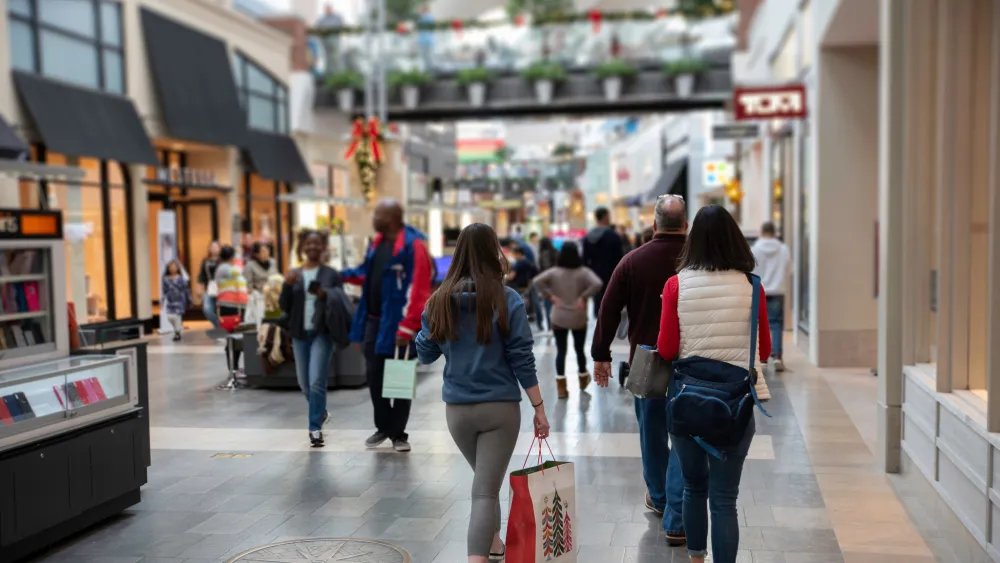
Recession is a dirty word in the business world, and it’s being tossed around again.
While the U.S. is not in recession, concerns of one occurring later this year or next year are being fueled by the Iran and Ukraine wars, ensuing rising prices on a spectrum of products and services, and sagging consumer confidence in the economy, personal finances, and President Trump’s inability to curb inflation. Rising consumer credit, modest wage increases, and AI as a threat to job security stir the pot.
Modest expectations on sales growth this year, if any, pervade the retail industry, with Macy’s forecasting comparable sales down 0.5 percent to up 0.5 percent, Kohl’s seeing sales ranging from a decline of 2 percent to flat, and Abercrombie & Fitch seeing sales gains slowing to 3 to 5 percent from last year’s 6.5 percent. Walmart expects sales to grow by 3.5 to 4.5 percent. Real consumer spending growth is expected to decline to about 1.5 percent in 2026, from 2.7 percent in 2025.
If history repeats itself, the U.S. could plunge into recession this year, based on downturns occurring on average every six years. The last recession happened in 2020 and was triggered by the pandemic, though only lasted from February to April 2020. By contrast, the Great Recession lasted from December 2007 to June 2009. A prolonged recession can lead to a depression.
On Monday, JPMorgan Chase chief executive officer Jamie Dimon characterized recession in the U.S. as a likely scenario. He cited warfare in the Middle East and Ukraine and their impact on fuel prices, and observed that the recessions of 1974 and 1982 were likely due to rising oil prices.
Dimon also said that while AI should lower inflation in the long run, the money spent by businesses to implement the technology should increase prices in the short term. Recessions entail rising unemployment, declining earnings, reduced consumer spending, and corporations reducing investments. Retailers are hurt by slowing sales, consumers shifting to cheaper, more generic and private brands, and lenders tightening the credit lines.
“The economy was carrying a lot of momentum into 2026 and so it would take a much bigger rise in the oil price to push the economy into recession,” said Michael Pearce, chief U.S economist for Oxford Economics.
“If we were looking at a world where the global oil prices reaches $190, the chances of a recession would be much, much higher,” though the price of a barrel of oil is currently around $110 to $112. “The additional risks to the U.S. are if we see a squeeze on supply chains from the disruption, or a much larger correction in the stock market, which risks undermining the wealth effect to spending by higher-income households, which has been an important tailwind for consumer spending in the past few years.”
Marshal Cohen, chief industry analyst at Circana, a leading market research firm, estimated there’s roughly a 35 percent chance of a recession occurring, and 65 percent chance the U.S. skirts a recession. “So many things have been thrown at the consumer, whether it’s the sluggish job market, credit levels hitting record highs, the removal of rebates on student loans, and now we’ve got the Iran war and the gas price issue and cascading price increases” all over.
“But what’s been amazing over the last couple of years, even through COVID and since, is the resilience of the consumer despite all these headwinds,” Cohen added. “Spending gains and drops have moved so quickly. It’s volatile. The consumer starts spending again after a short period [confronting] headwinds, breaking the paradigm of what would be a recession. The volatility in consumer spending suggests less of a possibility of a recession since by definition, a recession requires at least six months of consumers reducing their spending.”
The National Bureau of Economic Research, a group of economists, is considered the official body to announce the U.S. is in a recession or when the U.S. has pulled out of recession. Recessions are defined as two or more quarters of declining economic activity, typically a drop in gross domestic product, which is the dollar value of all the goods and services produced during a year or a quarter. Consumer spending accounts for two-thirds of GNP, a statistic published by the Bureau of Economic Analysis. Other metrics used in determining whether recession has occurred include statistics on jobs, wages, personal income, wholesale sales and factory output.
The good news, at least for the near future, is that the Federal Reserve Bank of Atlanta is tracking GDP growth for the first quarter of this year at about 2 percent to 3 percent as of early March, marking a rebound from 0.7 percent annualized growth during the fourth quarter of 2025.
Still, there are warning signals.
“We are heading into tougher times, a tougher job market, and higher prices. Young consumers and lower-income consumers are tapped out,” Cohen said. What concerns him the most is the “E”-shaped economy, marked by three tiers of consumers — upper, middle and lower. “Two out of three sectors are not providing growth. That puts a lot of pressure on the upper-income households. If we can’t prop up the middle market and support the lower market, that puts us on a path to recession,” Cohen said.
“We’ve got to get the cost of living back in line, and the job market to provide opportunity for lower-income and younger-income consumers. The market hit the hardest is the 18- to 24-year-olds. Their credit levels are stressed out, and it’s difficult for them to find and sustain jobs.”
According to Cohen, there are 133 million households in the U.S., of which 42 million are lower-income households earning under $50,000; 37 million are middle-income households earning $50,000 to $100,000, and there are 54 million households earning $100,000 or more. “With the upper-income households spending disproportionately more than the other cohorts, they have the power to drive growth, but when they start to neutralize, it spells trouble for the economy.” He sees a “dip” in recent spending by upper-income households.
“I think a recession is going to happen but when we realize it, we will already be coming out of it,” observed William Susman, managing director, head of consumer and retail at Cascadia Capital, which advises firms on M&A, raising money and strategy.
“I am less concerned about a recession but very focused on consumer demand and inflation. The two are interlinked. Most importantly, gas prices matter. Food prices matter. They mostly impact discretionary spending. The stock market impacts luxury discretionary spending. The rich are still rich but the question is do they feel as rich. With the moderate and mass consumer, on the 20th of each month do they feel they have enough to put food on the table. We’re going to start to see an expanded definition of discretionary spending. Can my kids’ shorts last longer, but I still have to get them a new pair of sneakers. They will delay purchases, and put incremental purchases on the sidelines. But the pandemic showed us, never underestimate the American consumers’ desire for stuff.”
According to a recent Coresight report, any pause in the Iran war provides consumers with some short-term relief; however, “the underlying economic concerns, such as inflation, persist. We believe that the boost in consumer confidence will be fleeting unless there are sustained de-escalations in global risks, notably to energy prices. As such, we expect sentiment to remain volatile and reactive to geopolitical events, with any improvements in financial sentiment likely short-lived unless they are backed by more substantial macroeconomic stabilization.”
“It’s really tough to know whether or not we’re headed for recession,” said a prominent real estate executive who requested anonymity. “There are a lot of different factors, but I think the size of the upcoming tax cuts will outweigh hiccups in the economy. If there is some kind of major war buildup, beyond what we are currently seeing, all bets are off. Spending has slowed up in the last couple of weeks, with the war still continuing, but in general spending has been holding up.”

Jamie Dimon
Getty Images