dailynewsnblog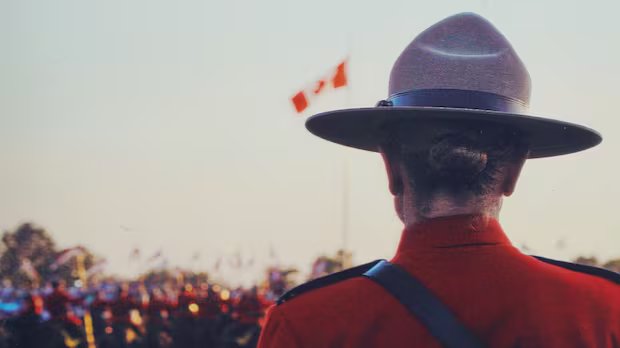
WARNING: This article describes allegations of sexual assault.
One thousand RCMP employees, past and present, allege that as new recruits applying for jobs they were subjected to “improper and invasive” breast, genital and rectal exams during mandatory medical screening, CBC News has learned.
Class-action lawyers say 1,000 RCMP recruits and employees have come forward complaining about doctors performing “inappropriate and unnecessary” exams “many of which arose to the level of sexual assault, assault or battery.”
Megan McPhee, the plaintiff’s lead lawyer, says the lawsuit, launched in 2019 and certified in 2021, originally focused on allegations of sexual assault by two RCMP doctors.
But after the story made headlines, hundreds of men and women levelled complaints about 26 doctors hired by the RCMP.
During court proceedings, the RCMP has also had to produce an internal form they gave doctors mandating a checklist exam for all candidates as a final step before they were hired.
“Many of us were surprised by some of the things on the form,” McPhee told CBC News. “Squeezing an applicant’s breasts to see if there’s discharge. Looking at genitourinary systems. Checking for a male to see if they’re circumcised.”
“It doesn’t screen for occupational health,” she said. “I have an incredibly hard time imagining … whether a male is circumcised or not has any application to the ability to perform the role as a police officer.”

The case is headed to Federal Court in Toronto on Jan. 19, where McPhee will ask for compensation and a summary judgement to settle the multi-million dollar case without a full trial.
The RCMP declined CBC’s request for an interview, but in its court filings, it has denied claims of “systemic negligence.”
In an additional statement to CBC News, the RCMP expressed concern for anyone who felt victimized and said it was opposing the motion “not because the allegations are trivial, but because the legal and factual issues in this matter require a full trial.”
“The RCMP does not minimize the seriousness of the allegations involving former physicians,” wrote media relations officer Camille Boily-Lavoie.
‘He was not conducting a medical exam’
The class action was launched in 2019 after a number of women came forward alleging sexual assault and impropriety by two doctors — one in Toronto and another in Halifax. CBC is not naming them as neither has been charged criminally.
Sylvie Corriveau, the representative plaintiff in the civil suit, says her assault happened in 1989 when she was 27 and had just moved from northern Ontario to Toronto to apply to become an RCMP civilian 911 dispatcher. The final step was a medical exam. She says she was terrified as the doctor began massaging her legs and conducted a vaginal and rectal exam.
“He was rubbing, he was massaging. He was not conducting a medical exam,” Corriveau recounted recently in an interview with CBC News. “He had me spread my legs, and at this point he doesn’t have any gloves on. He didn’t wash his hands.”
Corriveau says it was completely inappropriate and believes the physician was acting for his own sexual gratification.

Sylvie Corriveau, the representative plaintiff in a civil suit against RCMP doctors, says her assault happened in 1989 when she was 27 and says she was terrified as the doctor began massaging her legs and conducted a vaginal and rectal exam.
“He keeps telling me that he’s got the last say, so I have to just go along with this, so I was just going through the motions. But the minute I got away from that office, I couldn’t believe what I had been put through.”
Corriveau and other women complained at the time to the RCMP, to Toronto police and to the College of Physicians and Surgeons of Ontario , each of which investigated, but ultimately laid no charges.
Corriveau retired in 2020 after 36 years on the force. To this day she is dumbfounded as to why the Mounties even required such an invasive exam in the first place.
“Was it necessary for the job that I was going to be doing as a 911 operator? Absolutely not,” Corriveau said.
RCMP liable for ‘systemic negligance,’ lawyer says
McPhee, her lawyer, argues the RCMP is liable for “systemic negligence.”
She claims the force ignored numerous complaints about the exams and disregarded recommendations for better supervision and the suggestion that if gynecological exams were needed at all, they should be carried out by specialists.

“All of these things really combined to place applicants to the RCMP in a very vulnerable and very dangerous position,” McPhee said. “Really it’s a lack of oversight. It’s a lack of policies. It’s a lack of procedures. It’s the lack of safeguards.”
Among the court documents is a 2018 review of the force’s medical examination policies conducted by Dr. Josée Pilon of the RCMP’s Occupational Health and Safety Branch. It concludes the medical examinations done on recruits between the 1980’s and early 2000’s “were done pursuant to policy and standard of care applicable at the time.”
But the same review notes that the mandatory inspection of genitals, breasts and rectums was ultimately dropped as a requirement in 2006.
The RCMP said in its statement to CBC that “as medical standards evolved, the RCMP adapted its practices, including expanding eligibility to women, strengthening privacy and administrative safeguards, and, between 2006 and 2018, reducing or making optional certain sensitive examinations in line with modern occupational health expectations.”
The RCMP also stressed that many employees didn’t have provincial health coverage prior to 2013, so RCMP doctors conducted these medical exams as part of general health care — not just for the purpose of screening new recruits.

Prostate exams for men and women
Many complainants are men who were subjected to prostate exams as part of their job screening. But some women report having had rectal exams, too.
One serving RCMP member, who CBC is not identifying because he fears he will face repercussions at his job, says that when he applied to the force in his early 20s, he was given a prostate exam with no explanation of why or how it was connected to his work.
“I’m sort of baffled as to why the procedure was done, whether I kind of feel like I was a bit of a lab rat for lack of a better phrase,” he told CBC News.
He was angry to learn from other colleagues that not all new recruits were subjected to the same invasive procedure.
He is upset that he hasn’t gotten an answer from the RCMP about what medical purpose the prostate exam served.
In 2020, a retired Supreme Court Judge recommended that Canada compensate recruits who were mistreated by RCMP doctors.
Michel Bastarache, in his final report administering a different class action on behalf of female employees of the RCMP, noted that many women came forward but couldn’t receive compensation because the alleged abuse occurred before they were officially hired.
“The stories that I was told about the sexual abuse that female applicants suffered at the hands of RCMP doctors were shocking,” Bastarache wrote.
“What was worse, was that it appears that the behaviour of these doctors was known to others in the RCMP,” he wrote.
“In my view, it is unjust to compensate some of the victims and not all of them. I therefore recommend that steps be taken by Canada to compensate those who were not eligible under this process.”