dailynewsnblog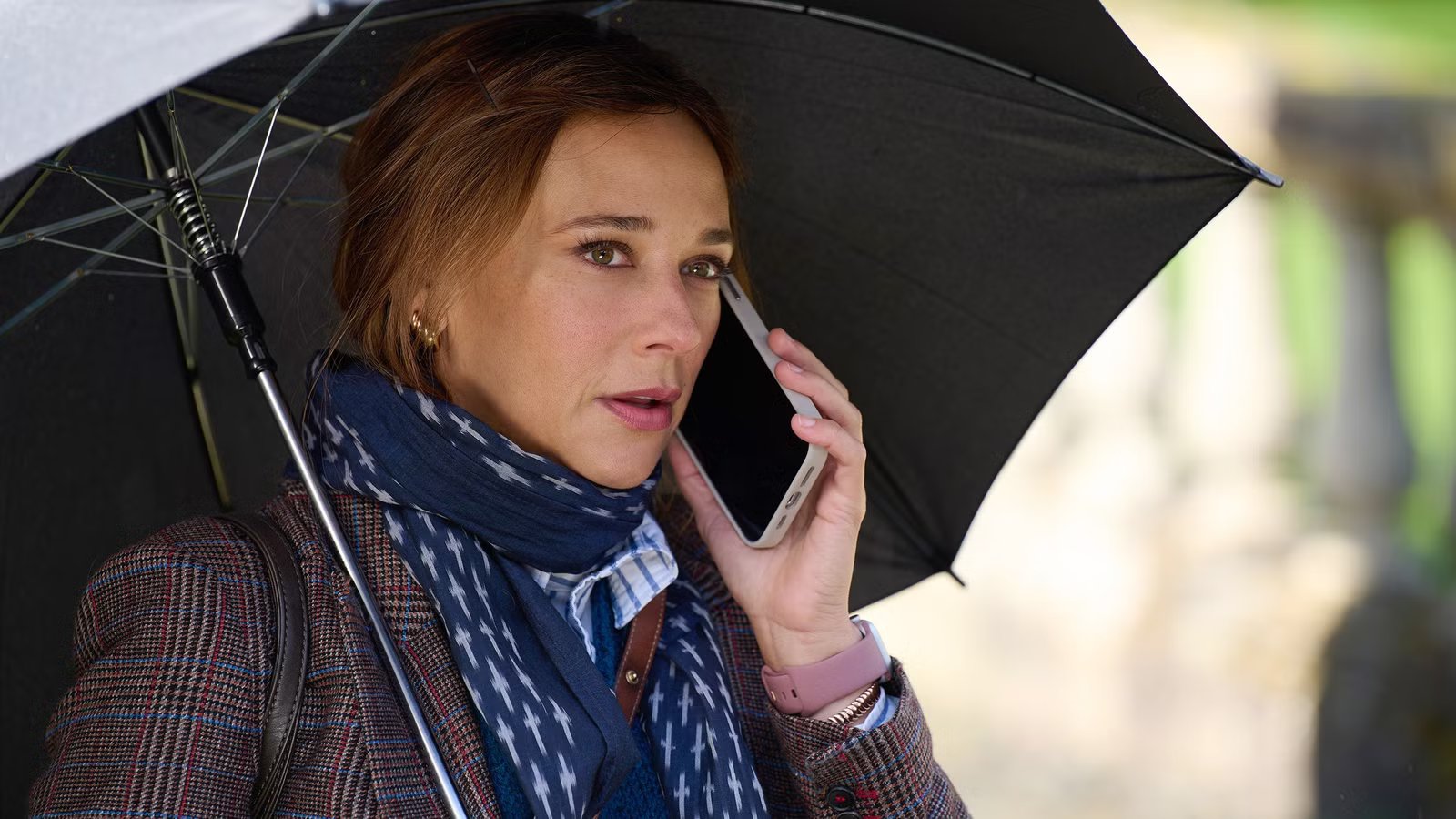
In the Blink of an Eye, the new straight-to-Hulu science fiction epic from Finding Nemo and WALL-E director Andrew Stanton, links three stories set millennia apart. In the first, in 45,000 BC, a family of Neanderthals weathers sickness, injury, and death. In the third, beginning in 2417, a lone astronaut (Kate McKinnon) and her AI companion try to salvage a mission to reseed humanity on a new planet. The middle story links both those stories in a surprisingly mundane way: Post-grad students Claire (Parks and Recreation’s Rashida Jones) and Greg (Hamilton’s Daveed Diggs) begin a fumbling relationship as Claire’s mother is dying of cancer.
But while that middle storyline is the most familiar and down-to-earth of the movie’s three threads, it’s still ambitious. Stanton and screenwriter Colby Day track Claire and Greg from what seems to be their first awkward drunken hookup through decades of life achievements, discoveries, and breakthroughs — and eventually, through death, which Jones considered a particular challenge to play out.
“Dying, but leaving a satisfying life behind? You don’t get to see that too often on film,” Jones tells Polygon. “It was an interesting rehearsal practice to try that on.”
Diggs, for his part, says the biggest challenge was playing Greg starting somewhere around his late 20s. Diggs is 44 years old.
“In this business, you’re always trying to pretend you’re a little younger than you are, for some reason,” he says. “Just a thing I never understand. But having a story that starts a little bit younger than you are, and then continuing through your whole life, was really interesting. It made me think about what it means to be younger, as opposed to just continuing to paint the gray out of my beard.”
The best writing advice: move the mountain

The actors both say working with Stanton on the movie was a heavily collaborative experience. “There was a lot of room for exploration, and we did a lot of collective mining of what was important in the scene, and how to go about that,” Diggs says. “He’s great. Putting the pieces together on something like this is really, really difficult — it’s a really big swing of a movie.”
Diggs says Stanton’s patience with development surprised him, “because of how rigid and difficult animation is.” But Jones pushed back against his perception of working in animation. As a screenwriter herself, she famously worked with Pixar on Toy Story 4, then left the project, citing a sexist, racist culture at the studio. She says that experience gave her a different perspective.
“I would actually say the opposite — having worked a little bit in animation with Andrew at Pixar at the beginning stages, it is not rigid,” Jones says. “You’re throwing out entire scripts every three weeks, and starting over with entirely new stories. In that way, [Stanton is] really flexible. His brain is extremely flexible.”
In particular, Jones says Stanton helped her own writing work.
“Andrew’s given me one of the best pieces of advice I’ve ever gotten as a writer,” she says. “Which is, you’re trying to figure out the path around the mountain: You’re going to go up it, around it, down it, whatever. Move the mountain! Just move the mountain! I think about that every time I’m writing and trying to problem-solve: Sometimes you just have to restructure. You have to let something go. He’s so flexible, and so collaborative.”
Who wants to live forever?

Jones and Diggs’ storyline includes one particularly significant plot point that goes on to affect the 2417 story: During their characters’ lifetimes, a scientist invents a treatment called Elixir that extends human longevity, allowing people to remain young and healthy for hundreds of years. The movie only touches on the impact of that invention in the lightest terms, but it still raises philosophical questions. Would Jones or Diggs want to take Elixir and live to be 300?
“They asked us that on stage at the Sundance screening, and it was an immediate no for me at the time,” Diggs says. “I think it’s still no — but I would extend my life by 20 years, or 10. I don’t want to live forever, that’s definitely true.”
“I want to be healthy and old, so if I could be healthy and old until 110, I would take 110,” Jones says. “I was kind of an old mom. I would love to be with my kid that long and see what his life is like. But I wonder what the implications of saying yes to something like that are. […] It feels like there will be a price to pay. That’s how I see everything. Something would go wrong, and then I’d feel not good about it.”
She says that in a version of Earth where people live for centuries, she’d be worried about class disparity — who would be able to afford Elixir and who wouldn’t — and the ethics of the people who would agree to take the treatment, versus the people who wouldn’t.
“It’s a resource issue, too,” Jones says. “The longer you’re alive — that means the resources for you are not going to younger people. So I don’t know. I mean, listen. We live so much longer than we did before. If you asked people [in the past] ‘Would you live to 85 if you could?’ They’d be like, ‘Yeah, I would not want to die at 40, thank you!’ So I don’t know. Yeah, it’s weird.”
In the Blink of an Eye is streaming on Hulu now.