dailynewsnblog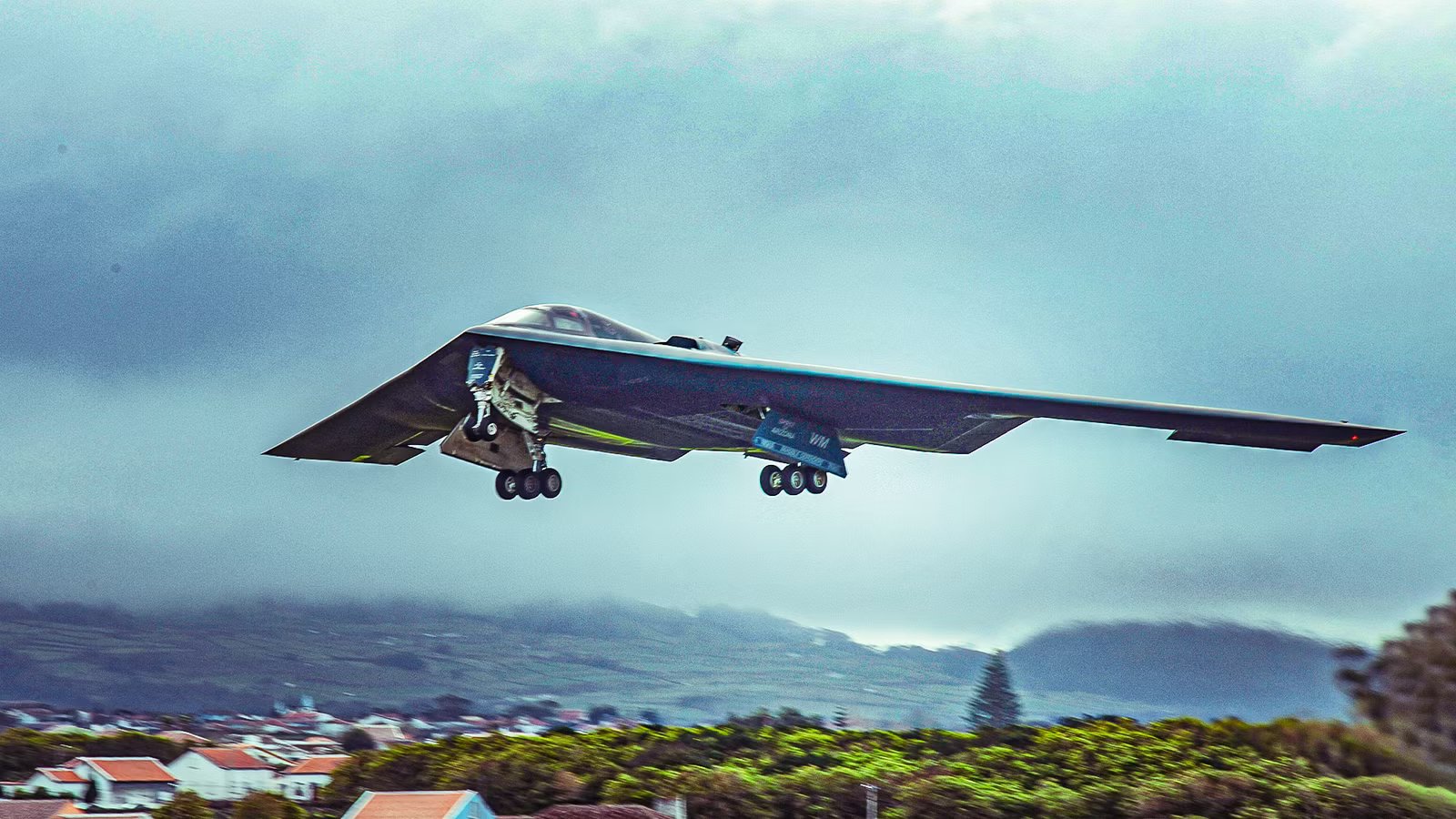
The Northrop Grumman B-2 Spirit was the first fifth-generation bomber to ever take flight, but it also represents the culmination of Jack Northrop’s ultimate dream of creating a true flying wing. The deceptively simple appearance of the aircraft hides the incredible complexity of its design and engineering. As a machine made to fight the most terrible and unthinkable conflicts, it was made from day one to empower its pilots to become virtually invulnerable on the battlefield.
Although it is theoretically possible to shoot down a B-2 under highly specific circumstances, the equipment in training in the flight deck makes it even more resilient than its already incredible stealth design does alone. Aircrew use real-time threat imagery of enemy radar coverage to chart a course where adversaries are least likely to obtain a target solution, or ‘weapons-quality’ track. They fly in electronic silence like a ghost gliding through the sky, relying on a passive data link to employ highly refined tactics to accomplish their mission.
Engineering A Ghost: Radar Absorbent Material

The B-2’s primary radar evading design feature is its flying wing shaping and RAM coating. The unique silhouette removes vertical stabilizers and leaves only the continuous curvature of the fuselage. The B-2’s leading and trailing edges are also at identical angles to further disperse the weakened signals that are not absorbed by the RAM. This shape focuses all radar reflections into a few very small ‘spikes’ of energy while the RAM converts much of the signal energy into heat.
The B-2 bomber’s RAM coating is made of Carbonyl Iron Powder that absorbs radar energy. When radar waves impact the surface, the coating converts the radar energy into thermal energy. The layered structure features a dielectric gradient designed to prevent radar reflection by making the outer layers reflectively similar to air while trapping incoming waves deeper, generating destructive interference.
|
Aircraft |
Generation |
Estimated RCS Area |
Visual Equivalent |
|---|---|---|---|
|
B-52 Stratofortress |
2nd Gen |
100 square meters |
A large building |
|
F-4 Phantom II |
3rd Gen |
10 square meters |
A large truck |
|
F-117 Nighthawk |
4th Gen |
0.003 square meters |
A small bird |
|
F-35 Lightning II |
5th Gen |
0.001 square meters |
A golf ball |
|
B-2 Spirit |
5th Gen |
0.0001 square meters |
A honeybee |
|
F-22 Raptor |
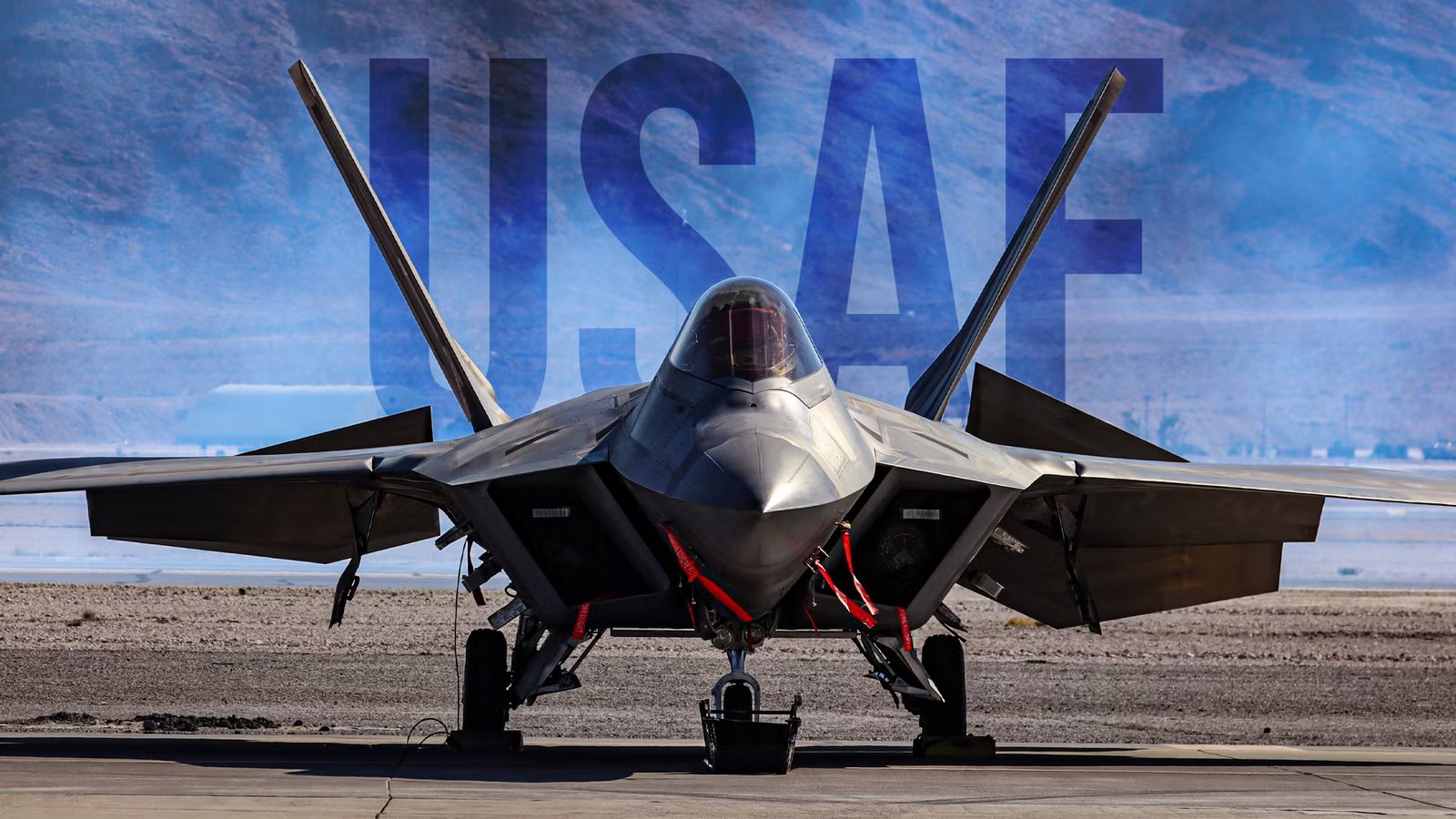
5th Gen |
0.0001 square meters |
A marble |
Even minimal gaps can lead to radar energy reflections. Conductive materials, referred to as ‘Butter,’ are combined with unique tape to eliminate gaps across the bomber’s panels, ensuring seamless surface continuity. Advanced techniques and equipment are used in maintenance procedures to apply RAM at a precise thickness for ideal performance.
Managing heat signatures is critical for a stealth jet, as all objects emit infrared energy that is detectable. The F118-GE-100 engines lack afterburners to avoid high-temperature exhaust and supersonic booms. Meanwhile, the upper-wing exhaust placement utilizes the wing itself as a shield against infrared detection from the ground. ‘V-Trough’ carbon tiles in the aft efficiently disperse exhaust heat, rapidly cooling the thermal plume to avoid detection by ground-based infrared systems.
Head-To-Head: The B-2 In Action

Consider a high-stakes engagement between the B-2 Spirit and a Russian S-400 Triumf. The outcome is determined as much by design and hardware as the pilot’s tactical mastery of the electromagnetic spectrum. While the S-400’s ‘Big Bird’ search radar is marketed as an advanced counter-stealth system, according to ODIN, the B-2 crew renders it effectively blind by exploiting the aircraft’s bird-sized radar cross-section. Pilots navigate the periphery of the radar’s sensitivity threshold, ensuring the airframe remains a transient flicker on enemy consoles, indistinguishable from background clutter or atmospheric interference.
The critical phase of the encounter starts with the handoff to the ‘Grave Stone’ fire control radar, as Radar Tutorial outlines. As the battery works to obtain a high-frequency tracking lock, the B-2 crew performs precision edge-alignment movements. By positioning the bomber’s geometry along the radar’s line of sight, pilots optimize the distribution of the radar return into the air. This tactical posture keeps the aircraft securely beyond the ‘burn-through’ zone, which is a 20- to 30-mile radius where radar strength might eventually overwhelm the airframe’s stealth qualities.
The pilot switches to an active defensive stance in the event that a surface-to-air missile is launched. The crew activates the electronic warfare suite after determining the precise frequency of the threat using the Defensive Management System. By capturing the radar pulses and rebroadcasting them with a deliberate delay, the pilots successfully hijack the enemy’s incoming signal. The interceptor’s guidance logic is forced to pursue a phantom coordinate that is miles from the aircraft’s actual position as a result of the enemy’s radar display being filled with numerous ghost targets.
In the end, a seasoned B-2 crew completely avoids terminal encounters. The pilots use standoff munitions to neutralize the threat well in advance of the battery’s effective engagement range. The Spirit can continue to operate as an invisible penetrator because the enemy’s sensors have already been destroyed by precision strikes by the time the B-2 reaches the theoretical detection zone.

How Many B-2 Spirit Bombers Are Left?
The US’ B-2 stealth bomber is an awesome warplane, but how many are there?
Last Line Of Defense: Tactical Evasion And Illusion

If a B-2 Spirit is detected, pilots transition from passive stealth to a multi-layered active defense strategy to break the enemy’s ‘kill chain’ and regain invisibility. Because the aircraft lacks defensive guns or air-to-air missiles, its survival depends entirely on electronic warfare and tactical maneuvering. By breaking the ‘lock’ of enemy fire-control radars and missiles, these devices enable the aircraft to accomplish its mission in contested areas.
Although stealth is the B-2’s main ‘jammer,’ it also has specialized systems for more active defense when needed, including decoy management and active countermeasures. For terminal defense against approaching missiles, the B-2 can spread specialized chaff to fool radar-guided seekers or flares for infrared seekers.
The AN/ZSR-62/63 modules are other critical, highly classified components of the B-2 Spirit’s electronic countermeasures (ECM) system that function as the ‘active’ side of the bomber’s stealth. The advanced suite of systems is believed to ‘capture’ an incoming enemy radar pulse, manipulate its data, and rebroadcast it in fractions of a second. By rebroadcasting altered signals, the suite can create ‘ghost’ targets or simply obscure the bomber’s real position, making it nearly impossible for an enemy to achieve a ‘weapons-quality’ track.

The Unique Jet Engines Powering The USAF B-2 Spirit
Much of the B-2 program is on a classified level, what we do know about the aircraft and the power plant driving this aircraft is truly remarkable.
The Invisible Flight Deck: Electronic Warfare In The B-2

While the aircraft’s shape is its passive shield, B-2 pilots employ specialized systems and tactical maneuvers to stay invisible. Aircrew can fly at extremely low altitudes to use hills and mountains to physically block radar radiation, a tactic known as terrain masking. The Flying Dorito, as the B-2 is jokingly nicknamed, almost always operates in ‘receive-only’ mode, utilizing data link to receive targeting information from other aircraft without turning on their own radar.
Pilots use the Defensive Management System which detects hostile radar emissions from hundreds of miles away. Via a system of high-sensitivity antennas hidden along the wing edges, the DMS shows the pilots a ‘danger image’ on the cockpit screens. This enables them to change their fly route in real time, weaving between the ‘holes’ or weak regions in radar coverage where the B-2’s narrow radar cross-section is most effective.
The electronic warfare suite of the B-2 Spirit is its ‘invisible shield,’ making the aircraft actively dangerous to track rather than just difficult to see. Meanwhile, active scanning radar uses ‘frequency hopping’ and ‘spread spectrum’ technology. It spreads its signal across a wide band of frequencies in a seemingly random pattern, making the signal indistinguishable from background cosmic radiation to enemy sensors.

The Last USAF Bomber Without A Stealth Profile
This aging bomber continues to adapt, proving its resilience in a changing world.
The Most Exquisite Bomber

In the year 2026, the B-2 Spirit remains the premier stealth strike platform in military history. Its successor, the B-21 Raider from Northrop Grumman, is expected to debut very soon, but even then will continue to serve alongside its predecessor for years before the B-2 is finally retired. Despite the continuing advance of air defenses, the stealth technology of the B-2 is so complete that it remains virtually invulnerable to even the best counter-air anywhere in the world.
The B-2 Spirit remains one of the most sophisticated machines ever created. It is also notoriously the most expensive aircraft ever made, with its unit production price tag at a staggering $2 billion per frame. The price tag included research and development that led to breakthroughs in stealth technology, which have continued to keep the US decades ahead of its enemies in airpower technology.
|
Specification |
Northrop Grumman B-2 Spirit |
|---|---|
|
Wingspan |
172 feet (52.12 meters) |
|
Maximum takeoff weight |
336,500 pounds (152,634 kilograms) |
|
Payload |
40,000 pounds (18,144 kilograms) |
|
Speed |
High subsonic |
|
Ceiling |
50,000 feet (15,240 meters) |
|
Thrust |
17,300 pounds (7,847 kilograms) each engine |
|
Powerplant |
Four General Electric F118-GE-100 engines |
That advantage is not due to a single ‘cloaking technology,’ but rather to a clever integration of shape, materials, and electronic management designed to defeat the kill chain of Integrated Air Defense Systems. Engines are buried deep in S-shaped ducts to block radar from hitting highly reflective compressor blades. All weapons are carried in internal bays to prevent external hardpoints from creating radar ‘hotspots’.