dailynewsnblog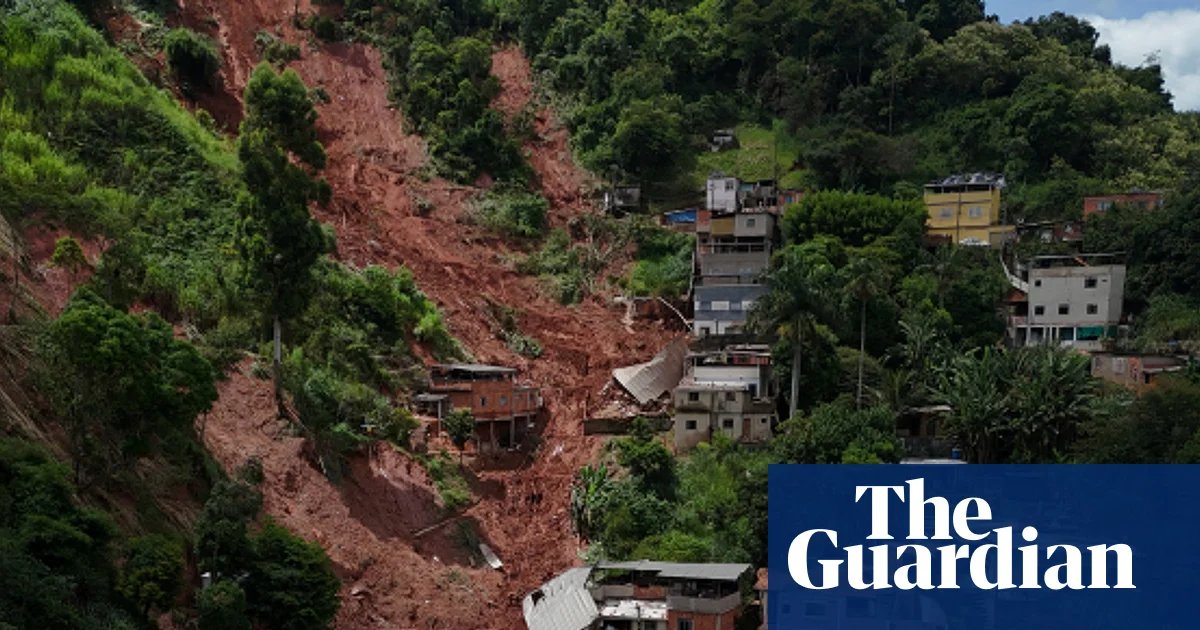
The record floods that have brought death and destruction to the heartland of Brazil’s coffee industry are expected to intensify if people continue to burn fossil fuels, analysis has shown.
Dozens of residents in the state of Minas Gerais have been buried alive in landslides or swept away as roads turned into rivers over the past month. Thousands more have been forced to evacuate their homes, while the wider, longer-term effects are likely to include higher prices for coffee across the world.
The city of Juiz de Fora was among the hardest hit, experiencing its wettest February on record, with more than 750mm of rainfall – three times the expected amount for that period and 65% more than the previous record of 456mm set in 1988, according to the latest study by the World Weather Attribution group.
The international team of scientists said a primary cause of the deaths was inequality and inadequate urban planning, which created landslide vulnerabilities for poor communities dwelling on steep, deforested and poorly drained hill slopes. Juiz de Fora is one of the 10 riskiest cities in Brazil in terms of the proportion of residents living in such danger zones.
The intensity of the downpour in the city was also exceptional, calculated by the experts as a one-in-several-hundred-year event. While the scientists were unable to determine a clear fingerprint of human-driven climate disruption in this instance, they found that downpours in the area would be expected to become 7% more severe if the planet reached 2.6C of heating above preindustrial levels, up from the current level of about 1.3C.
The authors of the paper said the priority should be to phase out planet-heating gases from oil, gas and coal use as rapidly as possible. “We must fight to ensure that record-shattering months, like the one Juiz de Fora just endured, don’t become the norm. The science shows us that risk is growing – we now need the urgent action that it justifies,” said Friederike Otto, professor of climate science at Imperial College London.
“It is vital that we fight to prevent every fraction of a degree of additional warming. Each year that we delay acting with the urgency required loads the dice further in favour of more weather extremes that will take lives and destroy livelihoods.”
They also urged the authorities to build shelters, improve early-warning systems and strengthen urban planning, particularly in the most threatened, low-income communities. “The scale of this tragedy is immense and it highlights just how vulnerable our hillside communities can be as the planet continues to heat. Looking to the future, there are clear implications for Brazil’s leaders to ensure people aren’t living in harm’s way as we see more of these events unfold,” observed Regina R Rodrigues, a professor at the Federal University of Santa Catarina, Florianópolis.
The economic impact may prove hardest to alleviate – with inflation impacts felt around the world. The latest rapid analysis, which is not yet peer-reviewed, notes that Minas Gerais is a leading producer of arabica coffee beans, the price of which has soared in recent years because extreme weather has reduced harvests by 15-20%. It had been hoped that output could return to normal this year, but the wetter-than-usual conditions over the past month have reportedly worsened the spread of diseases in arabica plantations.
British climate experts, who were not involved with the latest study, said the results showed how the effects in Brazil of global heating are affecting the prices that shoppers pay at supermarket tills elsewhere in the world. Gareth Redmond-King, head of international programme at the Energy and Climate Intelligence Unit, a UK-based non-profit, said the cost of ground coffee in the UK had gone up by about a quarter over the last five years due to extreme weather effects on harvests in Brazil (the No 1 supplier) and Vietnam.
“Not only do worsening climate change impacts threaten lives and livelihoods in Brazil, but they are actively adding costs to the day-to-day prices we pay in the supermarket here at home, from fruit and veg to feed for livestock which we farm in the UK,” he said. “We know that net zero emissions is the only solution we have to limit these worsening threats and tackle the risks which expert after expert is warning that climate change poses to our food security.”