dailynewsnblog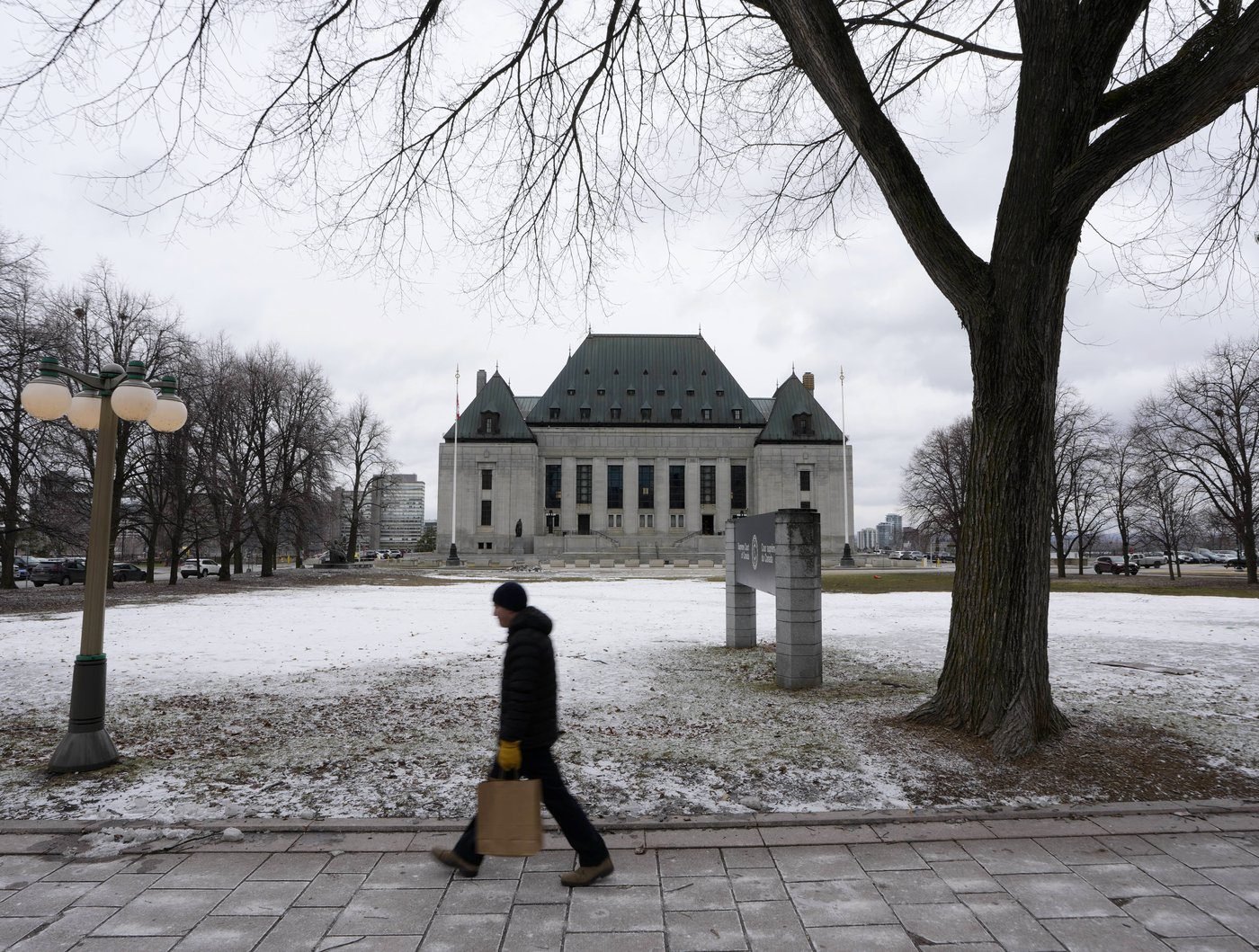
MONTREAL — A legal challenge to Quebec’s secularism law, known as Bill 21, will be heard at the Supreme Court of Canada beginning Monday, and legal experts say whatever the eventual ruling, it will have a profound effect on constitutional law in Canada.
The highly anticipated high court challenge to Bill 21 has been years in the making, but legal debate is likely to focus primarily on Section 33 of the Canadian Charter of Rights and Freedoms, the provision known as the “notwithstanding clause,” which shields legislation from most court challenges over violations of fundamental rights.
François Legault’s Coalition Avenir Québec government pre-emptively invoked the provision into the law passed in June 2019.
The Quebec law, known as Act respecting the laicity of the state, sets out the principles of secularism in the province. Among its most controversial measures is the prohibition of civil servants who are considered in positions of power — such as police officers, teachers and judges — from wearing religious symbols at work.
“What lies at the heart of the challenge before the Supreme Court is far less the act on state secularism than the criteria for suspending the application of human rights and freedoms,” said Louis-Philippe Lampron, a professor at the Université Laval’s School of Law.
“That’s why the upcoming Supreme Court decision will be a true earthquake in constitutional law, no matter which way the Supreme Court rules.”
Patrick Taillon, a fellow professor at Université Laval in constitutional law, concurs that the notwithstanding clause will be the focus, but said he doesn’t believe it will put an end to the debate over Bill 21.
“We must not completely overlook the fact that there are other arguments, but it seems that the further the case progresses, the more the heart of the matter is this debate, at its core: those challenging the law are asking the Supreme Court to overturn the interpretation of (Section) 33 that it established in 1988 in the Ford decision,” Taillon said.
The Ford decision allowed the legislature to use Section 33 to suspend certain rights without having to justify its actions. Challenges to Bill 21 heard by courts in Quebec have adhered to this rule set by the highest court, though not without criticizing the way Quebec has used it.
Superior Court Judge Marc-André Blanchard wrote in his April 21, 2021, decision that “the legislature’s use of the derogation clauses appears excessive, because it is too broad, although legally unchallengeable under current law.”
His ruling largely dismissed the Bill 21 challenge, with a few exceptions. The Court of Appeal arrived at the same conclusions as the lower court but overturned exemptions for English school boards granted by Blanchard.
On appeal, the decision by the three-judge panel rendered on Feb. 20, 2024, also recognized this unassailability under the Ford decision, but added that the fact “that a legislature may exempt a law from the application of certain provisions of the Canadian Charter or the Quebec Charter and thereby remove it from judicial review in this regard (…) is likely to give rise to reflection, if not discomfort.”
The Quebec high court warned that using the clause in this manner could weaken rights, allowing for governments to sidestep protections and create a risk of majority-driven abuses.
There is only one limit to the clause — that is that it must be renewed every five years, a time frame that is not arbitrary given the four-year government mandate. The Quebec appellate court ruling noted the electorate does hold the power to oust a government over the provision.
However, Lampron notes, the ballot box also has its limits. “Minority groups, precisely because they are minorities, cannot simply be told: ‘If you disagree with the provision affecting your rights, well, you’ll just have to defeat the government that infringed upon your rights in the next election.’ They are minorities, after all,” he said.
The Quebec government has already renewed Bill 21 once in May 2024 for another five years. The next Quebec election will be held this October.
The Supreme Court also cannot rewrite the Constitution, Taillon said, but it can establish its limits.
“We cannot outsource this to the Supreme Court,” Taillon said. “But others will tell you that the courts, implicitly, through their interpretation, supplement it, but that is a matter of degree,” Taillon said.
“Moreover, when we already have a Supreme Court decision — the Ford ruling — that clearly defined the meaning of Section 33, and we’re asking the court to add conditions not provided for in the text and to overturn the 1988 decision, that’s a tall order.”
The highest court has several options.
It could simply uphold the Ford decision, giving Quebec a final legal victory.
Alternatively, Lampron said it could decide that nothing in Section 33 permits the use of the notwithstanding clause in a preventive manner. The case could be referred back to Quebec Superior Court to be heard on the merits — or lack thereof — of banning the wearing of religious symbols.
This time, the Quebec government would have to justify this infringement of rights under Section 1 of the Canadian Charter, which states that the rights and freedoms “is subject only to such reasonable limits prescribed by law as can be demonstrably justified in a free and democratic society.”
If it were to lose, the Quebec government could invoke the notwithstanding clause once the legal process has played out.
The high court could also take a page from the Saskatchewan Court of Appeal, which in a decision last August suggested the court had the right to rule on constitutionality of a law, even if its opinion had no effect. The decision involved Saskatchewan’s use the notwithstanding clause to require schools to obtain parental consent to use an alternative first name reflecting a new gender identity.
“Nothing in the remaining text or structure of the Charter, or the Constitution more generally, suggests that the idea of a legislative last word should be equated with a legislature having the only word on the issue of whether legislation limits Charter rights,” wrote Chief Justice Robert Leurer of the Saskatchewan Court of Appeal.
Taillon said that type of ruling from the high court is a possibility.
The Supreme Court has asked all parties to provide arguments based on Section 1 and to explain why the limits would or would not be “reasonable.” Quebec has, however, refused to do so, relying on the Ford decision, which does not require it to provide any justification.
This report from The Canadian Press was first published on March 22, 2026.
— with files from Sidhartha Banerjee in Montreal.
Pierre Saint-Arnaud, The Canadian Press