dailynewsnblog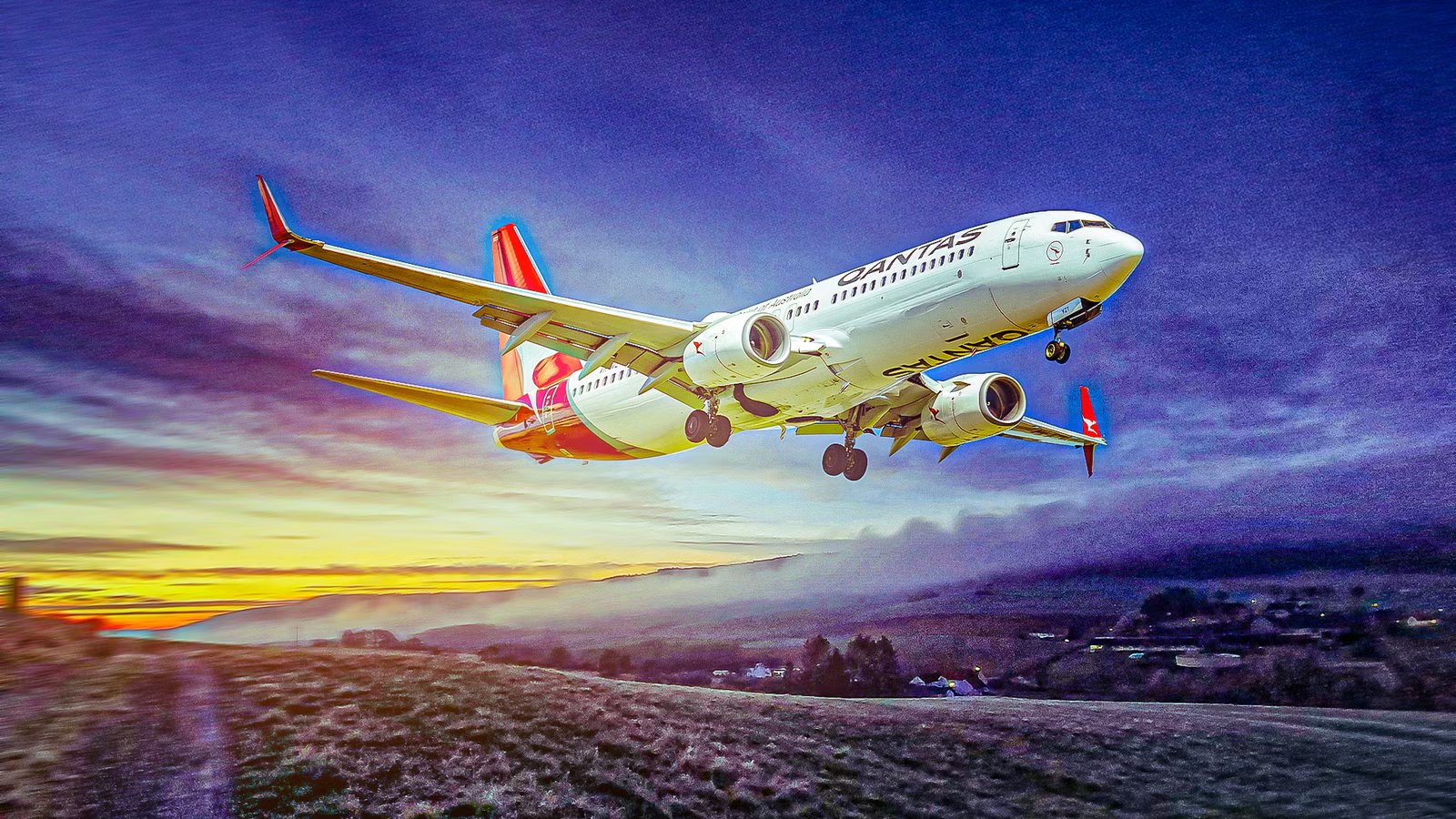
A Qantas Boeing 737-800 aircraft departed from Canberra using take-off performance numbers based on an incorrect loadsheet after the aircraft diverted from Perth to Sydney. An input error in Qantas’ departure control systems ultimately resulted in 51 passengers being listed as not onboard, which produced a calculated weight that was approximately 9,460 lbs (4,291 kg) below the aircraft’s actual weight, and take-off speeds were also slightly lower than expected.
Attempts to warn the flight crew were made before this departure, but they ultimately failed. The crew later learned of this discrepancy after takeoff, and they coordinated with operations teams and placed the aircraft in a holding pattern until they were able to confirm the correct weights. The flight then continued and landed safely at Sydney Airport (SYD).
An Error Tracing Back To One Staff Mistake

This incident ultimately began when a staff member created the Canberra to Sydney additional stop and entered a configuration code for a Boeing 717 instead of the  Boeing 737, which ultimately prompted the system to mechanically offload 11 business-class passengers and more than a dozen economy passengers that were on standby, according to reports published by the Australian Transport Safety Bureau (ATSB).
Although the code was corrected, the system did not automatically reallocate those passengers, and the flight itself was later closed using this flawed data. Load control was then issued into a load sheet that showed 51 passengers as not onboard and resulted in the massive fuel under-read. Before pushback, load control was quickly identified as the problem, and teams on the ground attempted to reach the crew by phone and were unsuccessful. They were then reached out to by radio through movement control, but the message itself was not effectively delivered. The aircraft then departed, and the crew was alerted, and the correct figures were quickly verified in flight.
An Invisible Impact For Passengers

For passengers, the most direct impact was effectively invisible in the cabin but meaningful in overall risk terms. The aircraft was rotated using inappropriate take-off speeds that were originally calculated for a significantly lighter type of aircraft. The ATSB found the incorrect weight ultimately produced speeds that were a bit lower than necessary, ultimately increasing the risk of degraded performance and unanticipated handling during take-off.
From the perspective of a traveler, this came after an already-disruptive day. The service between Perth and Sydney was diverted to Canberra due to storms, and some customers left the flight there. Once airborne, the crew received an air traffic control message that load control had to be corrected, and that the aircraft was to quickly enter a holding pattern while accurate weights were confirmed.
Despite this actually resulting in a safe outcome, these are the kinds of incidents that can ultimately erode confidence, as passenger accountability is also a major security issue; knowing who is actually onboard matters more than where they sit. Ultimately, no injuries were reported, but the event underscores why headcounts and cross-checks are ultimately reassuring.

Delta Air Lines Boeing 737-800 Grounded After Wing Flap Partially Breaks Off Inflight
A Delta jetliner suffers a scary mechanical failure.
Reputational Risk Was Greater Than Operational Risk

For Australian flag carrier Qantas, the report is actually a case study in how a single operational slip can propagate across a number of systems like flight management, customer management, and load control. This is especially true during irregular operations like mass diversions. The ATSB ultimately concluded that airport staff attempted but ultimately failed to correct the passenger discrepancy in the system.
This ultimately led to the load control error and the need to quickly update the load sheet as concerns about data validity became very clear. Communication procedures then broke down before departure, ultimately leaving the crew unaware until after takeoff. Beyond just reputational risk, the event itself carries tangible costs, such as internal investigations, training refreshers, and process redesigns.
Qantas has amended its overall procedures in order to require a headcount when overall discrepancies are identified. It enables load control to contact flight crews directly when a loadsheet error is detected. This comes alongside local briefings on handovers and overall diversion handling. Passengers can expect closer scrutiny of load-control governance and accountability as weight-and-balance errors are treated seriously across the industry.