dailynewsnblog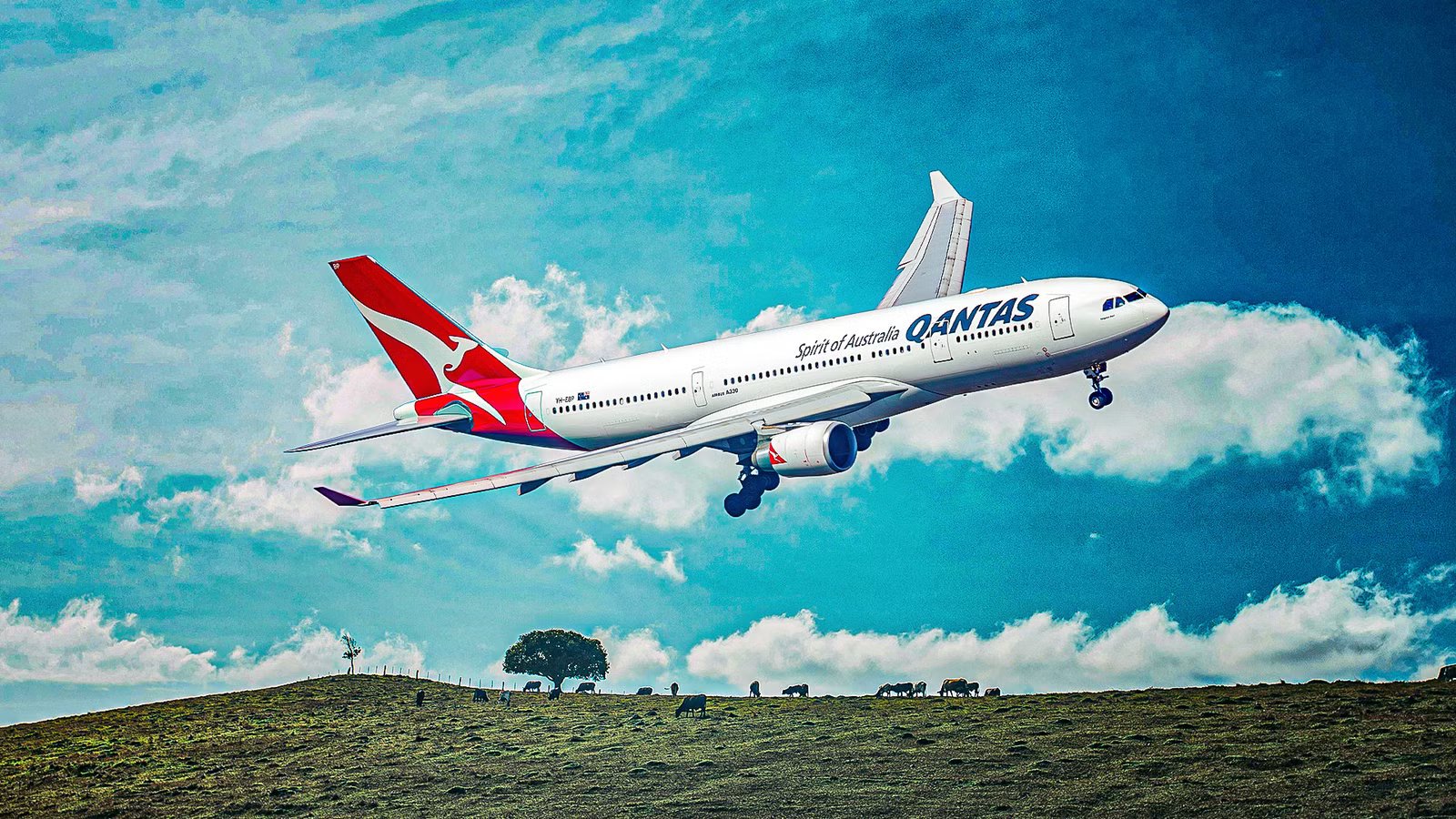
A Qantas flight between Singapore and Melbourne was forced to divert to South Australia after the aircraft reported it was experiencing pressurization problems. This saw 240 passengers stranded in Adelaide, before being placed onto replacement flights to Melbourne.
QF36 had been operating from  Singapore Changi Airport (SIN) to Melbourne Airport (MEL) on Wednesday, December 24, when the technical issue was located. Allegedly, passengers were only advised of the pressure concern and diversion some 30 minutes before the plane was due to land.
Circling Above Adelaide

The flight had departed from Singapore at 7:30 pm on Tuesday, December 23, and had been expected to arrive in the state of Victoria at 6:15 the next morning. Undoubtedly, carrying plenty of Australians home to spend Christmas with their friends and family.
The aircraft was forced to circle above the St. Vincent Gulf while considering its options before deciding to divert to Adelaide International Airport (ADL) in South Australia at approximately 5:00 am. It remains unclear if the ADL airport curfew, which restricts aircraft operations between 11:00 pm and 6:00 am, had any factor in this.
The aircraft arrived safely at Adelaide, andw as not classed as an emergency or priority landing. There have been no immediate reports of injury. Simple Flying reached out to Qantas for a statement; however, the airline did not immediately respond by the time this article was published.
Alternative Flights Booked

The 240 passengers onboard were subsequently disembarked from the airplane and put onto replacement flights to Melbourne. 7 News notes that many travelers had been making the pilgrimage from London to Melbourne to be on the sidelines of the Boxing Day Cricket Test.
Passengers have claimed to 7 News that the communication from the flight crew was light during the pressurization issue, with passengers claiming they were only told of the proposed diversion some 30 minutes before it occurred. However, the airline worked swiftly in getting affected passengers re-booked onto replacement services to Melbourne to ensure they arrived before Christmas.
The aircraft remained on the apron at Adelaide for more than 24 hours, before being ferried back to Melbourne on Thursday, December 25, under QF6004, operating at 10:05 am and landing in Melbourn eat 11:40 am. The airplane remains grounded in Melbourne and is not yet scheduled onto any more revenue flights at the time of writing, as per Flightradar24.

Emergency Forces Qantas Airbus A380 Flying To Singapore To Divert To Azerbaijan
The aircraft remains on the ground in Baku, and the onward flight to Singapore is scheduled for Tuesday morning.
23-Year-Old VH-EBA

The aircraft at the centre of the diversion is a Qantas Airways Airbus A330-200, according to data from ch-aviation the aircraft that has been flying for the red-tailed airline since 2002. The aircraft took its first test flight under French Airbus registration on October 11, 2002, and has been flying for Qantas under the nickname Cradle Mountain since its delivery on December 5, 2002, under Australian registration VH-EBA. The aircraft’s serial number is 508.
Jetstar Airways, the low-cost-carrier subsidiary of Qantas, operated this aircraft under its own branding between February 15, 2007, and September 2014, remaining under the same registration. The aircraft was stored temporarily for four months between March and August 2014.
|
Registration |
VH-EBA |
|---|---|
|
Serial Number |
508 |
|
Hex Code |
7C1464 |
|
Configuration |
28 Business, 243 Economy |
|
Nickname |
Cradle Mountain |
Returning to Qantas colours in September 2014, the airplane has since continued to operate medium and long-haul services for the airline, primarily on routes to and from Asia. Configured to carry up to 271 passengers, it seats 28 in business and 243 in economy. It is powered by two General Electric GE CF6-80E1A4 engines.
Qantas has 16 Airbus A330-200 active in its fleet, all configured to carry between 251 and 271 passengers. Ten of these planes are set to be retrofitted with new cabins from 2025; the planes’ days are numbered, with the Australian flag carrier poised to retire these aircraft gradually from 2027 with the Boeing 787-9 set to replace these.