dailynewsnblog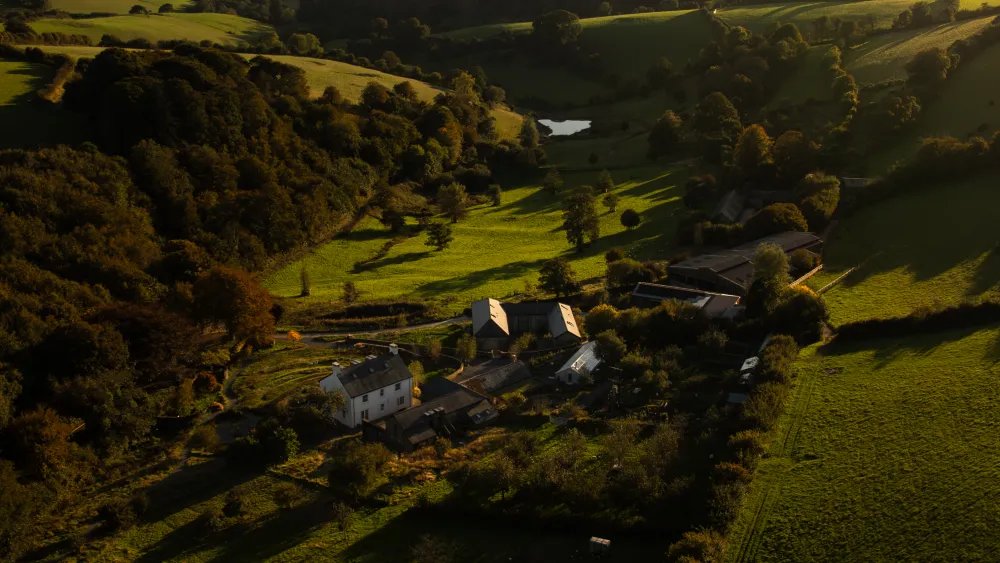
LONDON — Looking for somewhere to decompress after the last day of Paris Fashion Week?
Look no further than Fowlescombe Farm, a nascent boutique hospitality concept sitting within the valley of a 450-acre regenerative farm in Dartmoor, Devon, in southwest England.
A two-and-a-half-hour train ride from London Paddington, the location not only offers nature at the doorstep but also rooms and services crafted with a personal touch.
What’s even more appealing is that, unlike Soho Farmhouse or Estelle Manor, chances of running into any fashion people who you have been seeing for a month are low, for now at least.

Tall Barn suite at Fowlescombe Farm.
Courtesy of Fowlescombe Farm
The property comes with 10 types of cozy and minimalist suites, nestled within restored stone barns and a Victorian farmhouse.
Fowlescombe is also equipped with the Refectory, a communal kitchen and farm-to-table dining concept led by chef Elly Wentworth, serving dishes made mostly with seasonal produce grown on the farm.
While there is no gym at Fowlescombe Farm, guests can join the run club, jogging up and down hills in the morning, join a yoga class in the greenhouse, or take a wild (and chilly) swim on the beach on Fridays.

Yoga class in the greenhouse at Fowlescombe Farm.
Courtesy
One can call Fowlescombe Farm the one-level-above B&B experience that caters to those who are well-informed and well-traveled, yet are seeking a genuine and refreshing point of view.
Fowlescombe’s blend of regenerative farming, modern hospitality and Devon-focused narrative is a reflection of its owner and managing director, Caitlin Owens, and her husband, Paul Glade, who designed the suites alongside Swiss architects Studio Gugger.
Owens’ family, previously in the green fuels industry, took over the farm in 2019 and initially envisioned Fowlescombe as a rural co-working concept. But the COVID-19 pandemic changed its trajectory.
“I was working at Deloitte as a management consultant at the time in London. Nobody in the family has ever done anything in hospitality. I came home with my partner and stayed on the farm during the pandemic, and we were just absolutely blown away by how beautiful it was. I knew at the end of lockdown that it was going to be a hotel, because I could just see an idea that would be so engaging,” recalled Owens, who quit her job at Deloitte by the end of 2020 and moved to Switzerland with Glade.

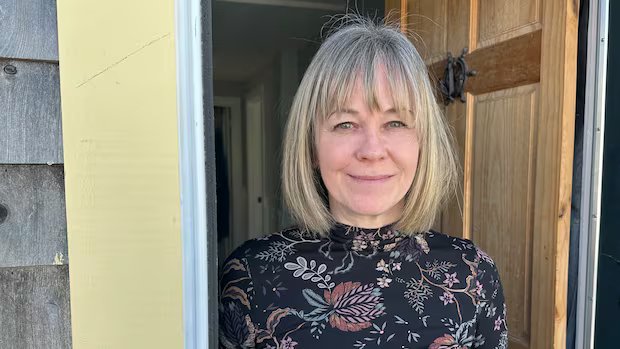
Fowlescombe Farm’s owner and managing director Caitlin Owens.
Courtesy
Instead of applying for a hospitality management course, she worked for a year at Relais & Châteaux’s Hotel Schönegg in Zermatt, in the Swiss Alps, gaining firsthand experience. Owens later returned to London and joined the management trainee program at the Four Seasons on Park Lane.
“It was fantastic training, because it showed me how the best of the best do things, but it also showed me how I don’t want to do things. The way Four Seasons works is all about standard operating procedures. Fundamentally, in Four Seasons, if you want a burger at 4 in the morning, you’re going to get it, and you’re going to get it quickly. It’s going to be a really high standard, and the person delivering it’s going to be smiling,” she said.
Fowlescombe, she said, is not competing in that space. “Everything’s quite pared back here. You don’t have a huge amount of choice, but everything that you have is beautifully chosen and very high-quality,” Owens added.
She also encouraged the staff to be themselves, rather than scripted.
“We only have 20 members of staff, and everybody here has been chosen because they’re basically naturally hospitable. Also, apart from two people, they’re all from the area. They want to show it off. They want to make it their home, and they want to welcome guests to it,” said Owens.

Produce grown on Fowlescombe Farm.
MATTHEW HAGUE
On a strategic level, Owens said Fowlescombe was born out of the observation that her generation, as they grow into family wealth, is unlikely to spend that wealth in the big global resorts that their parents used to go to.
“I would never book one now, because people are looking for something a bit more authentic, a bit more individual, and a bit more unique,” she said, adding that Fowlescombe is meant to feel like a high-end chalet that’s not built around guests as the only center of meaning.
Guests, according to Owens, are the primary beneficiaries of an existing, authentic community.
“Even if there were no guests, everybody here would be doing what they’re doing anyway, because they’ve got to produce the food and lay up the flowers in the greenhouse. When you come to Fowlescombe, you can come straight into the community. It’s supposed to feel a bit like if you were staying with a friend,” she added.

Orchard Studio at Fowlescombe Farm.
Taking care of guests with personalization and informality aside, Fowlescombe is also big on the concept of regenerative hospitality, meaning the property features no single-use plastics, a well-insulated building, and draws energy from sustainable sources such as solar and ground heating.
Regenerative hospitality, in a broader sense, also means taking good care of its staff and supporting Devon’s highly seasonal economy by buying from local businesses with shared values all year round.
Fowlescombe Farm opened its doors in May 2025, and it has seen strong repeat business in the following months, said Owens.
It attracts family visitors with children and pets, as well as design-conscious European guests who discover the property on curated sites like Holiday Architecture, a German platform spotlighting architecturally outstanding holiday homes, guest houses and hotels.

A flock of Manx Loaghtan sheep at Fowlescombe Farm.
Courtesy
In addition to the hotel, the farm hosts the world’s largest flock of Manx Loaghtan sheep, a protected breed, among other livestock animals, supplying high-end restaurants in London and beyond.
Owen said the ultimate goal in her lifetime is to replicate the Fowlescombe Farm concept in 20 locations around the world and widen the concept of hospitality based on food production.