dailynewsnblog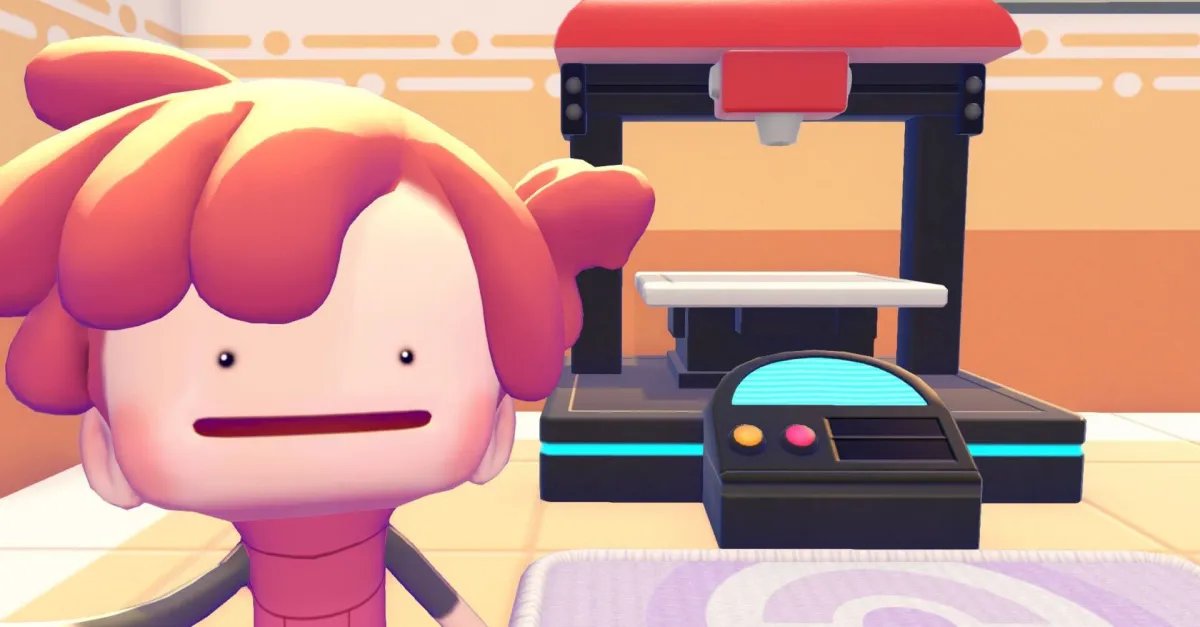
Pokémon Pokopia features, of all things, a 3D printer. I wasn’t sure why this surprised me so much, given all the other high-tech gear in pretty much every Pokémon game. But I was not expecting to find, inside the once-crumbling Pokémon Center I’d just worked hard to restore, a kind of machine I’d never seen before.
Until Pokopia, I hadn’t spent much time thinking about tech in the Pokémon world. I’ve been Pokémon-pilled for so long that I took all its sci-fi technology for granted. Sure, there are magic PCs that can digitally store living creatures — that’s how it’s always been. Obviously fossils can be resurrected and obviously sometimes pokémon can travel through time. These are just facts. The power of science is amazing.
Pokopia is different. In this world, humans are long gone, and pokémon are slowly repopulating the ruins left in their wake. Here, technology is not guaranteed to work. Climate change has led to widespread environmental disasters, and as a result, pokémon have been safely stored in PCs for some time. But a collectible journal entry reveals that the PC storage system can’t keep working without regular maintenance, and it seems that explains what’s been happening: The pokémon are showing up now because the storage system has finally failed. That fallibility made me pay closer attention to the technology in Pokopia — and see the high-tech world of Pokémon in a new light.

Image: The Pokémon Company, Nintendo
There is still a lot of sci-fi and fantasy in Pokopia, in more than a few ways. (Least among them: The PC outside the dilapidated Pokémon Center, which is not for storing pokémon but for tracking your restoration efforts in the surrounding area, still works somehow.) But ordinary, real-life objects you can find throughout the world — lamps, TVs, vending machines, arcade cabinets — often need electricity to work, and more of it than electric-type pokémon can reasonably provide on their own. That means building some significant power infrastructure; magical Pokémon technology can only get you so far.
You can’t take these kinds of devices for granted in Pokopia because using them takes real effort. As you work to rebuild the world, you have to create homes for pokémon to live in. Sometimes this just means growing a flowerbed, but in a lot of cases, you have to acquire “old” human technology and supply it with electricity in order to make a proper pokémon habitat. You might need to get power to a vending machine to fulfill a pokémon’s request, or power the lights in their house so they aren’t sitting sadly in the dark. To do this, you have to set up utility poles and enough power generators to supply all the electronics on your grid — and this takes time, resources, and planning.
What happened to the humans is best left unspoiled, but suffice it to say that it’s very much science fiction. In that way, some things about Pokopia feel like a distant, apocalyptic future, and then you turn around and build a regular ol’ windmill to generate electricity. The Pokémon-specific fantasy elements are there, too, but exist alongside run-of-the-mill and even largely outdated tech. There’s a new version of Rotom — the pokémon that can occupy appliances to change its form — who has possessed a stereo and is a DJ, but you have to find physical compact discs so DJ Rotom can play music for you.
The dichotomy between ordinary and futuristic tech makes Pokopia feel stuck out of time. How long has it been since the humans disappeared? How much time has passed since the events of the main series games? Why, in this world where you can put living beings into the computer, are we using CDs to play music?

Image: The Pokémon Company, Nintendo
Caught between the sci-fi tech and the game’s normal everyday devices is the 3D printer. It’s in its own category: not purely contemporary, not a far-off evolution of real-life technology, but something almost within reach. Take out your Pokédex’s camera, toggle the setting for reference photos, and take a picture of basically any object; now you can use that photo and some rare materials to 3D print a copy of it. It’s more advanced than in real life, but it doesn’t take much imagination to get there.
Pokémon gadgets have reflected real-life ones going back as far as the series does, but they’ve mainly been handhelds (and sometimes wearables) that fulfill menu functions and provide information. The original Pokédex is essentially a ’90s PDA with a pokémon database in it; Gold and Silver’s Pokégear is a sort of flip phone that can take calls and access the radio; Diamond and Pearl’s Pokétch is an early smartwatch with a ton of simple apps, including a calculator for some reason. The recent games’ Rotom phones, too, are pretty much just real-life smartphones, albeit possessed by a pokémon that can provide some unique features.
These are the kinds of devices I expect from Pokémon, alongside the matter-of-fact “this is possible because pokémon can do it” tech and the true speculative fiction stuff. I did not expect something quite as current, yet not as mainstream, as a 3D printer.
It’s possible that at some point in the past 30 years there has been a piece of Pokémon tech along these same lines. I know a lot about Pokémon, but I’m not an encyclopedia. While advanced tech has always been a part of Pokémon, it wasn’t until I discovered the 3D printer that I finally pieced it all together, and then everything about Pokopia’s tech clicked. In the rough timeline in my head, the 3D printer placed Pokopia quite a few years after CDs — maybe it wasn’t that humans had inexplicably advanced in everything except for music distribution, but that there were some technologies that did not survive the climate disaster. When there’s no internet left to stream music on, CDs become pretty important again.
High-tech PCs and 3D printing materials are precious commodities in Pokopia, but so are CDs and power lines. They’re all part of rebuilding the world, because the world of Pokémon has always relied on a mix of the everyday and the fantastical. I just didn’t realize it until that world had been taken down to the studs and shown me something I hadn’t seen before.