dailynewsnblog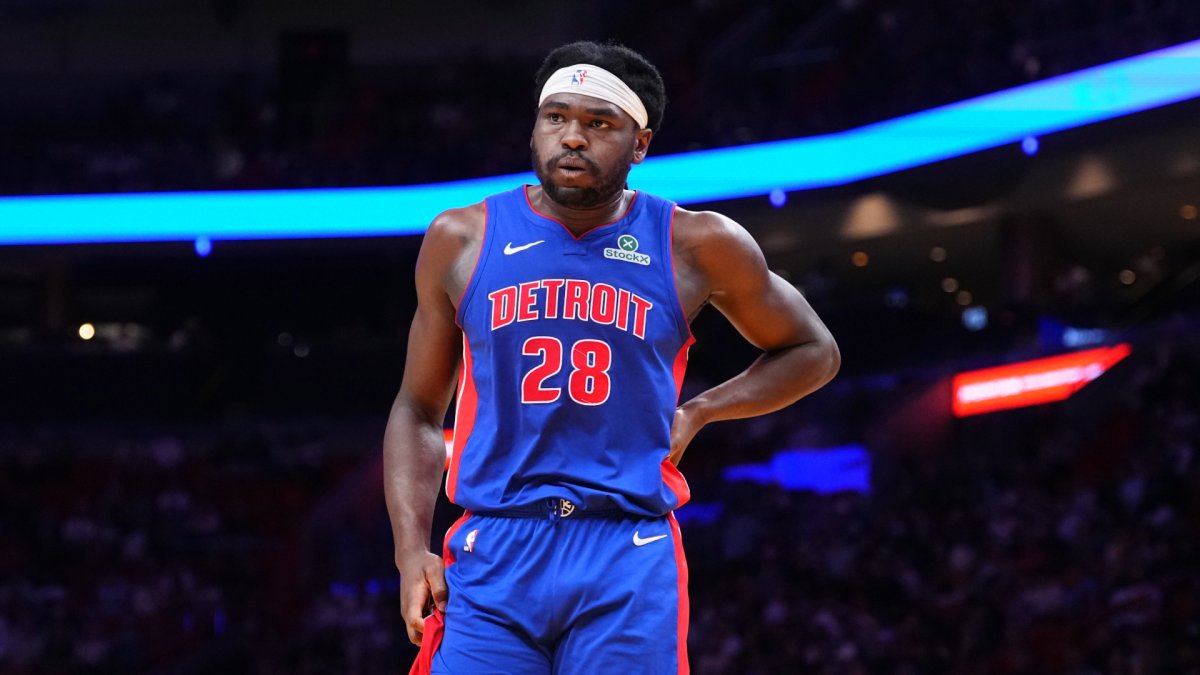
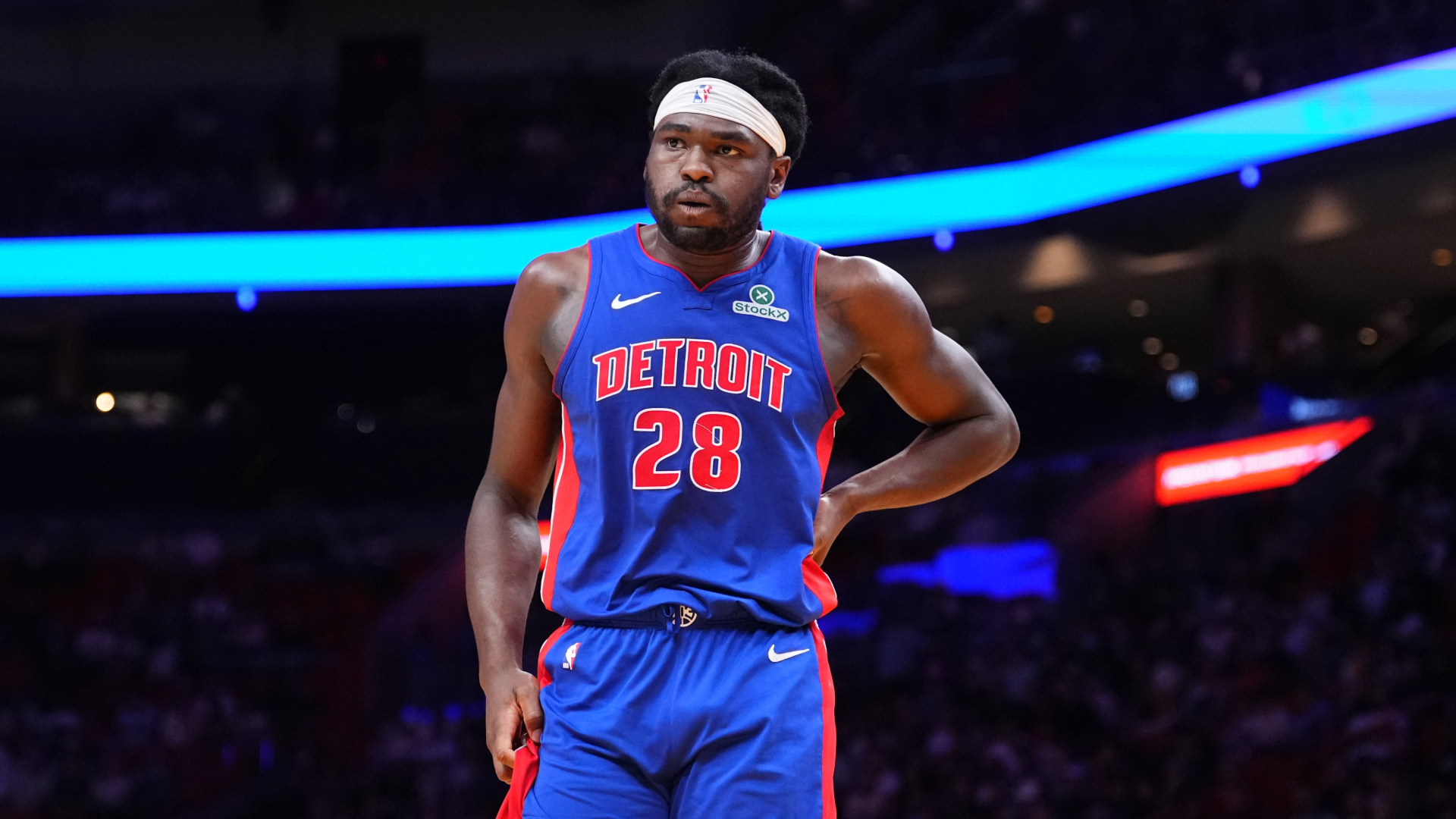
Detroit Pistons center Isaiah Stewart is happy to tell you why he deserves to win the Defensive Player of the Year award and be named to the All-Defensive Team. On several occasions since this time last season, he has publicly said he’s the best defender in the NBA. After shootaround at Barclays Center on Tuesday, he said it again.
“I say that because this is my second year in a row leading the league in defensive field goal percentage,” Stewart said. “Obviously I may not get the block every time, but you’re talking 42% at the rim versus guys that are averaging a lot more blocks, but you look at their percentage at the rim and it’s like 50–55% or high 40s. So I just feel like I’m the best.”
Indeed, opponents have shot just 42.7% at the rim against the 6-foot-8 Stewart, the lowest mark in the league by a significant margin, per the NBA’s tracking data. But his case is not just numbers-driven. When he sees an opponent decide not to attack him at the rim, he’s just as satisfied as when he forces a miss. “I’m not 7-foot, I’m not 7-2, I’m not 7-3,” Stewart said. “The fact that I am who I am and they see me at the rim and they defer, I think it’s a respect thing.” The Pistons have the second-best defense in the league (108.9 points per 100 possession) and the best record in the East (45-18). Stewart’s rim protection, toughness and mobility have a lot to do with it.
“I’m the best defensive player because you can put me in any defensive scheme and I’m able to anchor the defense,” Stewart said. “Whether that’s guarding perimeter, guarding the rim, guarding bigger guys. And not only that, I feel like my presence — not everybody’s driving in looking to score every time because of my presence and my timing on taking dunks out the air. I don’t see anybody around the league that’s an undersized center that’s able to time dunks, take dunks out the air. It does something for us. It builds momentum and it sends us heading in the right direction the other way.”
As confident as he is in his credentials, Stewart also knows he could receive zero votes for DPOY and All-Defense. Since the 2023-24 season, players have needed to play in at least 65 games in order to be eligible for these end-of-season awards; in this context, “playing” in a game means logging at least 20 minutes in it. (Each player also gets credit for a maximum of two games in which he plays at least 15 and fewer than 20 minutes.) For Stewart, who has appeared in 52 of the Pistons’ 63 games but logged fewer than 20 minutes in eight of them, this means he has no wiggle room. He must play at least 20 minutes in every one of the 19 games that remain on Detroit’s schedule to maintain awards eligibility. (For awards purposes, he has played in 46 games. Had he logged just one more second in their 122-117 win against the Indiana Pacers on Nov. 24, that number would be 47.)
“I’m not a big fan of the rule,” Stewart said. “I feel like it hurts guys. Last season, I didn’t qualify.”
In 2024-25, Stewart missed only 10 of Detroit’s 82 games and played an average of 19.9 minutes per game. He wasn’t even close to meeting the 65-game criteria, though, as he reached the 20-minute mark only 30 times.
“I was pretty pissed off about that because I left it all out there every single game and I wasn’t able to qualify even though I played in I think 72 games last year,” Stewart said. “Obviously, I know the rule. I’m just not a fan of that rule.”
When Donte DiVincenzo, then of the New York Knicks, missed out on some Most Improved Player votes in 2024 for the same reason, he wasn’t bothered, as he didn’t think he had a real chance to win it anyway. Stewart, however, felt strongly enough about the issue that he reached out to the National Basketball Association Players Association about it.
“Obviously they agreed, but it wasn’t much they could really do because the rule was already passed,” Stewart said. “But they do agree that that rule definitely hurts players that should be more than deserving to be eligible for an award.”
Stewart said he understands that the 65-game rule was implemented to incentivize player participation and curb load management. The particulars of it, however, have put players like himself in “a tricky situation,” he said.
While the NBA reviewed the skirmish between the Pistons and the Charlotte Hornets last month, everybody involved had to wait anxiously to find out about punishment. Stewart, though, had a specific concern: If the league suspended him for eight or more games, he’d be automatically disqualified from award contention. Fortunately for him, he got seven games.
“I gotta finish out the season with 20 minutes a game, and, hey, that’s fine,” Stewart said. “As long as I’m still eligible.”