dailynewsnblog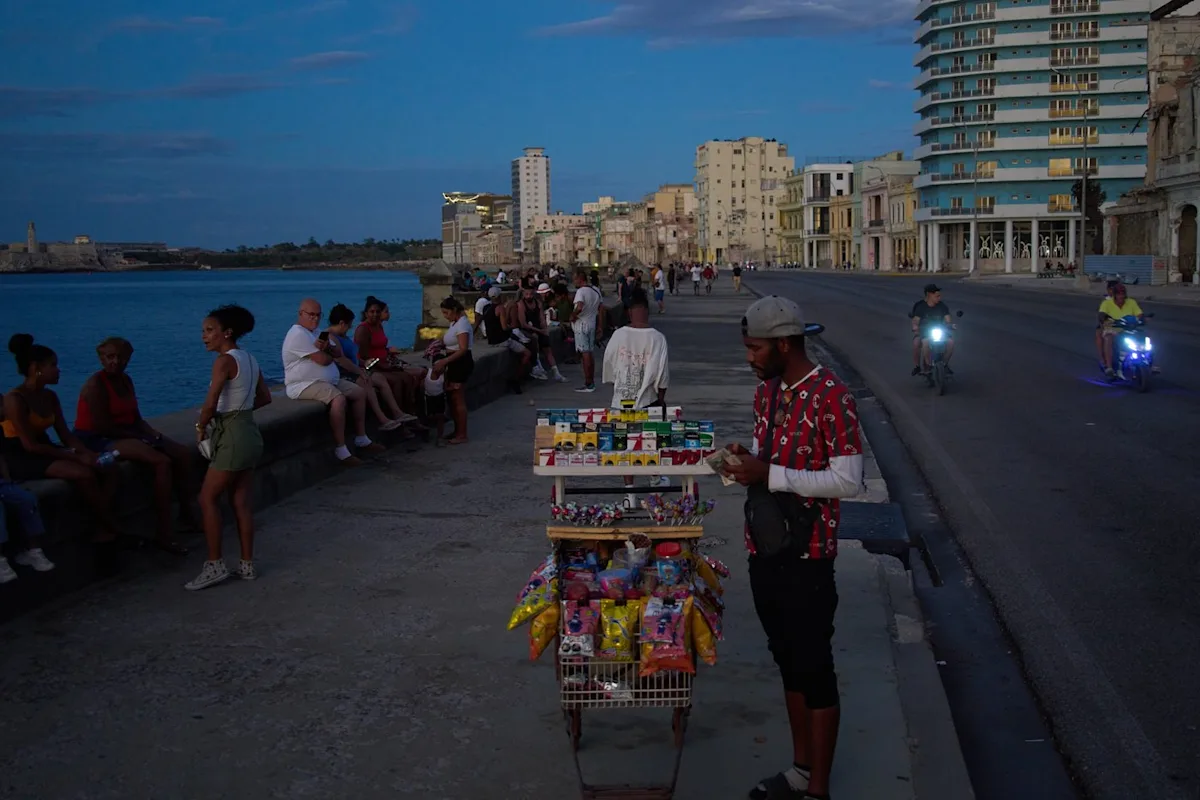
Two Canadians on a humanitarian mission in Cuba say it’s easier for locals to count the number of hours the lights are on than off.
And when electricity is flowing, Leanne Isaak says Cubans can be seen scrambling to get as many tasks done as they can, such as cooking, charging phones, showering and filling buckets with water.
“People say, ‘I may not get power again for three days so I’m going to do everything that I need to do in this one or two-hour time-frame to prepare for the next chunk of time when I’m just going to try to keep going,” said Isaak, the founder and a co-director of a non-profit called One Shared Future Un Futuro Compartido.
“In Spanish they say, ‘We don’t have blackouts, we have lights-on,’ because (they’re) more often in the dark than they have electricity,” added Elise Hjalmarson, also a co-director of the non-profit.
The women, who live in Kelowna, B.C., arrived in Cuba on Friday with 14 suitcases full of medicine, solar equipment, multivitamins, adult diapers, surgical gloves and menstrual products, among other goods.
In an interview from Havana on Saturday, they said they plan to find a driver with an electric car and, in partnership with Cuban-led groups, distribute the items across the island over several days. They also plan to buy rice and beans with cash donations for distribution.
“Some of this is going to hospitals, it’s going to women’s centres. We have a whole variety of places that we built connections with,” said Isaak, who also works at the University of British Columbia.
Life on the Caribbean island has been rapidly deteriorating since the U.S. removed Venezuela’s leader in January, halting critical petroleum shipments from the nation that had been a steadfast ally to Havana. U.S. President Donald Trump has also threatened tariffs on any country selling or supplying Cuba with oil.
The island has since been relying on its own natural gas, solar power and oil to run thermoelectric plants, but that hasn’t been enough to meet demand.
Isaak and Hjalmarson said they experienced the dire situation as soon as they landed. There was a power outage at the airport. They heard a flicker and a generator, and the conveyor belt carrying their bags began moving minutes later.
“Then we had a power outage in the evening when we got to our Airbnb, and then we had another one in the morning, so you can see the frequency. This portion of the city, about a year ago, would maybe get less than a handful of power outages,” said Isaak, who has made nearly a dozen trips to Cuba for her charity work.