dailynewsnblog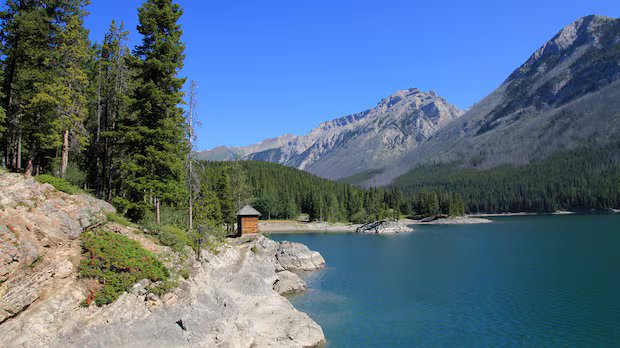

Listen to this article
Estimated 4 minutes
The audio version of this article is generated by AI-based technology. Mispronunciations can occur. We are working with our partners to continually review and improve the results.
Parks Canada is banning boats and other watercraft on several popular lakes and rivers in Banff National Park starting this spring to prevent the spread of aquatic invasive species.
Canoeing, paddleboarding, kayaking and fishing with waders will no longer be allowed at lakes such as Moraine Lake, Bow Lake and Lake Minnewanka. Other backcountry lakes and rivers will face similar restrictions.
Motorboats that pass inspection, along with rental boats, will still be permitted on Lake Minnewanka.
Visitors will still be able to swim, snorkel and fish without waders at these lakes.
The restrictions are expected to remain in place indefinitely.
Until now, visitors could use those lakes if they followed the “clean, drain, dry” policy. The rule requires people to remove plants, mud and water from boats and equipment before moving between lakes, to prevent invasive species from spreading.
Whirling disease was detected in Lake Louise for the first time in 2025.
“It’s unlikely that whirling disease was spread to Lake Louise through natural fish movement,” said François Masse, the Parks Canada superintendent for Lake Louise, Yoho and Kootenay’s field unit. “It’s most likely the disease was introduced by mud or water on watercraft or angling equipment.”
During a media briefing, Parks Canada aquatic invasive species project co-ordinator Marie Veillard said about 60 per cent of visitors follow the rules, but that hasn’t been enough to stop the spread of the parasite.
“We’re still seeing some spread of the disease, which is why we’ve added additional protections for our most sensitive water bodies,” she said.
Whirling disease is a parasite that can severely impact fish populations, particularly trout, whitefish and salmon. In some cases, it can kill up to 90 per cent of young fish.
“It’s not harmful to humans or other mammals, but it can have a profound effect on aquatic ecosystems,” says Veillard.
Paddlers frustrated by rollout of new restrictions
Mike Holroyd, executive director of the Alberta Whitewater Association, says many paddlers support efforts to stop invasive species and are frustrated by how the policy was rolled out.
He says paddling groups were not consulted before the decision and believes Parks Canada should focus more on education, cleaning stations and enforcement to prevent the spread of invasive species.
“It’s pretty devastating for some of our users,” Holroyd said. “A lot of people have recreated on these rivers responsibly for years.”
Some popular lakes remain open for recreation
“We understand the disappointment,” Veillard said. “We’re trying to find a balance between protecting ecosystems and allowing visitors to continue enjoying these places.”
Popular lakes including Lake Louise, Johnson Lake and Two Jack Lake will remain open for water recreation.
Parks Canada says the decision to close certain lakes and rivers while leaving others open was based on ecological sensitivity.
Lake Louise will remain open because it does not contain species at risk or important migratory routes for fish.
Meanwhile, Lake Minnewanka, Moraine Lake and Bow Lake contain sensitive fish populations, including trout and salmon.
Veillard says aquatic invasive species are extremely difficult to remove once they become established, making prevention the most effective strategy.
Similar restrictions introduced in Yoho and Kootenay national parks in 2023 appear to be working, says Veillard. There have been no new detections of whirling disease in Yoho since then, she says.
Masse says Parks Canada will continue monitoring fish populations, recreational use and the spread of the disease in the lakes with the new restrictions.
Parks Canada is also reminding visitors to clean, drain and dry all equipment before entering lakes and rivers where watercraft are still allowed.