dailynewsnblog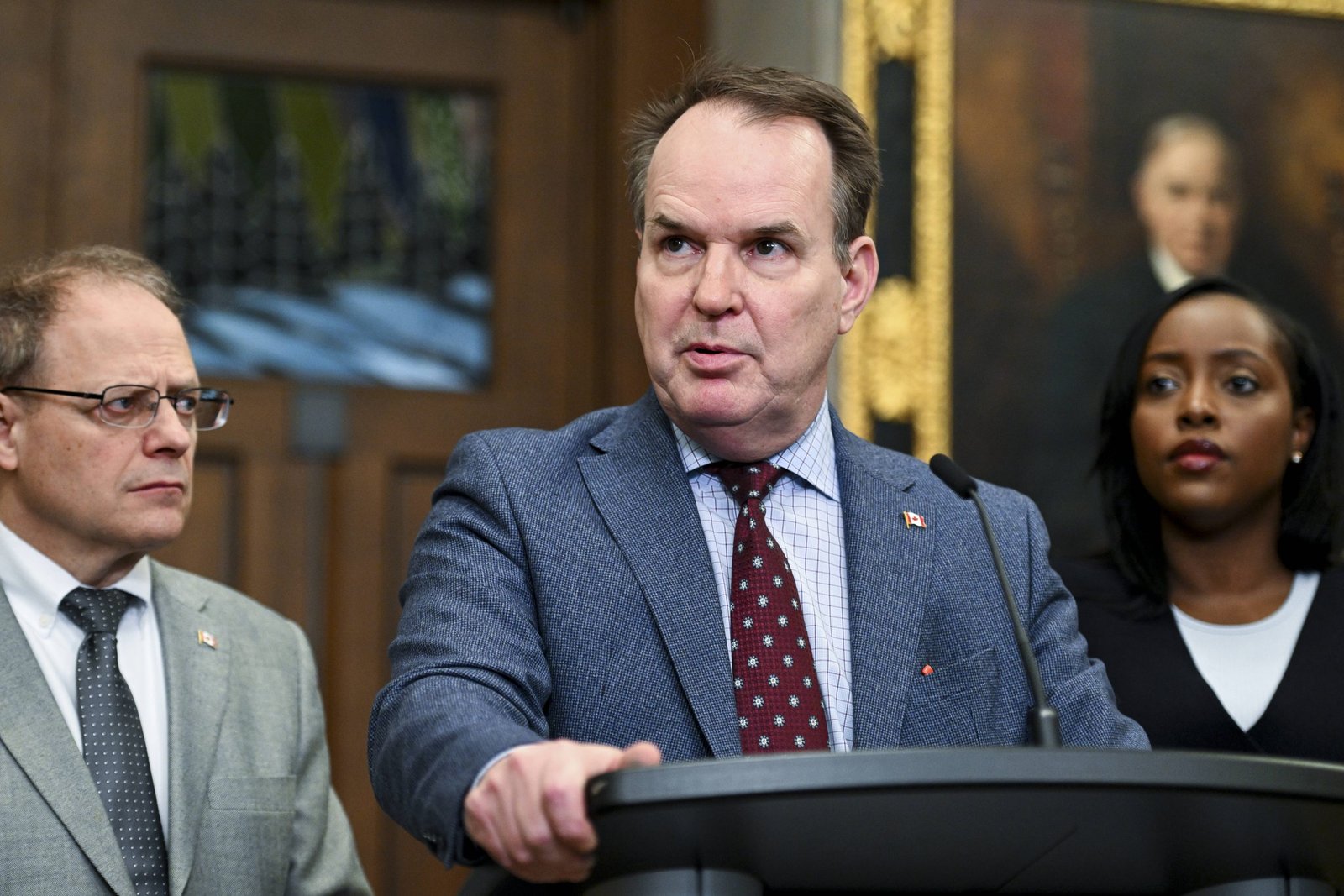
‘These are preventative measures,’ Government House Leader Steven MacKinnon said of proposed changes to the elections law that seek to tighten political financing and address emerging AI-generated deepfakes.
Ottawa is proposing a sweeping update to the Canada Elections act aimed at strengthening protections against foreign interference, tightening political financing rules and addressing emerging threats such as AI-generated deepfakes.
Bill C-25, the Strong and Free Elections Act, follows recommendations from the Public Inquiry into Foreign Interference in Federal Electoral Processes and Democratic Institutions. It reflects what the government describes as a broader effort to modernize rules in response to evolving risks.
Minister of Transport and Government House Leader Steven MacKinnon said Thursday the legislation is part of a wide effort to better safeguard Canada’s democratic system.
The proposed changes make a shift in how Ottawa approaches election security. It looks to criminalize deepfakes and coordinated disinformation, and tighten restrictions on foreign funding and third-party activity. It would also make it an offence to knowingly spread false or misleading information about the voting process with the intent to disrupt an election with a higher monetary penalty.
More specifically, the maximum amount of penalty will increase from $1,500 to $25,000 for an individual and $5,000 to $100,000 for organizations.
To ensure security from foreign interference, the legislation also targets opaque funding streams by banning hard-to-trace political donations, including those made through cryptocurrency, money orders and prepaid cards.
“These are preventative measures,” MacKinnon said when asked how big of a problem this is in Canada in past elections.
The bill includes new protections to internal party processes, including nomination and leadership races, which have increasingly been viewed as potential targets for interference.
However, the reforms also introduce a new set of trade-offs. While enforcement powers would be strengthened and political parties face new privacy obligations, some transparency measures would be scaled back.
One amendment would remove the five-day notice requirement to publicly disclose regulated fundraising events at least five days in advance, instead limiting location details in post-event reports to the municipality and province or territory.
The requirement was introduced under former Prime Minister Justin Trudeau’s government to increase transparency around political fundraising by enabling advance public disclosure.
MacKinnon said this is a needed security measure, noting that harassment has happened to people with their personal addresses published online.
“Frankly, it limits their rights and abilities to participate in democratic processes,” MacKinnon said.
The bill also aims to “mitigate” the long ballot tactics, where dozens, and in some cases, hundreds of candidates register in a single riding, often as part of coordinated protest efforts against the first-past-the-post system. The proposed changes would tighten nomination requirements in an effort to reduce ballot length and ease administrative strain.
When asked if this is a shot at activists, MacKinnon said the Parliament views the tactic as “harassing behaviour.”
“I understand that they have a message that they wish to put forward, but the results of these efforts makes… accessibility difficult, makes the work of our world renowned elections agency prohibitively difficult,” he said.
He added that there are other ways to put forward the message.
A significant portion of the bill also focuses on strengthening Canada’s ability to detect and respond to foreign information threats. The government plans to invest $31.5 million over five years into Global Affairs Canada’s Rapid Response Mechanism, which monitors and responds to foreign interference and disinformation.
While the bill is introduced, MacKinnon said the changes will not be in place in time for the by-election scheduled in two weeks.
Conservative MP Michael Cooper said the party will carefully review the bill to ensure it protects the integrity of Canada’s democracy.
Cooper noted that the Conservative Party raised concerns about foreign interference and the longest ballot committee long before the bill.
“For too long, the Liberals turned a blind eye to interference in our election and failed to act,” Cooper wrote in a statement to iPolitics.
Duff Conacher, co-founder of Democracy Watch, an ethics advocacy group, said the proposed bill came in “much too late” to close loopholes in federal laws that allow undemocratic interference in Canada’s nomination and party leadership contests.
“The Liberals are proposing measures in the bill to make it essentially impossible to determine if a lobbyist or someone who wants something from politicians is helping organize or holding a fundraising event for a party, riding association or candidate,” Conacher said.
“That secrecy is a corruption, waste of the public’s money and other abuses.”