dailynewsnblog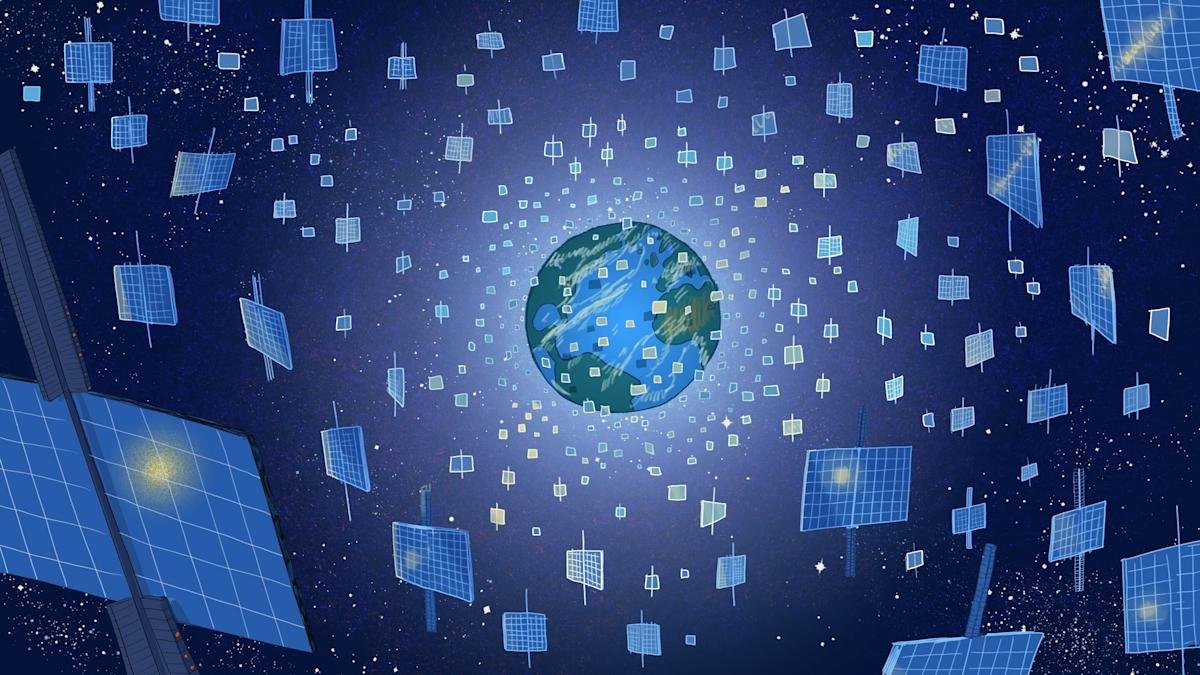
At the start of the month, Elon Musk announced that two of his companies — SpaceX and xAI — were merging, and would jointly launch a constellation of 1 million satellites to operate as orbital data centers. Musk’s reputation might suggest otherwise, but according to experts, such a plan isn’t a complete fantasy. However, if executed at the scale suggested, some of them believe it would have devastating effects on the environment and the sustainability of low Earth Earth orbit.
Musk and others argue that putting data centers in space is practical given how much more efficient solar panels are away from Earth’s atmosphere. In space, there are no clouds or weather events to obscure the sun, and in the correct orbit, solar panels can collect sunlight through much of the day. In combination with declining rocket launch costs and the price of powering AI data centers on Earth, Musk has said that within three years space will be the cheapest way to generate AI compute power.
Ahead of the billionaire’s announcement, SpaceX filed an eight-page application with the Federal Communications Commission detailing his plan. The company hopes to deposit the satellites in this massive cluster in altitudes ranging between 500km and 2000km. They would communicate with one another and SpaceX’s Starlink constellation using laser “optical links.” Those Starlink satellites would then transmit inference requests to and from Earth. To power the entire effort, SpaceX has proposed putting the new constellation in sun-synchronous orbit, meaning the spacecraft would fly along the dividing line that separates the day and night sides of the planet.
What a data center would endure in orbit
Almost immediately the plan was greeted with skepticism. How would SpaceX, for instance, cool millions of GPUs in space? At first glance, that might seem like a weird point to get hung up on — much of space being around -450 Fahrenheit — but the reality is more complicated. In the near vacuum of space, the only way to dissipate heat is to slowly radiate it out, and in direct sunlight, objects can easily overheat. As one commenter on Hacker News succinctly put it, “a satellite is, if nothing else, a fantastic thermos.”
Scott Manley, who, before he created one of the most popular space-focused channels on YouTube, was a software engineer and studied computational physics and astronomy, argues SpaceX has already solved that problem at a smaller scale with Starlink. He points to the company’s latest V3 model, which has about 30 square meters of solar panels. “They have a bunch of electronics in the middle, which are taking that power and doing stuff with it. Now, some of that power is being beamed away as radio waves, but there’s a lot of thermal power that’s being generated and then having to be dissipated. So they already have a platform that’s running electronics off of power, and so it’s not a massive leap to turn into something doing compute.”
Kevin Hicks, a former NASA systems engineer who worked on the Curiosity rover mission, is more skeptical. “Satellites with the primary goal of processing large amounts of compute requests would generate more heat than pretty much any other type of satellite,” he said. “Cooling them is another aspect of the design which is theoretically possible but would require a ton of extra work and complexity, and I have doubts about the durability of such a cooling system.”
What about radiation then? There’s a reason NASA relies on ancient hardware like the PowerPC 750 CPU found inside the Perseverance rover: Older chips feature larger transistors, making them more resilient to bit flips — errors in processing caused most often by cosmic radiation — that might scramble a computation. “Binary ones and zeroes are about the presence or absence of electrons, and the amount of charge required to represent a ‘one’ goes down as the transistors get smaller and smaller,” explains Benjamin Lee, professor of computer and information science at the University of Pennsylvania. Space is full of energized particles traveling at incredible velocities, and the latest GPUs are built on the smallest, most advanced processing nodes to create transistor-dense silicon. Not a great combination.
“My concern about radiation is that we don’t know how many bit flips will occur when you deploy the most advanced chips and hundreds of gigabytes of memory up there,” said Professor Lee, pointing to preliminary research by Google on the subject. As part of Project Suncatcher, its own effort to explore the viability of space-based data centers, the company put one of its Trillium TPUs in front of a proton beam to bombard it with radiation. It found the silicon was “surprisingly radiation-hard for space applications.”
While those results were promising, Professor Lee points out we just don’t know how resilient GPUs are to radiation at this scale. “Even though modern computer architectures can detect and sometimes correct for those errors, having to do that again and again will slow down or add overhead to space-based computation,” he said.
Space engineer Andrew McCalip, who’s done a deep dive on the economics of orbital data centers, is more optimistic, pointing to the natural resilience of AI models. “They don’t require 100 percent perfect error-free runs. They’re inherently very noisy, very stochastic,” he explains, adding that part of the training for modern AI systems involves “injecting random noise into different layers.”
Even if SpaceX could harden its GPUs against radiation, the company would still lose satellites to GPUs that break down. If you know anything about data centers here on Earth, it’s that they require constant maintenance. Components like SSDs and GPUs die all the time. Musk has claimed SpaceX’s AI satellites would require “little” in the way of operating or maintenance costs. That’s only true if you accept the narrowest possible interpretation of what maintaining a fleet of AI satellites would entail.
“I think that there’s no case in which repair makes sense. It’s a fly till you die scenario,” says McCalip. From an economic perspective, McCalip argues the projected death rate of GPUs in space represents “one of the biggest uncertainties” of the orbital data center model. McCalip’s put that number at nine percent on the basis of a study Meta published following the release of its Llama 3 model (which, incidentally, measured hardware failures on Earth.) But the reality is no one knows what the attrition rate of those chips will be until they’re in space.
Orbital data centers also likely wouldn’t be a direct replacement for their terrestrial counterparts. SpaceX’s application specifically mentions inference as the primary use case for its new constellation. Inference is the practical side of running an AI system. It sees a model apply its learning to data it hasn’t seen before, like a prompt you write in ChatGPT, to make predictions and generate content. In other words, AI models would still need to be trained on Earth, and it’s not clear that the process could be offloaded to a constellation of satellites. “My initial thinking is that computations that require a lot of coordination, like AI training, may end up being tricky to get right at scale up there,” says Professor Lee.
Kessler syndrome
In 1978, a pair of NASA scientists proposed a scenario where low Earth orbit could become so dense with space junk that collisions between those objects would begin to cascade. That scenario is known as Kessler syndrome.
One estimate from satellite tracking website Orbiting Now puts the number of objects in orbit around the planet at approximately 15,600. Another estimate from NASA suggests there are 45,000 human-made objects orbiting Earth. No matter the number, what’s currently in orbit represents a fraction of the 1 million additional satellites Musk wants to launch.
According to Aaron Boley, professor of physics and astronomy at the University of British Columbia and co-director of the Outer Space Institute, forward-looking modeling of Earth’s orbit above 700 kilometers — where part of SpaceX’s proposed cluster would live — suggests that area of space is already showing signs of Kessler syndrome.
While it takes less time for debris to clear in low Earth orbit, Professor Boley says there’s already enough material in that region of space where there could be a cascading effect from a major collision. Debris could, in a worst case scenario, take a decade to clear up. In turn, that could lead to disruptions in global communications, climate monitoring missions and more.
“You could get to the point where you’re just launching material in, and you could ask yourself how many satellites can I afford to lose? Can you reconstitute your constellation faster than you’re losing parts of it because of debris?” says Boley. “That’s a horrible future in terms of the environmental perspective” In particular, it would limit opportunities for humans to fly into low Earth orbit. “Could you operate in it? Yeah, but it would come with higher and higher costs,” adds Boley.
“The entire world is struggling with the problem of how we safely fly multiple mega constellations,” says Richard DalBello, who previously ran the Traffic Coordination System for Space (TraCSS) at the US Department of Commerce. Right now, there is no common global space situational awareness (SSA) system, and government and satellite operators are using uncoordinated national and commercial systems that are likely producing different results. At the start of the year, SpaceX lowered the orbit of thousands of Starlink satellites after one of them nearly collided with a Chinese satellite.
SpaceX has its own in-house SSA system called Stargaze, which it uses to fly its more than 7,000 Starlink satellites. According to DalBello, competing operators can receive SSA data from SpaceX, but to do so they must share their satellite position information. “Assuming data sharing, it is likely Stargaze can make an important contribution to spaceflight safety” says DalBello. “SpaceX is likely to have success with US and other commercial operators, but without the assistance of the federal government, other governments — particularly China — will likely be unwilling to share their satellite and SSA data.”
According to DalBello, the Biden administration was unable to make meaningful progress on the next-generation TraCSS system, in part because Congress was initially reluctant to fund the program. Meanwhile, the current Trump administration hasn’t shown interest in advancing the work that began during the president’s first term.
Even if the regulatory situation suddenly changes and the world’s governments agree on an international SSA system, SpaceX launching 1 million satellites along the day-night terminator would see the company effectively monopolize one of the Earth’s most valuable and important orbits. Professor Boley argues we should view our planet’s orbits as a resource that belongs to everyone. “Every time you put a satellite up, you use part of that resource. Now someone else can’t use it.”
And as Hicks points out, even a single cascade of colliding satellites would prevent that space from being used for scientific endeavors. “You would have to wait years for that debris to slowly come back into the atmosphere and burn up. In the meantime, that debris is taking up space that could be used for climate monitoring missions or any other types of missions that governments want to launch.”
A blow to the atmosphere
Separately, the constant churn of Starship launches and re-entry of dead satellites would have a potentially dire impact on our planet’s atmosphere. “We’re not prepared for it,” Boley flatly says of the latter. “We’re not prepared for what’s happening now, and what’s happening now is already potentially bad.”
According to Musk’s “basic math,” SpaceX could add 100 gigawatts of AI compute capacity annually by launching a million tons of satellite per year. McCalip estimates a 100-gigawatt buildout alone would necessitate about 25,000 Starship flights.
Many of the metals found in satellites, including aluminum, magnesium and lithium, in combination with the exhaust rockets release into the atmosphere, can have complicated effects on the health of the planet. For instance, they can affect polar cloud formations, which in turn can facilitate ozone layer destruction through the chemical reactions that occur on their surfaces. According to Boley, the problem is we just don’t know how severe those environmental factors could become at the scale Musk has proposed, and SpaceX has provided us with precious few details on its mitigation plans. All it has said is that its plan would “achieve transformative cost and energy efficiency while significantly reducing the environmental impact associated with terrestrial data centers.”
Even if SpaceX could and does go out its way to mitigate the atmospheric effects of constant rocket flights, those spacecraft still need to be manufactured here on Earth. At one of his previous roles, Hicks studied rocket emissions and found the supply chains needed to build them produce an “order of magnitude” more carbon emissions than the rockets themselves.
SpaceX plans to fly its new satellites in a sun-synchronous orbit, meaning for much of the year, they’ll be sunlit. Each new Starlink generation has been larger and heavier than the one before it, with SpaceX stating in a recent filing that its upcoming V3 model could weigh up to 2,000 kilograms, up from the 575 kilograms of the V2 Mini Optimized. While we don’t know the exact dimensions of the company’s still-hypothetical AI satellites, they will almost certainly be bigger than their Starlink counterparts.
SpaceX has done more than most space operators to reduce the brightness of its satellites, but Professor Boley says he expects that this new constellation will be “strikingly bright” when moving through the night sky. In aggregate, he estimates they will almost certainly be harmful to scientific research here on Earth, limiting what terrestrial observatories can see.
“You’re going to see them with the naked eye. You’re going to see them with cameras. It’s going to be like living near an airport where you see all these things flying over just after sunset and the next couple of hours after sunset,” says Manley. “I don’t know if I want to have my entire sunset be just a band of satellites constantly shooting overhead.”
There are good reasons to make some spacecraft capable of doing AI inference. For instance, Professor Lee suggests it would make orbital imaging satellites more useful, as those spacecraft could do on-site analysis, instead of sending high-resolution files over long distances, saving time in the process. But the dose, as they say, makes the poison.
“There’s a lot of excitement about the many possibilities that can be brought to society and humanity through continued access to space, but the promise of prosperity is not permission to be reckless,” he says. “At this moment, we’re allowing that excitement to overtake that more measured progression […] those impacts don’t just impact outer space but Earth as well.”