dailynewsnblog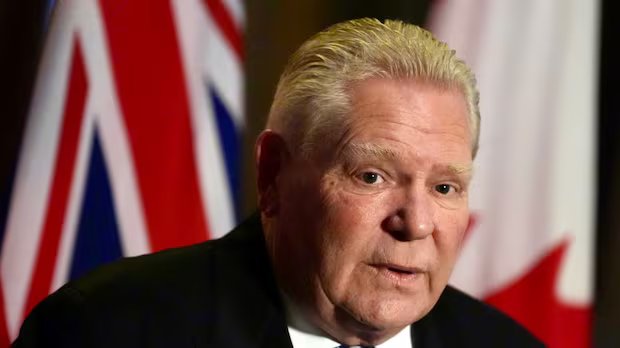

Listen to this article
Estimated 4 minutes
The audio version of this article is generated by AI-based technology. Mispronunciations can occur. We are working with our partners to continually review and improve the results.
The Ontario government spent over $7.5 million to advertise the Ring of Fire last year, according to documents obtained by CBC News.
The ad became a familiar sight during the Blue Jays playoff run last year.
Under the slogan of “Protect Ontario,” it promoted the province’s development plans for the mineral rich area in the James Bay lowlands in northern Ontario.
A document obtained through a freedom of information request revealed the campaign also spent money on ads for social media, radio, movie theatres and even printed material in 16 different languages.
But the ad promotes a project that is nowhere near completion and doesn’t address the need to build a road or about consultation with First Nations, said NDP mining critic Jamie West.
“They’re spending millions and millions of your taxpayer dollars basically to gaslight you about what’s going on,” he said.
“It just is basically a way for the government to brag about stuff that they’re not actually doing yet.”
WATCH | Government ad promotes Ring of Fire mining :
The money spent on the advertisements would have been better used towards improving infrastructure in the north or other projects that are in dire need of funding, he said.
“A lot of students and parents [would] like to see it funneled towards education. … We have hospitals, emergency rooms closing all over Ontario,” said West.
Earlier this week, Premier Doug Ford said work would begin to connect the Ring of Fire to Ontario’s highways by November 2031.
The new timeline will see the project completed years ahead of schedule and will help spur mining of critical minerals in the province, said Ford.
The premier’s office stood by the advertisement in an emailed statement on Thursday. Viewers were “talking about the new jobs and opportunities” that were opening up within the province.
“This commercial showed audiences in Ontario and across the country our economic potential that will last for generations to come,” Hannah Jensen said via email.
The Ring of Fire project is crucial for the province’s economy, Jensen said, “especially in the face of [U.S.] President [Donald] Trump’s tariffs.”

Ontario will spend millions to expand and fast-track construction of roads into the mineral-rich Ring of Fire, aiming to begin opening sections by 2030. CBC’s Shawn Jeffords breaks down the project and the new timeline.
Ad caused confusion, frustration: NDP critic
The FOI request by CBC News revealed the province budgeted over $12.2 million for the Ring of Fire ad campaign.
The $7.5 million spent on that project covered invoices issued up until Jan. 12, 2026. It’s not yet clear if more invoices could be issued for the campaign.
West says the ad has caused a lot of confusion for people, who thought it meant the Ring of Fire was open and developed.
“It’s an ongoing sense of frustration for me,” he said. “It’s easily a decade away from opening.”
Critics last year flagged the ad for being misleading and relying on stock footage that doesn’t actually show the Ring of Fire.
CBC’s image verification team reviewed the visuals called into question and confirmed none of them show the Ring of Fire. The team confirmed the ad contained stock footage from various Canadian provincial parks, Australia, Sweden and Russia.

According to the auditor general’s annual report last year, the province spent a record $112 million on taxpayer-funded advertising.
About 38 per cent of those campaigns were meant to leave people with a “positive impression” of Premier Doug Ford ahead of the snap election, said Auditor General Shelley Spence.
The report went further and found the Ford government spent approximately $452 million on taxpayer-funded ads since it came into power in 2018.
Before 2015, government ads considered partisan were banned if the intent was to foster a positive impression of the government or a negative impression of its critics. But the then-Liberal government amended the rules and the Progressive Conservatives decided to stick with them after forming government.