dailynewsnblog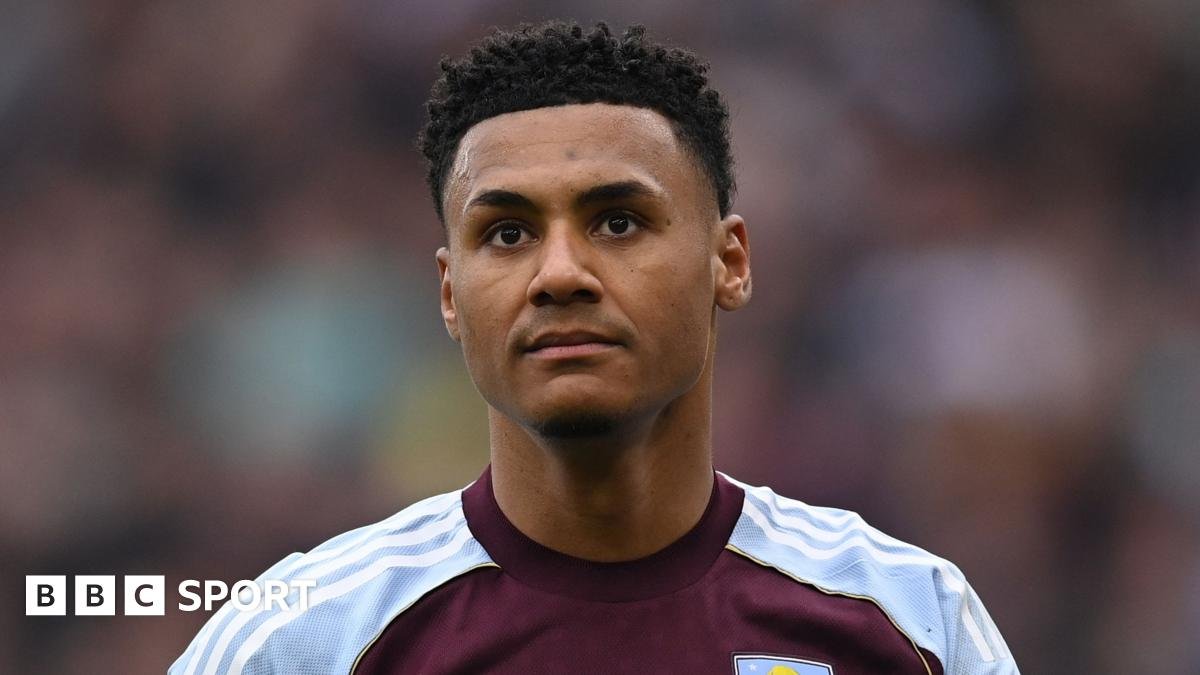
Kelly Somers: Well, Ollie, let’s go back to the very beginning. I want to know where your love of football came from and the first time you can remember having a ball at your feet.
Ollie Watkins: Ah, it was a long time ago now!
Kelly: You were so young that you can’t remember…
Ollie: Yeah, I was so young. My mum always used to say as soon as I could walk I was kicking bouncy balls and stuff around. Then whenever I used to go out to play in the street, I’d always come back with a football.
Kelly: What, you just nicked another kid’s football?!
Ollie: I would just find footballs around and I’d have a collection of different ones. I was playing with my brothers in the street and stuff like that. One day my friend came around and he was going to football practice later, but I didn’t have a team. He told me to come with him and then it started from there.
Kelly: So, that was your first team. What can you remember of your first session with them?
Ollie: It was just different. I was used to playing football down at the park with my friends. This is a little bit more… it was still fun, but obviously you have a little bit of coaching and stuff like that. And then I found that I was quite good at it, so just kept going.
Kelly: At what point did you realise, ‘OK, I’ve maybe got something here that the other kids haven’t got’?
Ollie: Well, to be honest, there was a player that played in my team… his dad actually ran the team as well… he was the best player. And I always just wanted to kind of get close to him and just be like him really.
At that age, I don’t think you think about it. You’re just playing football. It’s maybe when you get into academies and stuff like that then you start to think about doing it more seriously and thinking of the level you’re at. But at that time – I think that’s the fun thing about when you’re young – you just go out and play. There’s no rules. You can run everywhere. I think that’s the fun bit about football at that age.
Kelly: There’s been a lot made of your journey and it not being your typical route. It was Exeter that picked you up first, wasn’t it? But that wasn’t the easiest path straight away was it, either?
Ollie: No, I went for a trial when I was nine. I didn’t get in and then they told me to come back in six weeks, but I couldn’t concentrate. I was always looking around and stuff like that, so coming back six weeks later, I didn’t feel like I was going to improve. I needed to go back and, you know, play with my friends and just enjoy it because at that age it is very serious.
Kelly: So, you didn’t go back six weeks later? You decided not to?
Ollie: No, I went back two years later. I got in the academy and then, yeah, I was there until I left at 21 I think.
Kelly: I know it’s a long time ago now, but at nine years old that must have been your dream to play for your local team. To be told, ‘no, sorry, this isn’t right for you at the moment’ … can you remember how that felt? Or were you able to just go and enjoy football again?
Ollie: They weren’t saying: ‘Oh no, you aren’t good enough.’ It was more the fact that I couldn’t focus. Well, that’s what they told me anyway. But I just kind of saw it as… I just went and played more football and just enjoyed it. And I think I kind of saw it as a little bit of a blessing. At that age, you just want to go out and play, have that freedom to express yourself. So, that’s what I went away and did. When I then went into it, I was ready to focus more.
Kelly: And when you were at Exeter as well, you went on some loan spells. I know Weston-super-Mare was quite a big one, wasn’t it?
Ollie: Yeah, I feel like that was crucial in my development. One of my best friends at the time, Matt Jay, he made his debut at 16 I think. Obviously, I was very happy for him. He was my best friend, but I was so envious because you want that to be you.
But me going out on loan definitely helped me, because I felt like I was then… I’d experienced playing men’s football. I just learned to fight for three points. People had mortgages to pay and stuff like that and I didn’t understand that because I’d just been playing reserve-team football and playing games where I could win 5-0 or lose 5-0, it didn’t matter. Going out and playing for three points was a real learning curve for me and it definitely helped me. I learned a lot that year.
Kelly: You did, of course, make it at Exeter and then the rest is history because that’s where the rest of your journey started. But has there been a turning point along the way, where if you look back, you think, ‘OK, all of this… I wouldn’t be an England international scoring that goal at Euro 2024, playing in the Champions League… none of this would have happened without it’?
Ollie: I think there’s an element of luck. I remember the day I got into the first team at Exeter. Ryan Harley – one of the main midfielders – was ill that day. I ended up playing, scoring and then I stayed in the team and did well.
But after that, I think just working hard. And when I made the jump to Brentford, I was a little bit surprised at how well I took to it.
Kelly: Really?
Ollie: Yeah, I think because when you’re younger, you look at players that you want to play against… you search them on YouTube and then the next thing you know, football changes so quickly, you can be playing with those players that you had once watched or aspired to be like. I think just working hard and timing – everything just kind of falls into place naturally, I think.
Kelly: Is it quite hard to believe in that at times, though, because you kind of… you can control so much, but you can’t control your luck? Or can you, do you think?
Ollie: Yeah, I think it’s still something I’m coming to terms with. You can do all you can throughout the week and prepare as best as you can for a game, but sometimes things are out of your control. There are times where, you know, it’s lonely. You can’t take your mates everywhere with you and your family and the people closest to you.
You’ve got to work hard and do it yourself and persevere at the end of the day, and if you keep working hard it will pay off.
Kelly: What’s been the toughest moment?
Ollie: The toughest moment for me has probably been… throughout all my career… I would probably say this season. Just because I’ve done so well to get to where I am – getting to the Premier League… we had a bit of a dip… I scored goals. And then you set that expectation of… I think I hit a new level, scoring goals and being in Europe as well. That goal… after the Euros, I think there’s more eyes on you then.
This year, I haven’t been at the level I wanted to. So, to learn to deal with that is hard. And, look, it can always change. Football can always change. It will be a game where you can go out, score three goals and then everyone talks about you, like: ‘Ah, he’s back in form.’
I think that change of not being at the level where you want to be… I think for me this year has been difficult. But I’ve always got faith in my ability and I work so hard that I know I can get back to the level that I’ve achieved in previous seasons.