dailynewsnblog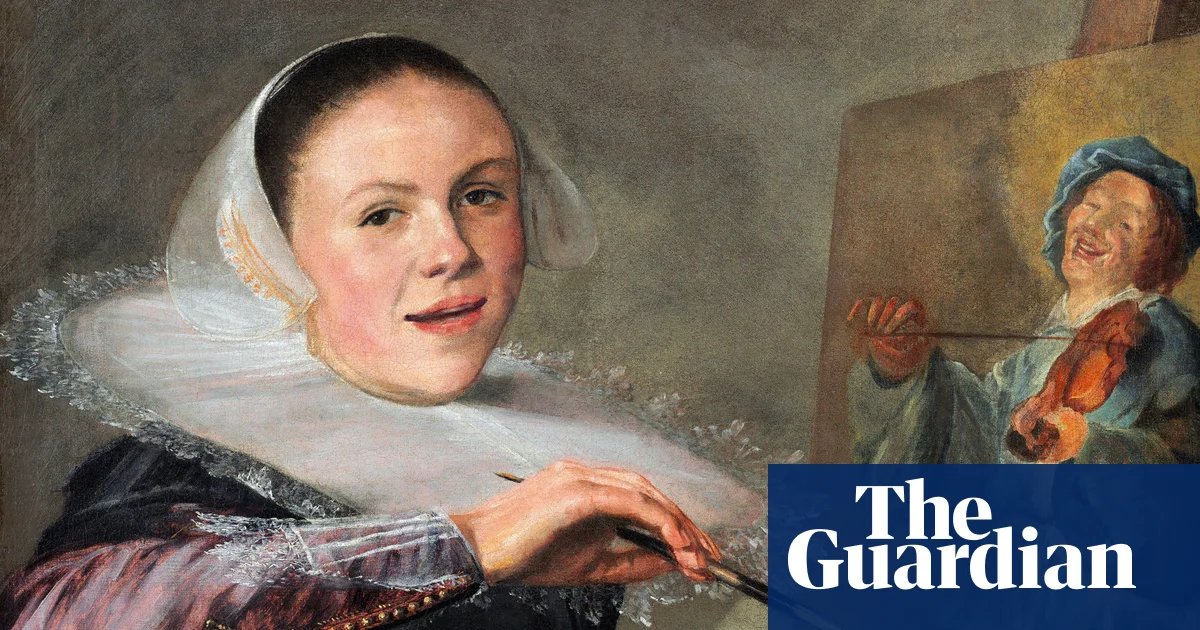
Judith Leyster, an artist of the Dutch golden age, was thought to be about 21 when she painted her self-portrait in 1630. In the picture she presented to the world, Leyster exudes cheerful confidence. Clad in shimmering silks and a stiffly starched lace collar, she leans back in her chair, palette and brushes in hand, a painting by her side.
This work, completed in the year she was admitted to a painters’ guild in Haarlem, proclaimed her arrival as an established artist. It was one of the first self-portraits by an artist in the Dutch republic, a device most male painters did not adopt until years later.
While celebrated in her lifetime, Leyster was quickly forgotten after her death. A posthumous inventory attributed some of her paintings to “the wife of the deceased”, referring to her artist husband, Jan Miense Molenaer. Then she disappeared. Her works were attributed to Frans Hals, other male contemporaries, or, simply, “unknown master”. Those paintings under her name were little esteemed. In the 1970s a major US museum sold one; other institutions left her work unseen in their vaults.
Now the painter, who has been enjoying a revival for some time, is back in the spotlight, one of more than 40 female artists who worked in the Low Countries during the baroque period to be featured in a new exhibition.
Unforgettable: Women Artists from Antwerp to Amsterdam, 1600-1750 opened this month at the the Ghent Museum of Fine Arts (MSK), after an earlier run in Washington DC. The exhibition seeks to restore women to one of the most feted periods of art history, best known for works by Rembrandt van Rijn, Johannes Vermeer and Anthony van Dyck. As MSK puts it in its slogan: “Old masters were women too.”
Co-curator Frederica Van Dam said the exhibition asked visitors to reflect on “why haven’t we seen artworks by women before? Why has no one ever questioned this”? The catalogue mentions 179 women who were active in the art economy of the Low Countries, which corresponds to the modern-day Netherlands and Flanders, in northern Belgium.
Many of them were admired in their lifetimes. Still-life paintings by Maria van Oosterwijck adorned palace walls throughout Europe. In 1697, the Russian tsar, Peter I visited the Amsterdam home of Johanna Koerten, who specialised in paper-cutting – using scored lines to make art on paper, a craft at the intersection of drawing, calligraphy and sculpture. Koerten was paid handsomely for her talents: a work of “woven silk in a rustic manner” made for the holy Roman empress is estimated to have earned her more than twice what Rembrandt made for The Night Watch.
The exhibition is part of growing rediscovery of women who were long absent from the tomes of art history, from Italian baroque artist Artemisia Gentileschi and her near contemporary of the southern Netherlands, Michaelina Wautier, to the Belgian modernist Marthe Donas and American impressionist Mary Cassatt.
Women were written out of the story in the 19th century, when art history became a discipline. Art historians, mainly men, “decided what was good art, what was worth writing about,” Van Dam said. When women had a walk-on role, they were deemed imitators. That fate befell Rachel Ruysch. Although collectors had long sought her floral still lifes – admired for their astonishing attention to detail and refined brushstrokes – scholars dismissed her work as derivative.
The 19th century was also when painting became the apex of the art museum, overshadowing the applied arts that women excelled at, such as paper-cutting, calligraphy and lace-making. In the early modern era, lace commanded fabulous prices, although the poorer women, nuns and orphaned girls who usually made the exquisite fans, veils, aprons and tableware earned a pittance. These artists remained anonymous in their lifetimes, signing their name with an “X”, in contemporary records.
While many female artists will remain lost to history, some are being rediscovered. The painter Catrina Tieling had been almost entirely forgotten until 2025, when a Dutch art historian re-examined works long attributed to her brother, Lodewijk, and concluded they were in fact signed “CT”. The exhibition includes Catrina Tieling’s rustic scene of two shepherdesses resting beside a herd of cows, a rare example of an Italianate landscape by a woman.
Photograph: Heritage Image Partnership Ltd/Alamy
It also charts some women’s life-changing and unconventional decisions. Louise Hollandine converted to Catholicism and entered a convent to maintain her artistic freedom. The daughter of exiled royalty, Hollandine had a gilded childhood in The Hague, becoming a talented portrait painter of friends and family.
But she fled her comfortable princess life in 1657 to become a French Benedictine nun, rather than marry her nephew, as sought by her family. At the convent, she switched to religious genre scenes, although many did not survive the French Revolution. The exhibition shows self-portraits of Hollandine in both lives. In the first, she is cool and poised, resplendent in rich silks and a big beribboned hat; in a later work, she makes an austere impression, wearing a cross and dressed in a black and white – but still lustrous – nun’s habit.
Van Dam hopes to see more research into female artists and efforts to make their work accessible. Through this exhibition, she said, “you get an impression of how valuable they were for the economic and artistic blossoming at the time”.