dailynewsnblog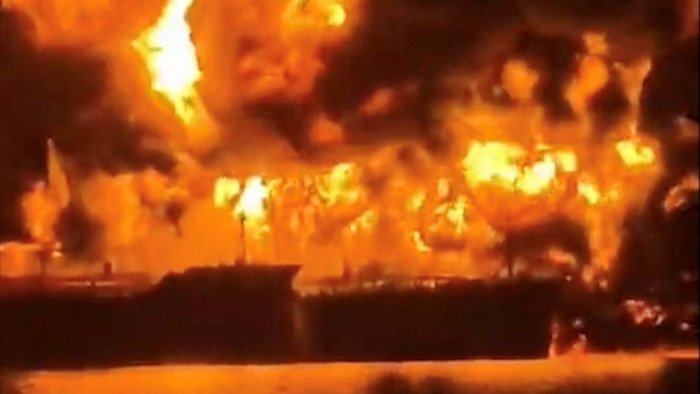
Good morning and welcome back. In today’s newsletter:
-
Oil back at $100 after vessels struck
-
Swiss firm Partners Group sounds alarm on private credit default rates
-
Paris frontrunner bets on ‘new left wave’ sweeping big cities
-
JPMorgan and Jeffrey Epstein: the long goodbye
We begin with oil, which climbed to $100 a barrel after ships and infrastructure were struck in the Gulf.
The latest: Three vessels in the Gulf were attacked in the morning, according to the UK Maritime Trade Operations Centre. Unknown projectiles struck two oil tankers south of Basra, Iraq, sparking fires and forcing crew to evacuate. A container ship was also struck north of Jebel Ali port in Dubai.
Market update: The attacks on energy transport sent global stock markets lower. Asian equities fell, S&P 500 futures declined 1 per cent and Stoxx Europe 600 futures dropped 0.7 per cent. Brent crude, the international oil benchmark, rose 9.4 per cent to $100.58 a barrel.
Alternative route: A flotilla of supertankers is steaming towards Saudi Arabia’s Red Sea coast as the kingdom rushes to find other exits for oil exports trapped in the Gulf by the Iran war.
Follow our live blog for more.
Read more coverage of the conflict:
Here’s what else we’re keeping tabs on today:
-
Economic data: The International Energy Agency publishes its oil market report.
-
Central banks: Bank of England governor Andrew Bailey delivers opening remarks at the Financial Stability Board payments summit in London.
-
Results: BMW, John Lewis Partnership, RTL, RWE, Savills, Swiss Life and Vivendi report earnings.
Five more top stories
1. Exclusive: Private credit default rates could double in the next few years, the chair of Partners Group has warned, as lenders are exposed to the full downside of AI-driven upheaval and only limited upside. The comments from one of Europe’s largest private capital groups come as investors have rushed to pull money from US private credit funds.
-
Loss-rate criticism: Private credit lenders such as Blue Owl are obscuring weaknesses in their portfolios, a US distressed debt investment fund has told its investors.
2. The Socialist frontrunner for mayor of the French capital has said that a “new left wave” is sweeping Paris and other large cities such as New York as politicians pursue progressive policies to counter far-right populists. Read the remarks from Emmanuel Grégoire to the FT.
3. The EU’s six biggest economies are calling for large stock exchanges and other critical financial entities to be supervised at the EU rather than national level, as they try to reinvigorate proposals to unify capital markets and boost competitiveness.
4. Exclusive: UBS, Legal & General and BlackRock are among asset managers offering more than 60 active environmental, social and governance funds that are invested in BP despite its retreat from renewables to reprioritise fossil fuels. Read more on the FT’s analysis.
5. Oracle has stepped up preparations to cut jobs over the coming months as it credits AI with driving efficiencies while it also conserves cash to fund a costly push into data centres.
The Big Read

Internal documents and emails show red flags were raised inside JPMorgan about sex offender Jeffrey Epstein’s activity since the early 2000s. But the US bank continued with him for years after his arrest. Read the full story.
We’re also reading . . .
-
Privileged position at risk: America’s payments deficit isn’t a problem — but the proposed cure might just create one, writes Gita Gopinath, formerly first deputy managing director of the IMF.
-
Humanoids: State-funded robot-training farms have popped up across China to supply data needed to put “brains” into machines.
-
In the cards: Which chokepoint would win in a game of geoeconomic Top Trumps? Soumaya Keynes says it all depends on three criteria.
Map of the day
Iraq has been a battleground for Washington and Tehran’s competing interests since the US-led invasion of Iraq toppled Saddam Hussein in 2003. A murky conflict has broken out there again. Read more on the shadow front in the war against Iran.

Take a break from the news . . .
Tim Harford makes an impassioned case for research that appears to lack value because, as he writes, “one never knows when useless knowledge will be useful after all”.