dailynewsnblog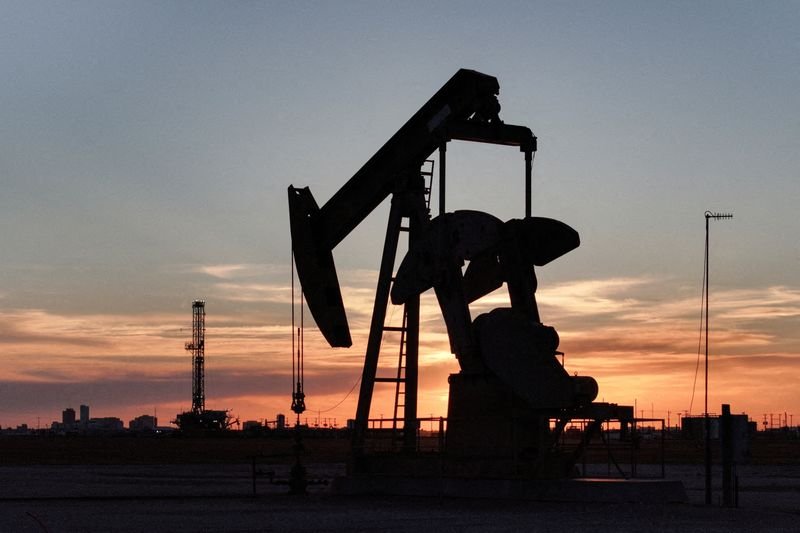
By Scott DiSavino
NEW YORK, April 13 (Reuters) – Oil prices jumped about 6% to more than $100 a barrel on Monday after the U.S. military said it will blockade ships leaving Iran’s ports nL6N40V09S, while Tehran threatened to retaliate against its Gulf neighbours’ ports, raising fears of more energy supply disruptions after weekend peace talks broke down.
Brent futures were up $5.76, or 6.1%, to $100.96 a barrel at 11:15 a.m. EDT (1515 GMT), while U.S. West Texas Intermediate (WTI) crude rose $5.69, or 5.9%, to $102.26.
Prices for physical crude barrels for immediate delivery nL6N40W0KB to Europe were trading even higher, with some grades already at record highs of about $150 a barrel.
If U.S. President Donald Trump “does indeed back his blockade threat with actual boats, a convergence between the paper and physical markets may soon come,” said Helima Croft, an analyst at RBC Capital Markets.
Two Iranian-linked tankers nL1N40W056 exited the Gulf on Monday as other vessels began avoiding the Strait of Hormuz. The strait handles about 20% of global oil and liquefied natural gas flows.
Saudi Arabia said it restored full oil pumping capacity through the East-West pipeline nL1N40S100 to about 7 million barrels per day (bpd) after damage from Iranian attacks. The kingdom, however, said nL1N40W081crude oil sales to China nL1N40W081 are set to fall in May as the war drives up prices and disrupts shipping.
HIGH PRICES HURT ENERGY DEMAND
The Organization of the Petroleum Exporting Countries (OPEC) nL6N40W0P6 lowered its forecast for world oil demand in the second quarter by 500,000 barrels per day, helping to pare earlier crude futures price gains.
Earlier in the trading session, Brent futures were up more than $8 a barrel and WTI was up more than $9.
India nL1N40W0BS said it was likely to see below-average monsoon rains for the first time in three years in 2026, stoking concerns about farm output and growth in Asia’s third-largest economy as it battles inflation driven by the war.
Inflation is also a concern in Europe where European Central Bank nL8N40W0XH Vice President Luis de Guindos said any ECB interest rate rise nL6N40W0LA will depend on how a war-fuelled surge in the cost of crude oil and some chemicals impacts other prices.
Central banks like the ECB use interest rates to control inflation. Higher rates boost consumer costs and can slow economic growth and demand for oil.
European Union nL8N40W0Q2 Commission President Ursula von der Leyen said member states must coordinate on energy prices amid a 22 billion euro ($25.70 billion) increase in fossil fuel bills since the start of the war.