dailynewsnblog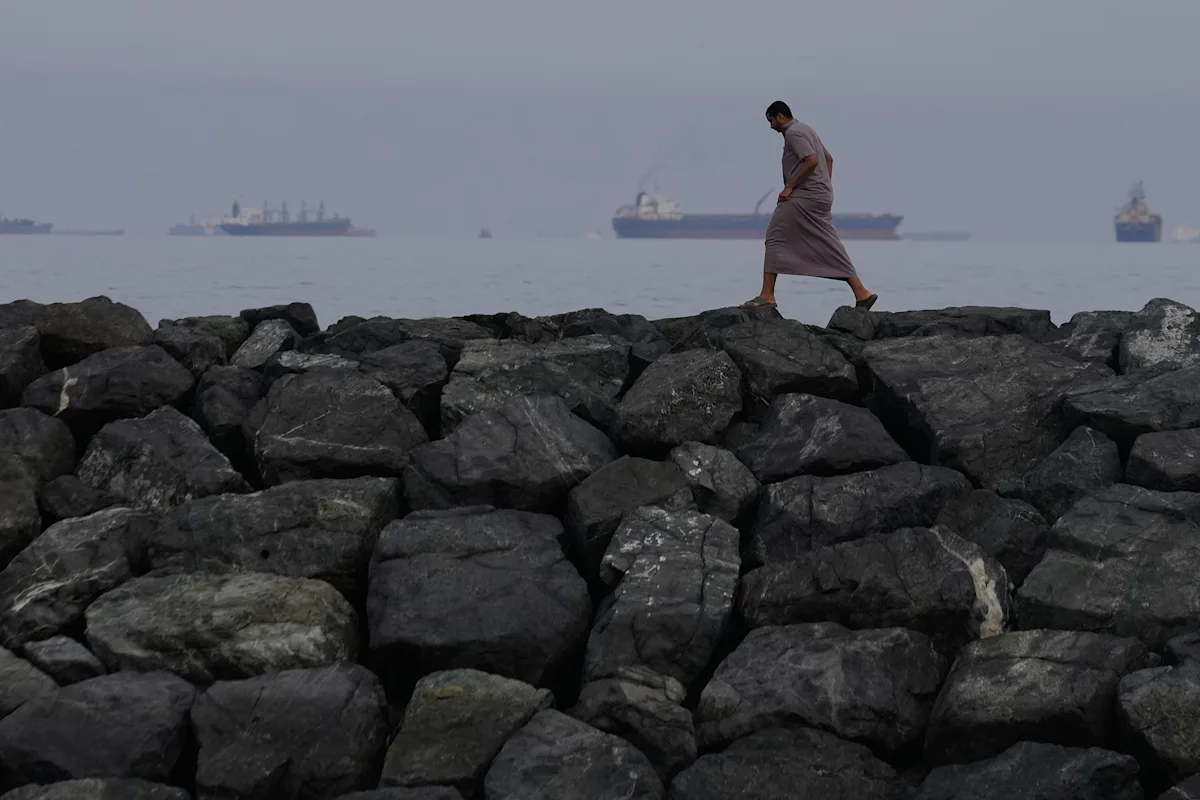

(Bloomberg) — Oil fluctuated after an initial small gain, as investors assessed President Donald Trump’s ultimatum to Iran to reopen the Strait of Hormuz and Tehran’s threat of more reprisals in the Middle East war.
Brent was little changed below $112 a barrel, while West Texas Intermediate was near $98. Trump said Iran must “fully open” the waterway within 48 hours, or have its power plants bombed. Tehran on Sunday warned it would attack key infrastructure across the Middle East if Trump followed through.
Global benchmark Brent has still surged by more than 50% since the strikes by the US and Israel on Iran in late February. The conflict has shown no signs of abating, with key petroleum-product markets rallying even harder than crude. That’s threatened to unleash a wave of global inflation, bringing turmoil to financial markets from commodities to stocks and bonds.
“The next real move needs something tangible, and not just escalation rhetoric,” said Haris Khurshid, chief investment officer at Karobaar Capital LP in Chicago. “It will probably take more broader issues with shipping or insurance before prices start moving more aggressively,” he added.
Part of the growing challenge for investors — beyond fatigue and extraordinary levels of volatility — has been Trump’s lack of coherent messaging on the conflict. Shortly before his two-day Hormuz ultimatum — which came at came at 7:44 p.m. New York time on Saturday — the president had said he was considering “winding down” US military efforts against Iran.

After weeks of war across the energy-rich region that’s affected more than a dozen states, the near‑complete closure of Hormuz — which links the Persian Gulf to global markets — has become a key flashpoint. Iranian officials have been increasingly reluctant even to discuss reopening the critical trade artery as they focus on survival.
“Now with this 48-hour deadline, Trump has posted himself into a corner,” said Rory Johnston, oil market researcher and founder of Commodity Context Corp. “It is highly unlikely that Tehran will agree to Trump’s terms on such an accelerated timeline under the threat of attack. And Iran is clearly able and willing to match any escalation.”
With maritime traffic through Hormuz at a standstill — apart from a handful of transits agreed to by Tehran — Persian Gulf crude producers have been forced to lock in millions of barrels of daily supply, or turn to limited, alternative export routes. The International Energy Agency has warned the global oil market is facing its largest-ever shock, even as it presided over a major release of emergency stockpiles from member nations.