dailynewsnblog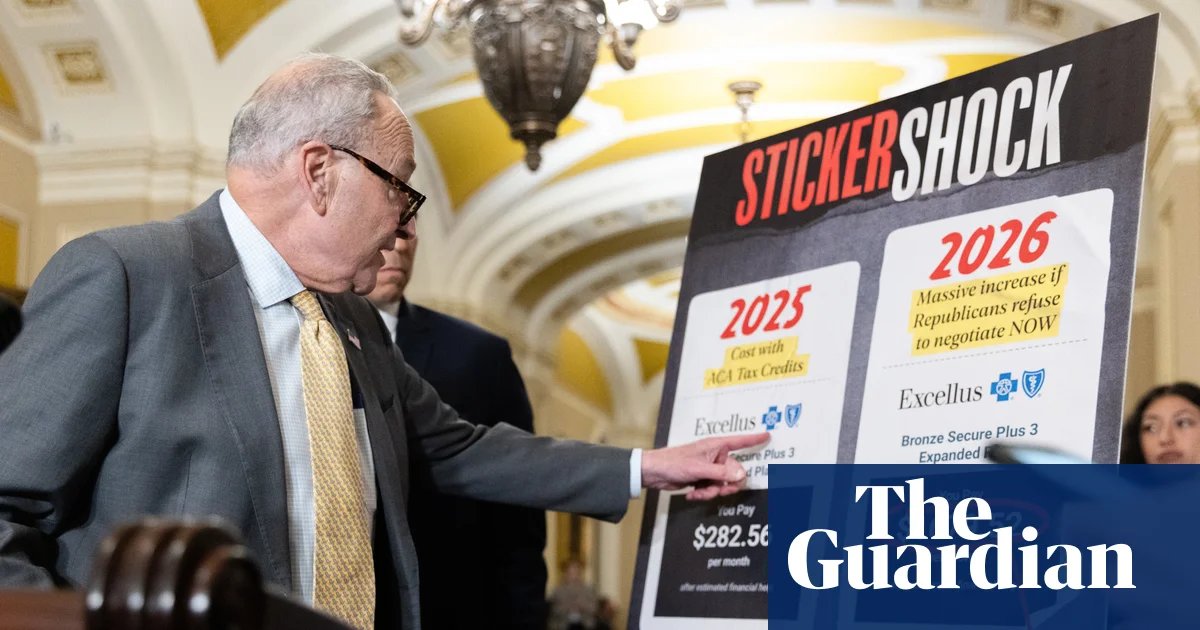
With subsidies for Affordable Care Act (ACA) health insurance set to expire, Americans who rely on them will probably switch to plans with lower monthly premiums and high deductibles or decide not to purchase any coverage, which will have a serious and damaging impact on the entire sector, according to healthcare policy experts.
The average amount ACA plan enrollees pay annually for premiums is estimated to more than double, from an average of $888 this year to $1,904 in 2026, according to a KFF analysis.
That will then have economic downstream effects, including for rural hospitals and people who have employer-sponsored health insurance, according to the experts.
With “a significant portion of people dropping their marketplace coverage and being uninsured, it doesn’t just impact them, it impacts everyone”, said Emma Wager, a senior policy analyst for KFF’s program on the Affordable Care Act (ACA).
In 2021, during the Covid-19 pandemic, Congress passed legislation to extend eligibility for ACA health insurance subsidies and increased the amount of financial assistance available to people who were already eligible for subsidies, which caused a dramatic increase in how many people enrolled in coverage through the healthcare marketplace.
Those premium tax credits are set to expire at the end of the year, despite a push from Democratic lawmakers and a small minority of Republicans to extend them for three years. On Thursday, legislation to preserve the credits failed to clear the 60-vote hurdle needed to pass in the Senate.
A Republican plan, which would have expanded health savings accounts and provided payments of up to $1,500 to people to purchase the most basic health insurance plans, also failed.
That anticipated expiration has so far not affected the number of people who purchased ACA health coverage. On 5 December, the Centers for Medicare & Medicaid Services reported that 5.7 million people had signed up for ACA insurance during the open enrollment period, which was slightly more than at the same time last year.
Still, Natasha Murphy, director of health policy at the Center for American Progress, a liberal thinktank, said she thinks the full impact of the subsidies expiring won’t become apparent until open enrollment ends Jan. 15.
“We will see actually who pays that first premium,” Murphy said. “I think that is really where the rubber is going to meet the road.”
In a recent survey, KFF found that if the subsidies expire, a third of the 24 million US adults who buy coverage through the ACA marketplace said they were likely going to select a lower-premium plan – with higher deductibles and out-of-pocket costs – while a quarter of enrollees said they would be “very likely” to go uninsured.
When you increase premiums dramatically, “the healthy people drop out and therefore the pool is sicker”, said Gerard Anderson, a professor of health policy and management at Johns Hopkins University.
It becomes a “death spiral”, Anderson said. “The sicker people are the only ones that stay in the program until it becomes no longer sustainable and the insurance company stops even offering the plan,” Anderson said.
Those people with high deductibles or no insurance could also struggle to pay medical bills if they become sick or injured.
Hospitals would then have to treat more people who do not have means to pay for their care, Wager said.
That would be particularly hard on small and rural hospitals “that have very thin margins”, Wager said.
“If they can’t make it work financially with the increase in uncompensated care that they are providing, they may have to close. In all likelihood, they will certainly think about raising their prices and charging everybody more,” Wager said. “That includes people with employer-sponsored insurance.”
Should the subsidies expire, when people in rural areas decide they still want health insurance, they will also see an even greater premium increase than those in urban areas, according to the Century Foundation, a progressive think tank.
Yet those same people who depend on rural hospitals and the ACA also are more likely to support Republicans, most of whom voted against extending the tax credits. More than half of ACA enrollees live in congressional districts represented by a GOP member, according to KFF.
“Farmers, ranchers … are heavily dependent on the ACA”, Wager said. “There are a lot of people who are represented by Republicans in Congress who have Affordable Care Act coverage who will bear the brunt of these premium hikes.”