dailynewsnblog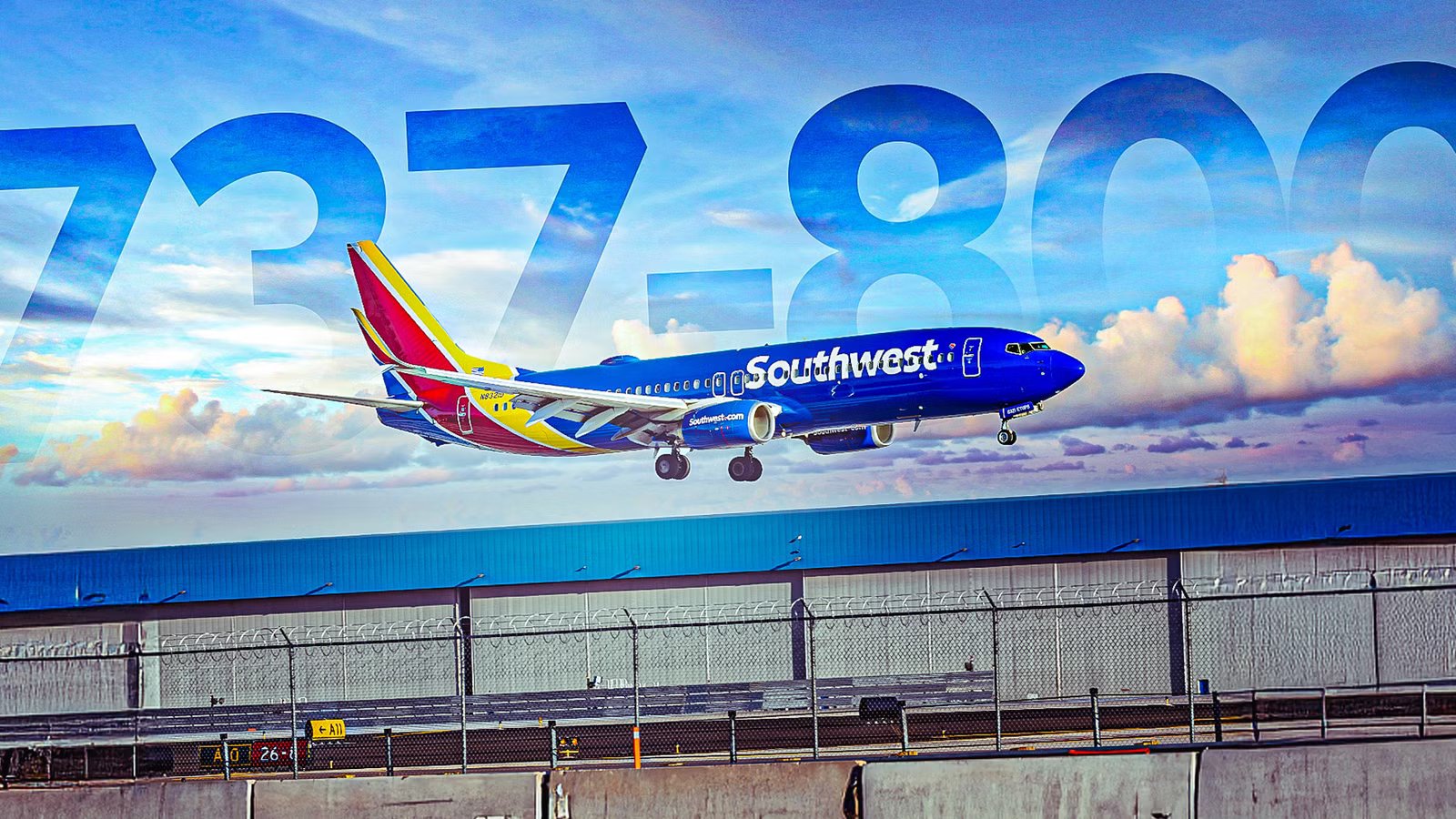
On March 20, 2025, a Southwest Airlines Boeing 737-800 began its takeoff roll on a taxiway at  Orlando International Airport (MCO). Fortunately, the aircraft did not lift off, and the takeoff was aborted. However, in the aftermath, investigators say that it was pilot error to blame.
The immediate reports that followed the mishap stated that the aircrew had mistaken the surface of the taxiway for the runway itself. The plane was cleared to take off by air traffic control. However, the crew failed to taxi to the runway before powering up.
Trouble In Orlando

During the incident, air traffic control noticed the airplane begin to take off from the taxiway, which runs parallel to the runway. Controllers then canceled takeoff clearance for the airplane, and the pilots rejected the takeoff. The aircraft safely returned to the apron with all 152 passengers and six crew aboard.
While the incident ended safely with no injuries or damage, the risk was very high as Orlando is famously busy during the spring break travel rush in Florida. The National Transportation Safety Board (NTSB) investigates these incidents all over the United States, and even some cases overseas that involve American aircrew and passengers.
 Southwest Airlines Flight 3278, serviced by aircraft N8315C, was bound for Albany, New York (ALB) when the incident happened, according to the Aviation Herald. The Federal Aviation Administration (FAA) collaborated with the NTSB to release the final report on Thursday, December 11. A key excerpt from the report was relayed in an update by the Av Herald:
“The captain’s failure to recognize that the airplane’s location did not agree with the assigned departure runway… [and] continuation error when he missed several cues that would have informed him that he was not on the assigned departure runway.”
The Series Of Events

In the investigation report, the captain was interviewed and recounted his actions during the lead-up to the mistaken takeoff roll. In his account of the events, the crux of the issue appears to be that after receiving takeoff clearance, the crew turned right on the taxiway H2 instead of runway 17R. They cleared the runway and final approach prior to running up the engines. The captain noted seeing the sign for 17R directly in front of his view, but did not notice that the surface was a taxiway and not a runway.
The captain stated that he was very focused on centering the aircraft and completing the pre-takeoff checklist items, which occupied his attention and prevented him from noticing that the surface of the tarmac in front of him was clearly not a runway. The parallel orientation of the taxiway meant that the signage was still directly in front of the cockpit, adding to the confusion.
Investigators asked the captain if he had not verified the painted numbers on the surface of the runway, to which he responded that he would not be able to see them from the cockpit. He answered that his visual references were lighting and the magnetic course, combined with the moving map display he used to maneuver during taxiing.

Which Southwest Airlines Operating Base Is Your Favorite?
Unlike major legacy carriers, which focus on funneling high-yielding traffic through major connecting hubs in order to efficiently transport them all over the world, Southwest Airlines has historically thrived with a unique operating model. The carrier has instead focused on offering convenient, affordable service on routes within the United States, primarily by connecting underserved communities. As a result, the airline has developed a system of operating bases all across the country, including some major facilities like Chicago Midway Airport (MDW) and Dallas Love Field (DAL). Which of the many Southwest Airlines operating bases do you believe is the best and what leads you to this opinion?
Standard Operating Procedures

Investigators found that the captain had not followed Southwest’s standard operating procedures (SOP). Those procedures list a number of references that are expected to be used to confirm an aircraft is in the correct position for takeoff. The references may include:
|
Southwest Airlines SOP References |
|---|
|
Aircraft heading indicators (including HGS) |
|
Navigation display |
|
Runway signage |
|
Painted runway designation (may not be visible for displaced thresholds or intersection takeoffs) |
|
Jeppesen -9 page |
|
Runway lighting (expected lighting versus actual lighting) |
|
Verify the aircraft is on the assigned runway for takeoff using all available references. |
The NTSB found the captain had failed to properly and correctly utilize visual references as he maneuvered the aircraft into takeoff position. Among the key failures were not noticing the yellow painted centerline and the significant difference in surface between the taxiway and runway.
Additionally, investigators found that the first officer was distracted by the captain’s request for him to confirm checklist items as the plane turned onto the taxiway, which was also contrary to the airline’s SOPs and contributed to the mishap.