dailynewsnblog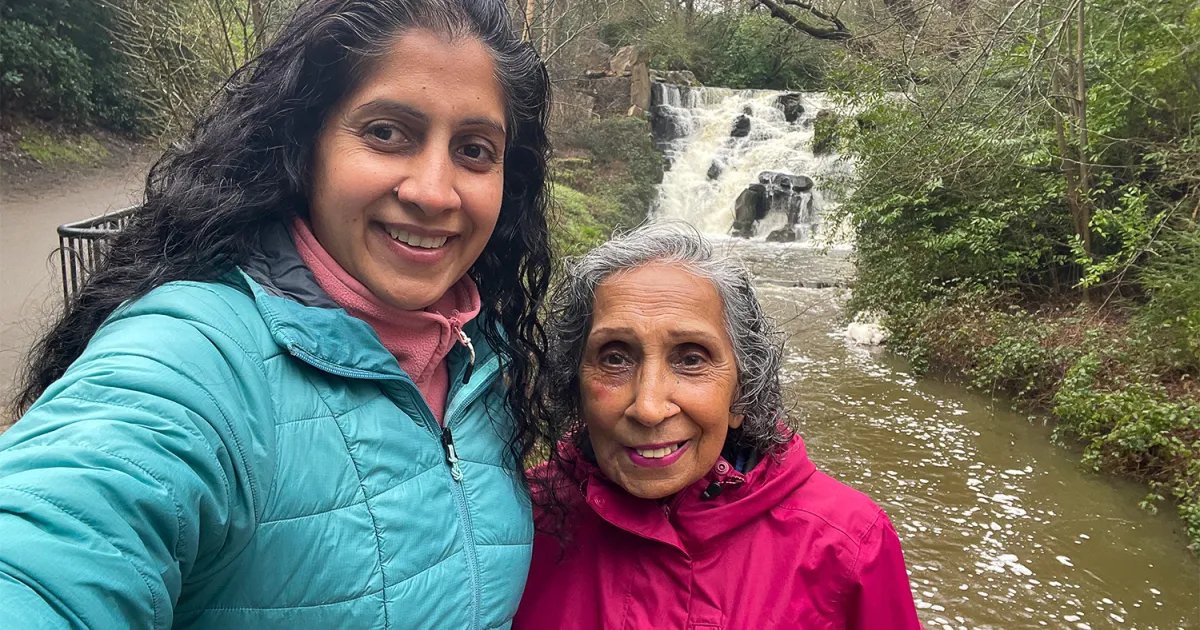
West London, UK – It was a rainy evening, and my mother and I were at home watching a Bollywood comedy when I received a call from the hospital.
After months of medical appointments and misdiagnoses, part of me wanted to ignore it. Instead, I went upstairs to answer. The doctor was calling to say my mother’s bone marrow results were back, and we had to go into the hospital the next day.
The call left me anxious, but when I told my mother about the appointment, I tried to be reassuring. “Don’t worry, Mum, it’ll be clear, nothing serious,” I said.
The next morning, the hospital waiting area was quiet. No patients. Just the hum of the building. We sat side by side, facing the wall.
When my mother’s name was called, we entered a small room with stark white walls, two chairs, and barely any space to breathe. The doctor calmly explained that the results showed myeloma, a rare blood cancer. Treatment had to start immediately.
I sat there frozen as my mother began asking questions.
My mother, then 72, would start with weekly chemotherapy sessions for two months. The doctor handed me a sheet listing the side effects – nausea, fatigue, weakness, and weight loss. Chemotherapy would drain my mother, who was already slight, and she would need to rest.
Sitting in that small room, I realised then that life had shifted. My ageing father wouldn’t be able to help much, and my older brother is estranged from us. I would be doing this solo, a single woman with no partner to turn to, caring for the person who had always cared for me. I would no longer be my mother’s child, but her carer.
![carers [Minreet Kaur/Al Jazeera]](https://www.aljazeera.com/wp-content/uploads/2026/02/e89a0873-87dd-495a-84a7-82aefffed39d-1-1771164558.jpg?w=770&resize=770%2C513&quality=80)
Losing a sense of self
We left the hospital overwhelmed. When we returned to our terraced house in West London, I sat my father, Rajinder, down in our small living room and told him about the diagnosis. He looked confused and turned to his wife, mumbling, “Pritpal, don’t worry,” and “keep the faith”, before heading upstairs to pray as part of his daily routine.
Later that day, flowers arrived. My mother, suffering from back and chest pain and fatigue, had been on sick leave from her retail assistant job, and her colleagues had sent her a bouquet to cheer her up. She broke down, thinking they knew about her diagnosis.
“I don’t want to give up work,” she told me, tears in her eyes.
The days that followed were filled with fear and grief, and I felt sick with worry, imagining life without my mum.
Our lives changed instantly after my mother’s first round of chemotherapy in September 2023.
My mum became so weak that she would stay in bed all day. She found it hard to eat, and some days vomited. If she used the stairs, she would have to lean on me.
Like many of her generation in our local South Asian community, she saw cancer as something to be ashamed of or that could spread. Because of this taboo, she was adamant that I shouldn’t ask others for help with cooking or other chores. We’d make do with smoothies and soup, she told me.
Everything fell on me.
I already lived with my parents, but went from having a full-time job as a broadcast journalist to freelancing and becoming a full-time carer.
Very quickly, I didn’t have time for anything other than making sure my mother ate, rested, drank enough water and didn’t have a temperature. I woke before her to make breakfast, gave her massages, and researched which foods and herbs could help during her treatment. When I could, I’d go to the gurdwara to pray for my mother’s recovery and bring her prashad (blessed food), hoping to make her feel better, even if she didn’t feel like eating.
The only real time I had to myself was when my parents went to bed around 8pm. I very quickly felt I’d lost a sense of self, and I couldn’t see things improving any time soon.
I started asking for caring advice on social media and a myeloma support group – it was the only way I could feel connected to the outside world and meet other carers.
About a month after my mother’s treatment started, I wrote a post about the tiredness and isolation that come with caring. One person commented that caregivers work around the clock looking after a loved one, yet are often looked down on and seen as incapable of doing anything else. It made me think of how invisible we are. My friend Bill Singh also saw the post. I’d known him for five years before I learned he had been caring for his parents full-time for years.
“I know how you feel,” he said in a message. “It’s tough.”
![Carers [Courtesy of Alzheimers Society]](https://www.aljazeera.com/wp-content/uploads/2026/02/image21-1-1770303039.jpg?w=770&resize=770%2C513&quality=80)
‘I get on with it’
On a cold, windy afternoon, my parents and I visited Bill’s home, about a 20-minute drive away. My mother has depression linked to her illness, and getting out of the house helps her feel better.
Bill is 64 and has been a carer since his 40s. He first cared for his mother for 15 years as she became increasingly frail with age. As her needs grew, Bill made the difficult decision to give up his job in 2007 as a manager at a freight company so he could be with her full-time. She passed away in 2022. Shortly after, Bill became the main carer for his father, who is now 96 and living with Alzheimer’s and dementia.
In their cosy living room, with a red carpet and family photos lining the walls, Bill brought out some tea and biscuits. He was yawning. “I’m knackered,” he said.
I asked him how long he’s been caring for his father. “Too long,” he replied with a cheeky smile. Warm and often cracking jokes, humour helps him cope.
Bill plans his entire day around his father’s waking hours. He gets him up around 8am, makes breakfast and keeps an eye on him while he showers so he doesn’t slip. He prepares meals, manages medication, cleans, shops, and takes his father to medical appointments. His father doesn’t eat much, so Bill gently encourages him to do so throughout the day. His father is nearly six feet tall and strongly built, and it can be physically exhausting to help him in and out of the car or deal with moments when he refuses to move.
On Thursdays, they attend a senior citizens’ get-together where his dad does gentle seated exercises and has lunch with others. “I don’t want him stuck at home watching TV all day,” Bill said. “It’s important he sees people.”
![Carers [Courtesy of Bill]](https://www.aljazeera.com/wp-content/uploads/2026/02/IMG_6359-1-1770303452.jpg?w=770&resize=770%2C770&quality=80)
As the only single sibling of five, the caring role fell to Bill. He gets some support from his siblings, who may bring their father and brother food or invite them over to eat, so Bill doesn’t always have to cook. Most of the time, Bill prepares frozen meals or takes his father to eat at the gurdwara, where langar (the free, vegetarian community kitchen) is available.
As we sat together, Bill repeatedly reminded his dad to take medication, eat something, or let him know if he needed to use the toilet. He has to constantly repeat himself and check on his father.
The conversation between them is now limited. “I feel like a broken record,” Bill told me with a sombre expression. “I repeat myself all the time. It frustrates me, but it’s not his fault. This is what dementia does.”
When his father got up to use the toilet, Bill asked if he needed help. His father insisted he was fine, and we watched as he carefully climbed each step on his own, determined to be independent.
Bill admitted in a tired voice that he sometimes shouts or gets annoyed, then feels guilty.
There are nights when his father wakes at 1am, convinced it’s time to go to the temple. He’ll start tying his turban and try to leave the house. Bill then has to guide him firmly back to bed. “Alzheimer’s is a deadly, silent disease,” he explained. “It creeps up so fast.”
Bill hasn’t seen some friends in years and said that he often feels lonely. “I can’t go anywhere and leave dad alone, so I stay home,” he said. He relies on daily phone conversations with family to stay positive.
He told me he still hasn’t replaced a broken kettle, not because he can’t afford it but because he doesn’t have the time or mental space to do so.
![Carers [Courtesy of Bill]](https://www.aljazeera.com/wp-content/uploads/2026/02/image3-1770303050.jpg?w=770&resize=770%2C513&quality=80)
Bill receives very little formal support. He receives Carer’s Allowance, a weekly payment of 83.30 pounds ($111) from the government, and he and his father survive on this payment, pension money and savings from when he worked.
“Carer’s Allowance is an insult,” he said, adding that it goes quickly with “rising bills”.
“It costs me more in petrol to get to [medical] appointments than I get from Carer’s Allowance,” he said. “Without carers like us, the NHS [National Health Service] would collapse, but no one looks after us.”
Still, despite the loneliness, exhaustion, and lack of government support, Bill says he does not resent caring for his father.
“I want to care for my dad; he cared for us. This is my duty,” he said. “I wouldn’t change caring for my dad for the world. It’s hard being a sole carer, but I get on with it as so many others do.”
In recent months, his father’s health has deteriorated. He has become very frail and now sleeps for much of the day and barely eats. Bill hardly sleeps as he frequently checks on his dad, and his father’s situation weighs heavily on him.

A carer for three decades
On the cul-de-sac where we live, 79-year-old Linda lives 100 metres (328 feet) away in a brown brick terraced house with big windows. I have known her since I was a child, and now we speak every few days over the phone or in person.
Linda, who asked that only her first name be published, is a bubbly woman who always thinks about others’ well-being. She cared for her husband, John, full-time for nearly three decades.
After several hospital admissions, John was moved to a nursing home under palliative care in February 2023 and was not expected to survive. He has now been there for three years, and the NHS covers the cost of the home.
Linda became a carer in 1998 when John was diagnosed with multiple sclerosis, a condition that damages the protective coating around the nerves, affecting movement, cognition and other functions. John, funny and full of life, always made Linda feel loved and secure. He was a driving instructor until about 28 years ago, when he had to stop working. Linda gave up her own career working with special needs children to look after her husband.
At first, John could walk short distances in their garden with the support of the washing line. Eventually, he couldn’t stand at all. By 2008, he was no longer able to hoist himself up onto the stair lift, so Linda turned the living room into a bedroom and made him a bed on the floor.
Linda cooked, fed her husband and helped him use the toilet and bathe with no outside help. My daughter “found out what help I might be entitled to, but I’ve never claimed Carer’s Allowance. It all feels too overwhelming,” she told me, referring to the time-consuming application process.
![Carers [Courtesy of Linda] -Linda note](https://www.aljazeera.com/wp-content/uploads/2026/02/Linda-note-1-1770303344.jpg?w=770&resize=770%2C1027&quality=80)
Linda’s health is declining due to old age and fatigue, and though she herself was diagnosed with MS in 1994, she remains physically strong. Her daughter, who is in her 40s, supports her mother, taking her to physiotherapy sessions and insisting she take breaks twice a week from visiting John in the care home to see her grandchildren or friends or go to the theatre. The home has taken pressure off Linda.
She and John speak every day, sharing jokes. “He never gives up. And that gives me strength, too,” she said.
When she visits, she brings homemade food. “He likes my bangers and mash. And my steak and kidney pie,” she laughed.
Last August, they celebrated his 80th birthday at the nursing home with family.
I recently ran into Linda as she walked to her car, and she held on to it for support as she came up to me. I asked how things were with John. Linda was anxious about the possibility of caring for John full-time again. The care home says John is stable and can come home, but she will push back, she told me. “I am worried and stressed about how I will cope if he comes home, as I am struggling with my health and can’t do what I used to be able to do,” she said.

Unpaid carers propping up the health system
Over the past two years, the appointments for my mother’s blood tests and treatment have seemed never-ending. After six months of chemotherapy, my mother entered remission, but she still needs monthly infusions. Although she is tired and suffers from bone and neck pain, she is walking more. I manage all the grocery shopping, household chores and other errands for my parents. My mother’s brothers help when they can, collecting her from appointments.
My mum encourages me to run, go on dates and meet friends, but caring leaves me too drained to think about my own needs, and I feel guilty if I take time out for myself. Sometimes, I manage to write articles for newspapers or magazines, or to go for a run to clear my head. But I worry about growing old alone. Caring has diminished my circle of friends and my time to meet a partner, someone with whom to build a family of my own.
In the UK, there are around six million unpaid carers, many of them family members and partners, but only one million receive Carer’s Allowance, the lowest income-replacement benefit of its kind in the country. More than 1.5 million people in England and Wales provide more than 50 hours of unpaid care weekly, yet support is limited. Only 55 percent of carers get the help they need, such as breaks, paid care workers or emotional support, according to a survey by the UK’s largest carers charity, Carers Trust.
Caring takes a serious toll on health. Half of carers report adverse effects such as stress, tiredness, and poor sleep, and they are 1.4 times more likely to be in poor health than non-carers. Financial hardship is common – 28 percent of informal carers live in poverty, compared with 20 percent of non-carers.
According to Carers Trust, many carers are not identified, so they cannot access support. The charity has called on the government to provide a robust social security system for intensive carers, invest in specialist employment support, and help those in crisis.
The need for caring, meanwhile, is immense. In an ageing UK, about 2 million people have unmet care needs for daily activities such as getting out of bed, bathing, eating and going to the toilet.
“Carers are propping up our failing health and social care system and feel ignored. Many have cut back or left paid work, driving them into poverty,” Ramzi Suleiman, policy and public affairs manager at Carers Trust, told me. “Local carer organisations face funding cuts, limiting support. Carer’s Allowance is outdated and inadequate.”
![Catherine Ann Reid, 62, and her daughter, Chloe, 23 [Courtesy of Catherine Ann Reid]](https://www.aljazeera.com/wp-content/uploads/2026/03/IMG_1563-1-1774857187.jpg?w=770&resize=770%2C513&quality=80)
‘Chloe has taught me so much’
Oftentimes, carers will discuss the hardships, but one day, I stumbled upon a LinkedIn post by Catherine Ann Reid describing how caring for her daughter, who lives with physical and learning disabilities, is an act of unconditional love.
I met 62-year-old Catherine Ann over Zoom. We could not meet in person as she has a dog, and both my mother, who has a weak immune system due to her treatment, and I are highly allergic to pets.
Catherine Ann sat on a couch next to Chloe, her arm around her daughter, who sipped tea and watched a favourite television programme. As we spoke, Chloe would chime in, and Catherine Ann would respond brightly, softly touching her hair.
Chloe, 23, has Cohen syndrome, a rare genetic condition characterised by severe learning disabilities, autism, a degenerative eye condition, chronic neutropenia – a rare blood disorder defined by a persistently low count of the white blood cell critical for fighting bacterial infections – and significant motor skill challenges.
“Nothing prepares you to be a carer,” Catherine Ann reflected. “I’m doing today what I’ve done for Chloe every day of her life. It’s exhausting, but she’s my child.”
Before Chloe was born, Catherine Ann was a sales director for a communications agency in London. Her pregnancy was uneventful, and Chloe was born small. But when Chloe was a few days old, she was unable to latch on to feed and was slightly jaundiced. Before long, mother and daughter were caught up in blood and genetic tests.
“We were in the system from day one,” she said. “I realised very quickly that I was being thrown into a world I didn’t understand. There’s no manual for having a child who is ‘different’.”
When Chloe was 18 months old, her father left. Catherine Ann adapted her career to survive financially while meeting Chloe’s growing needs, switching to freelance and fractional work to remain flexible. Chloe was not formally diagnosed until she was nine, though she had already been treated for recurring respiratory infections, developmental delays, and other symptoms associated with Cohen syndrome.
Chloe, who first learned to walk at five, has had three major surgeries. She had multilevel orthopaedic bilateral surgery, which involved having her hips and femurs broken, derotated and pinned, and her feet and knees reconstructed, explains Catherine Ann.
“She had to learn to walk again,” she said. “After a period of time, her body rejected the metal work. She had further surgery to remove it and then had to learn to walk for a third time.”
She also had surgery to correct an aggressive lumbar scoliosis, and her lower five vertebrae were fused together.
“Despite everything,” Catherine Ann said, “She is an absolute joy.”
“She strives every day to be the best she can be, and she inspires everyone who knows her,” she added, explaining how Chloe loves horse riding and musicals, trying new activities and works hard to adapt to different situations.

As Chloe entered adulthood, the pressures on her mother intensified. Chloe attends college three days a week, studying a foundation course covering horticulture, animal care, cooking, art, community activities, English, and maths. On college days, Catherine Ann rises at 6am to manage the household, prepare meals, organise medication, and get Chloe washed, dressed, and ready.
“My partner, Gary, is incredibly supportive,” Catherine Ann said. “But the responsibility is constant.”
Chloe requires support for her daily living for everything from dressing, hygiene, to travel and will never live independently.
Chloe can become ill quickly, so it would be “impossible” to work for someone else, Catherine Ann, who now runs her own start-up, a life admin platform, explained. “Employers are not geared up to support parents, never mind parents of a child like mine,” she said.
She sees having her own business as the best way to ensure the funds are available for Chloe to receive the best possible care throughout her life.
“Every SEND [special educational needs and disabilities] parent’s greatest fear is dying,” she said quietly. “Who will look after our children when we’re gone?”
For now, “I live in burnout because I have no choice and little support” from both the government and outside.
Despite the daily exhaustion, Catherine Ann remains resolute.
“Chloe has taught me so much,” she explained. “Through her, I have become a better person, I am more resilient, I see people for who they are, my values are stronger. She has learned to walk three times. If she can do that … I can do anything.”
![carers [Minreet Kaur/Al Jazeera]](https://www.aljazeera.com/wp-content/uploads/2026/02/IMG_3219-1-1771164575.jpg?w=770&resize=770%2C513&quality=80)
‘Your world becomes very small’
Most days, I am up at 6am to prepare breakfast and clean. The days are long, and I am mostly at home with two elderly parents. I run errands, cook dinner, clean the house, and take my mum to her appointments and her monthly treatment sessions. If I manage to make a cup of chai, I’m not seated for long before the doctor calls about a follow-up appointment for my mother.
In February, I met Satnam Kaur, 47, through a Punjabi-language film project about carers we’re both involved in. She is the mother of three children, and is a full-time single carer for her daughter, Gurpreet, 23.
Her daughter, whom she calls Bubbi, was born with a very rare chromosome disorder, resulting in severe physical and learning disabilities and a range of complex health conditions. She has needed one‑to‑one care since birth.
Satnam tells me caring for Bubbi is the greatest responsibility and privilege of her life, but it is also demanding. “Caring is not a role you step in and out of – it is constant, relentless, and often invisible,” she explained. “What people don’t see is how isolating it can be. Your world becomes very small. You lose friendships, social connections and even parts of yourself because everything revolves around the person you care for. The isolation is emotional, social and even physical – you are often housebound, exhausted and carrying everything alone.”
Bill, Satnam and I belong to the Sikh community, where caring is rarely talked about and is seen as a duty. But many carers in our community and beyond are silently breaking under the pressure, says Satnam. The financial burden adds another layer of isolation.
At the gurdwara she likes to go to in Warwick, where many carers come with their family members, there is a move away from silence and a growing openness to conversations around acknowledging carers and supporting them, she says.
Carers are the backbone of our families, but are often the most overlooked, she adds.
Beyond recognition, which is about shared responsibility and respect, carers need “practical support, financial stability, and mental health support,” she said.
Together, we are working on a podcast about carers and looking for ways to bring individuals together to seek support and advice, and raise awareness about caring challenges in our community.
Caring means giving so much of yourself all the time, and I often wish more people would just ask how I’m doing.
For now, what keeps me going is my faith, talking to the few close friends who check in, going for runs, and going on walks with my mum.
My mother also gives me strength. I am grateful for every moment I have with her because I don’t know how long we have together. I try to prepare food she likes and buy flowers to bring a bit of joy to each day, even though I often feel hopeless and exhausted.
She wants to walk the London Marathon this year. The last time she tried, in 2023, the year she was diagnosed with blood cancer, she had to stop after 17 of the 26.2 miles. But she always promised to return, and I plan to support her across the finish line. Though she feels weak, she wants to do this to help more women like her feel motivated not to give up on life.
My mother still endures constant pain, and at the end of a long day, I massage her head and neck, something she used to do for me when I was little. The other night, as she lay in bed, I kneaded slow circles across her head.
“I wish I could do more for you,” she told me, closing her eyes. She said she’d be lost without me. In that moment, I realised what matters most is the love I give her – it’s what helps her continue her fight to get better.