dailynewsnblog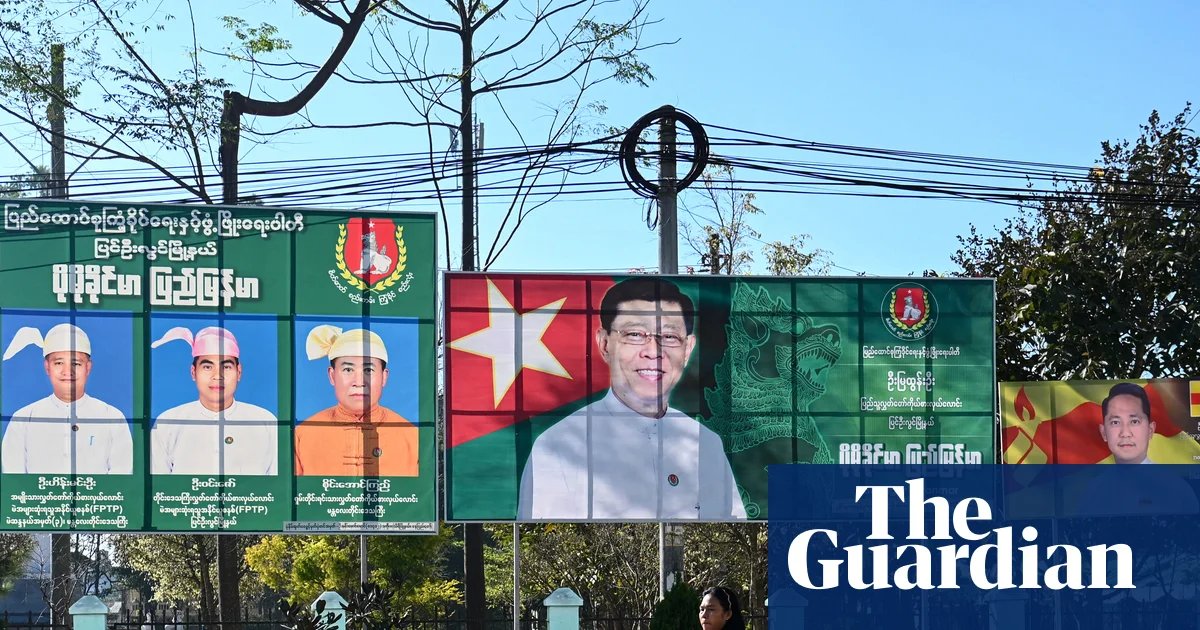
Myanmar is preparing to go to the polls for the first time since its military seized power in a coup in 2021, but with its former leader behind bars, its most successful political party disbanded and roughly a third of the country either disputed or in rebel hands, few believe claims by its military rulers that its 28 December election will be “free and fair”.
“This is not for the people, this is for themselves,” says Pai, 25, who fled Myanmar after the military seized power. “They [the ruling junta] are looking for a way out of the trap they are [in].”
When polls open on Sunday, almost five years after the military seized control of the country, the generals will be hoping the vote legitimises their grip on power – and allows them to repair their image of international pariahs.
The military has rejected criticism of the vote, saying the election was not being conducted through coercion and that it has public support.
“The election is being conducted for the people of Myanmar, not for the international community,” said the junta spokesperson Zaw Min Tun. “Whether the international community is satisfied or not, is irrelevant.”
Many western governments, and the United Nations, have dismissed the vote as a sham. However, the junta’s most important ally, China, which has helped the military claw back from the brink on the battlefield, is backing the election, which is being held in three phases. Commentators say that China views the vote as the country’s best path back to stability.
Analysis shows the conflict has only intensified over the past year. From 1 January to 28 November 2025, military air and drone strikes increased by about 30% compared with 2024, according to Acled, which tracks conflicts around the world. Civic infrastructure such as schools and medical facilities have been hit in near-daily strikes. This month, dozens were killed in a military strike on a hospital in Rakhine state, which is mostly controlled by the Arakan Army, an opponent of the military.
Conscription-related abductions increased by 26% compared with 2024, with the military snatching people from the streets and their homes and forcing them to serve, in a desperate attempt to boost their dwindling ranks.
Young people who have the means to do so have fled military-controlled areas such as the former capital Yangon, fearing they could be forced to serve.
‘Sham elections’
There is such intense paranoia among Myanmar’s ruling military that a new election protection law has been passed, under which any criticism of the election can lead to a minimum sentence of three years in prison, and even the death penalty. Since July more than 200 people have already been arrested, including for merely liking social media posts criticising the vote. In cities such as Yangon residents report the authorities going door-to-door instructing people to vote. People may have little choice but to obey, activists say.
“Everybody knows well how this military is ruthless and will continue to be very ruthless. Anyone who’s seen as disapproving of the junta’s sham election are at a very high risk,” says Khin Ohmar, a pro-democracy activist who lives in exile, citing the use of repressive laws to arrest those who criticise the vote or the military’s rule.
There will be 57 parties on the ballot on Sunday, but the majority are perceived as being linked to or dependent on the military. Analysts say they create only the illusion of choice, but do not represent any true opposition to military rule. Only six parties are running at a nationwide level, including the military-backed Union Solidarity and Development party, which has fielded the largest number of candidates and is effectively running uncontested in dozens of constituencies.
Aung San Suu Kyi’s party, the National League for Democracy, which won a landslide victory in the 2020 election, was dissolved after it refused to comply with a demand to register with the junta-backed Union Election Commission. Dozens of ethnic parties were also dissolved. According to election monitoring group Anfrel, 57% of the parties that ran in the 2020 general election no longer exist, even though they received more than 70% of votes and 90% of seats.
Large strips of territory will be excluded from the elections, illustrating how much ground the junta has lost since the coup – even as it has regained momentum on the battlefield.
The military has said there will be no voting in 56 of 330 townships. Voting has also been cancelled in an additional 3,000 wards and village tracts, with analysts estimating about a third of the country will be excluded from the vote.
Many areas are in the midst of intense fighting, or under the control of opposition groups. The country has been locked in a fierce conflict since the 2021 coup, when the military imprisoned then de facto leader Aung San Suu Kyi and opened fire on protesters calling for the return of democracy.
Communities took up arms and formed people’s defence forces to fight against military atrocities, while older, ethnic armed groups that have long fought for independence also launched attacks, leaving the military desperately overstretched. Despite relentless airstrikes and violence that UN experts have described as likely war crimes, the junta lost vast areas of territory along its borders. Some began to speculate the military could even be overthrown.
Support from Beijing has allowed the generals to fight back. China, which feared even greater instability were the junta to collapse, cut off cross-border supplies to some of the military’s most formidable enemies in northern Shan state. Two of these powerful ethnic armed groups, the TNLA and MNDAA, handed territory back.
The military, freed up to fight elsewhere, has also adapted its tactics, enforcing mandatory conscription, making better use of drones and reforming its chain of command to allow it to deploy airstrikes more quickly.
In the run-up to the election, it has intensified its bombardments, seeking to cement its power in areas where it plans to hold voting. That is unlikely to ease after the vote, said Richard Horsey, senior Myanmar adviser at the Crisis Group.
The military may seek to agree to ceasefires with some groups after the election, he said, but any such deals will be tactical in nature, to give the military respite in certain areas so that it can target its force elsewhere.
“They are determined to continue pressing their advantage and clawing back as much of the territory that they’ve lost since the coup as possible,” said Horsey. “This isn’t about a new civilian government shifting to a more soft approach.”