dailynewsnblog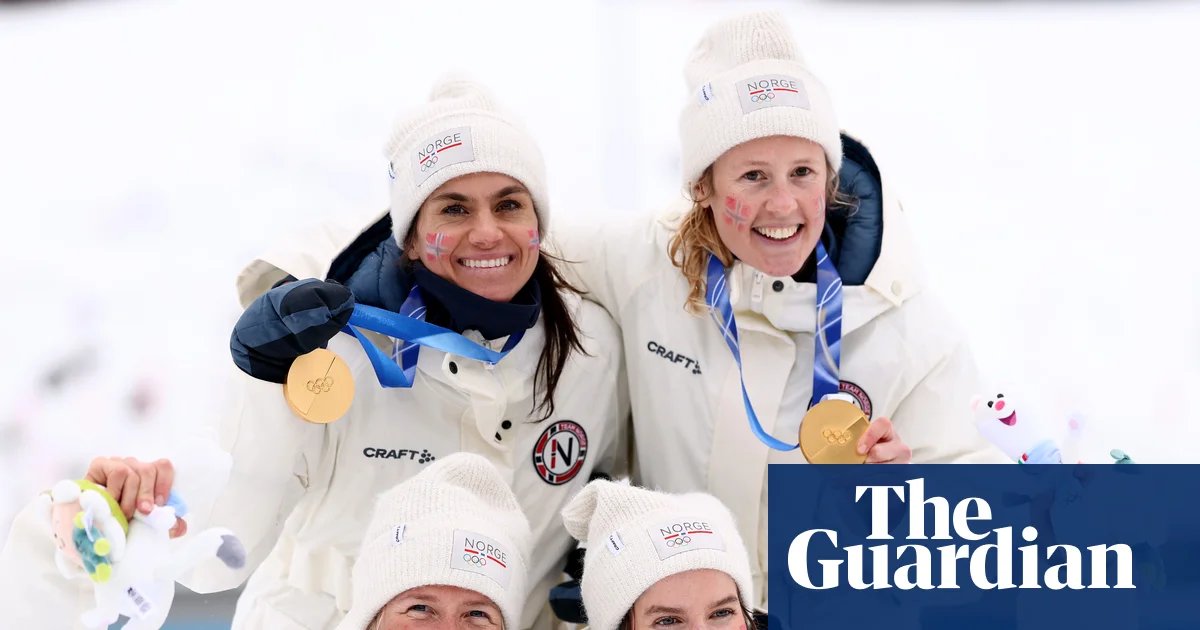
Norway has once again topped the Winter Olympics medal table, surpassing countries with far larger populations.
The Scandinavian country won more gold medals (18) and more total medals (41) than the US, who came second in both categories (12 golds and 33 total medals). Norway’s 18 golds were the most by a country in Winter Olympics history, while their cross-country skiing hero Johannes Høsflot Klæbo accounted for six golds on his own, more than the all but seven other countries at this year’s Games.
The achievements of Norway, which has a population of about 5.7m, are all the more remarkable given that they outperformed winter-sports nations with far larger populations such as the US (342m), China (1.4bn), Germany (84m), Italy (59m) and Canada (40m). The Netherlands, which excels in speed skating, also punched above its weight, finishing with 10 golds – the same as host nation Italy – despite its relatively small population of around 18m.
It was also a good Olympics for countries with modest winter sports traditions. Great Britain enjoyed its best ever medal haul at a Winter Olympics with three golds, a silver and a bronze, as did Australia (three golds, two silver and a bronze).
While the US finished in second place, the Americans’ 12 golds were the most at a Winter Olympics in the nation’s history.
Norway’s success is nothing new. The Norwegians have won the most golds at every Winter Olympics since 2014 (they tied with Germany in 2018). It also has world class athletes in other areas such as Erling Haaland and Ada Hegerberg (football), Casper Ruud (tennis), Viktor Hovland (golf), Jakob Ingebrigtsen (athletics) and Solfrid Koanda (weightlifting).
While the country’s climate and terrain play a part in its Winter Olympics success, other factors are at play. It is one of the wealthiest countries in the world per capita, while sports and exercise are a large part of many Norwegians’ lives.
Unlike countries such as the US, Norwegians put less emphasis on competition and specialisation in their youth sports – scores are not recorded in team sports matches featuring children under 12 – and more importance on fun. Norwegians believe this leads to fewer children becoming discouraged and quitting sports before they have time to develop their potential.
Norway’s Winter Olympics success is also concentrated in sports such as cross-country skiing, biathlon and ski jumping.
“We don’t do skeleton or bobsleigh because that costs too much money. We are a very rich country, but we believe in the socialist way of doing things. That success should be from working hard and being together,” Morten Aasen, a former Norwegian Olympian, said in 2018.
Geir Jordet, a professor at the Norwegian School of Sports Sciences in Oslo, told CNN Sports his country’s athletic success comes down to a simple formula: “Collaboration, communication and care.”