dailynewsnblog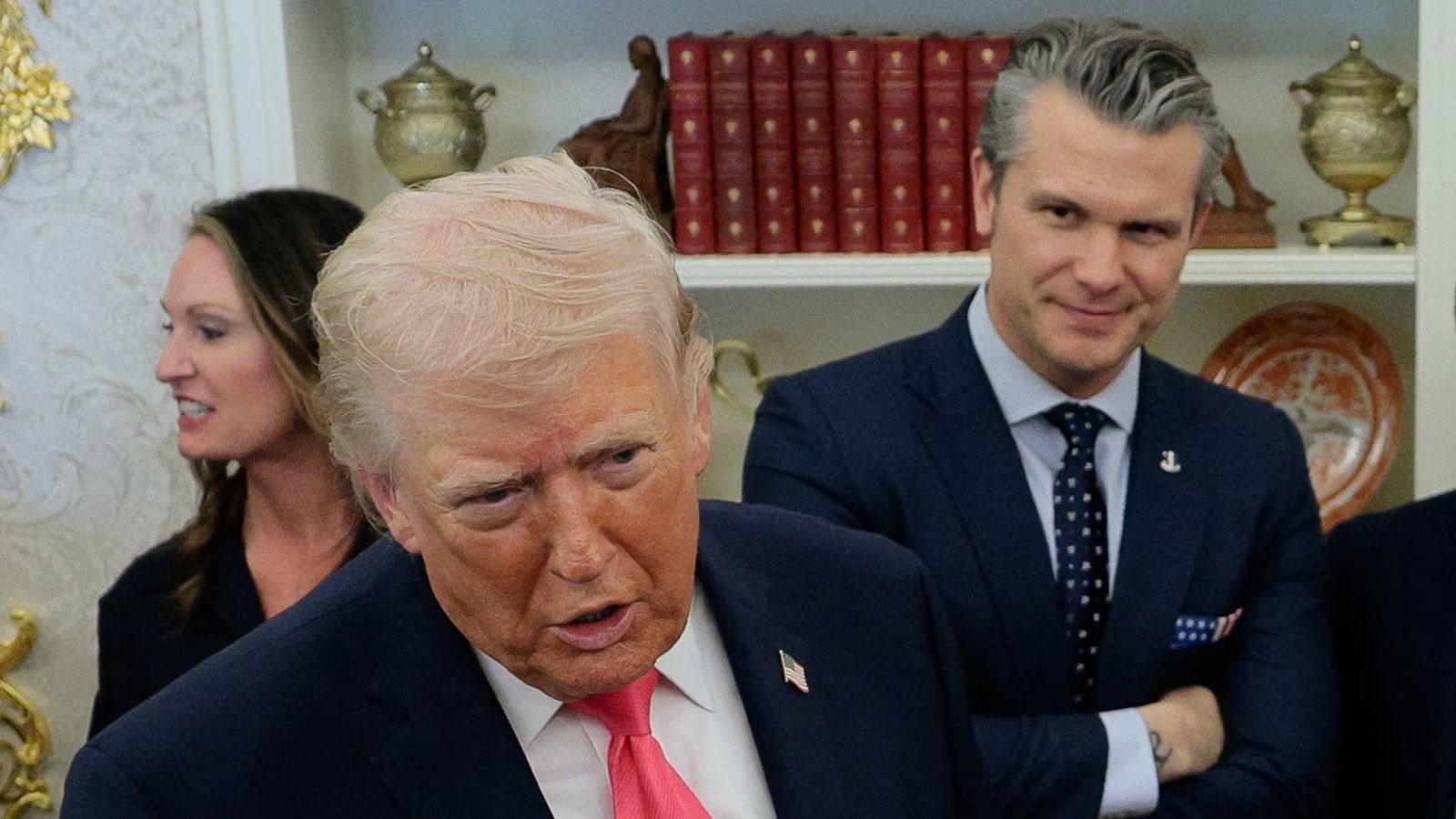
As the U.S. waged war over the last five weeks, President Donald Trump and Secretary of Defense Pete Hegseth have repeatedly said Iran’s capabilities were decimated — including its anti-aircraft defenses, which were taken out by American forces.
That assertion seems to have come into question Friday when, according to several U.S. officials, Iran appeared to down a U.S. fighter jet, an F-15E, over its territory.
One of the crew members was rescued, a U.S. official said. The status of the other crew member was not known and a search and rescue operation was under way according to officials.
Trump has been briefed on the incident, according to the White House. The Pentagon has not commented.
Another official said two Black Hawk helicopters involved in the search and rescue for the crew of the F-15E were also struck by incoming fire and an A-10 aircraft was hit in a separate incident and crashed in a neighboring allied country. The pilot was rescued in that case.
On Wednesday, in his first primetime address to the American people since the start of the war, Trump extolled the might of the U.S. military, threatening to attack Iranian power plants if they failed to reach a deal to end the conflict.

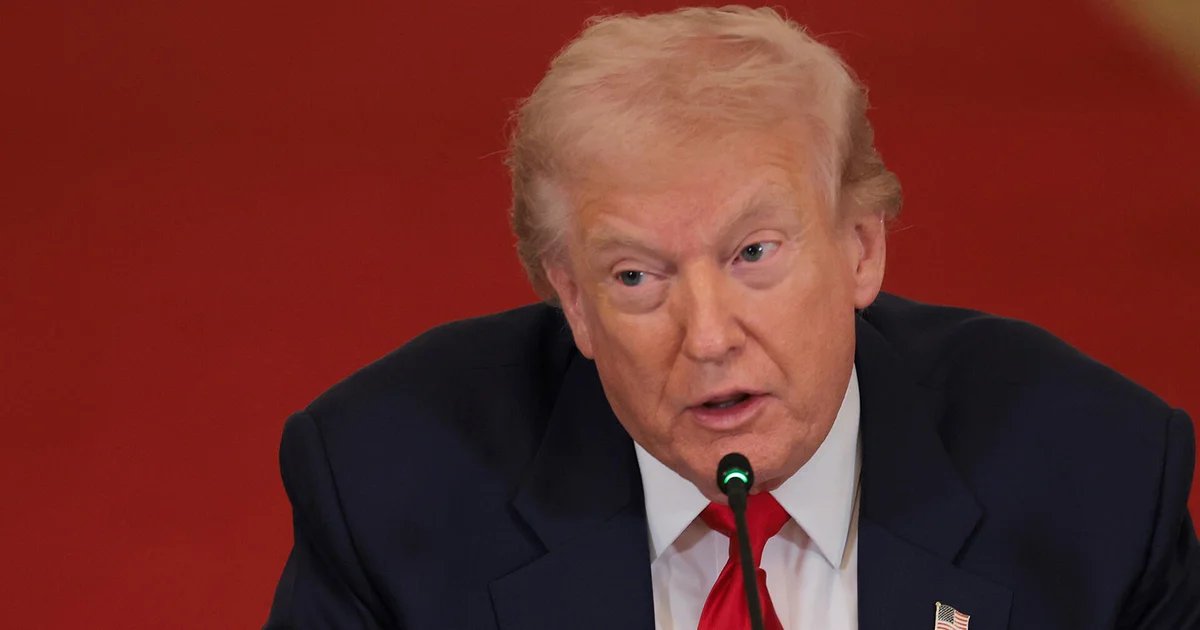
President Donald Trump walks to the podium to deliver an address to the nation about the Iran war at the White House in Washington, April 1, 2026.
Alex Brandon/Pool/EPA/Shutterstock
“We could hit it and it would be gone, and there’s not a thing they could do about it. They have no anti-aircraft equipment. Their radar is 100% annihilated,” Trump said from the Cross Hall of the White House. “We are unstoppable as a military force.”
In that speech, the president claimed Iran’s air force was “in ruins” and that “their ability to launch missiles and drones is dramatically curtailed.”
“Never in the history of warfare has an enemy suffered such clear and devastating, large-scale losses in a matter of weeks,” Trump said.
It’s not the first time during the conflict that the president described the operation as an ongoing success that has enabled the U.S. to dominate Iranian airspace.
The president addressed an investors conference in Miami on Monday, and again painted Iran as a diminished adversary on the battlefield unable to protect its skies.

President Donald Trump delivers an address to the nation about the Iran war at the White House in Washington, April 1, 2026.
Alex Brandon/Pool/EPA/Shutterstock
“[Iran is] not powerful anymore. Within two days, I think the damage was done. But now it’s really done. Now we’re just going after targets. And again, they have no anti-aircraft, so we’re just floating over the top looking for whatever we want, and we’re hitting it,” the president said “And we have another 3,554 targets left, and that’ll be done pretty quickly.”
And a week earlier, Trump rejected the notion of wanting to reach a ceasefire with Iran, saying it was unnecessary “when you’re literally obliterating the other side.
“They don’t have any spotters, they don’t have anti-aircraft, they don’t have radar, and their leaders have all been killed at every level,” he told reporters then while departing the White House.
American military superiority, specifically air dominance, is an assertion that has been frequently echoed by the president’s top military aide, Hegseth.
Briefing reporters on March 4, Hegseth said that “in under a week” the U.S. and Israel would have “complete control of Iranian skies.”

Secretary of Defense Pete Hegseth attends a briefing at the Pentagon in Washington, March 31, 2026.
Jonathan Ernst/Reuters
“I hope all the folks watching understand what uncontested airspace and complete control means,” Hegseth said then.
“It means we will fly all day, all night, day and night, finding, fixing and finishing the missiles and defense industrial base of the Iranian military, finding and fixing their leaders and their military leaders, flying over Tehran, flying over Iran, flying over their capital, flying over the IRGC.”
Like Trump, Hegseth added, “Iran will be able to do nothing about it.”
And on March 13, during a briefing with Chairman of the Joint Chiefs, Gen. Dan Caine, Hegseth said Iran “has no air defenses.”
“Iran has no air force. Iran has no Navy,” Hegseth said. “Their missiles, their missile launchers and drones being destroyed or shot out of the sky. Their missile volume is down 90%. Their one-way attack drones yesterday, down 95%.”
Caine has said that Iran is both a “determined enemy” and that it was “adapting” as its capabilities were degraded by U.S. forces.
In the context of an attack on a base in Kuwait that left six U.S. service members dead at the outset of the war, Hegseth conceded that while “we have incredible air defenders. Every once in a while you might have one. Unfortunately, we call it a squirter that, that makes its way through.”