dailynewsnblog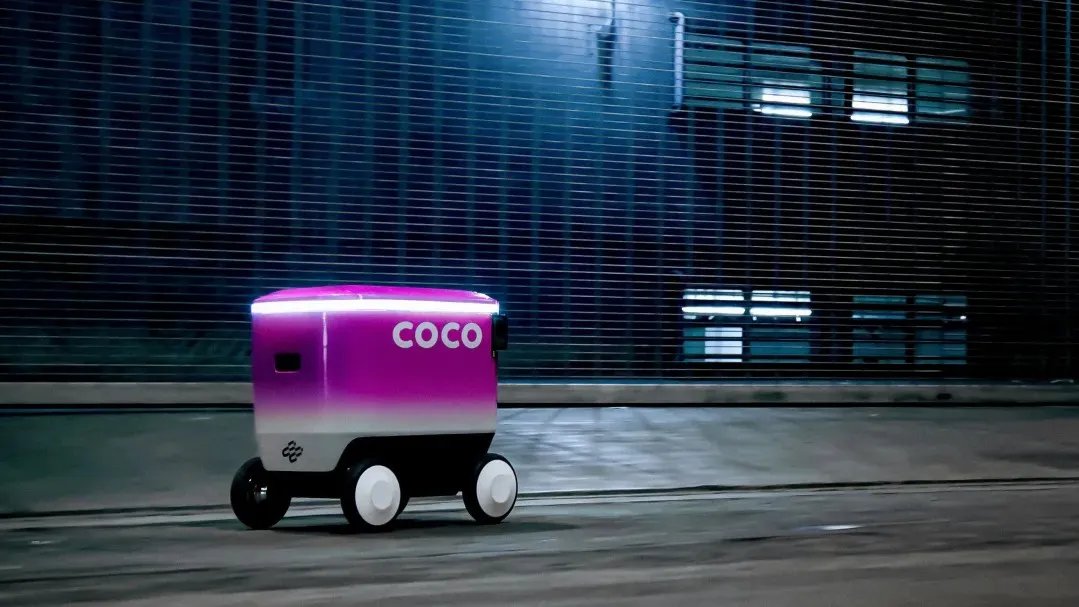
Pokémon Go creator Niantic is using players’ augmented reality data to help train delivery robots.
Now rebranded as Niantic Spatial, the company has joined forces with robotic startup Coco to help its fleet of 1000 suitcase-sized delivery vehicles trundle safely through busy city streets — just as Pikachu might, if he were real.
While Pokémon Go (plus Pikmin Bloom and Monster Hunter Now) are now owned and operated by Monopoly Go maker Scopely, Niantic still retains the database of augmented reality data collected over the years — during which time, the company has received millions of real-world scans submitted by players.

To be clear, these are consciously recorded and uploaded video scans of a specific real-world location already identified in-game — a PokéStop or Gym location, essentially — such as a piece of street art or notable building. This is not something Niantic has been harvesting quietly while your phone is in your pocket.
Niantic Spatial has not been shy about its need for real-world data it can plug into an augmented reality map of the world, useful for a future where we’re all using AR-enhanced technology to navigate the planet, in cars or on foot — or to receive your takeaway pizza via robot delivery.
“Everybody thought that AR was the future, that AR glasses were coming,” Brian McClendon, CTO at Niantic Spatial, told MIT Technology Review. “And then robots became the audience.”
“The urban canyon is the worst place in the world for GPS,” McClendon continued, referencing the mass of buildings in urban environments that can play havoc with GPS location detection. “If you look at that blue dot on your phone, you’ll often see it drift 50 meters, which puts you on a different block going a different direction on the wrong side of the street.”
It’s here that Niantic Spatial wants to use its real-world data learnings to allow robots like Coco’s to navigate on their own, without the need to rely on fuzzy GPS. “It turns out that getting Pikachu to realistically run around and getting Coco’s robot to safely and accurately move through the world is actually the same problem,” commented Niantic Spatial founder and CEO John Hanke.
The company says it has access to 30 billion images in urban environments, though it’s unclear if this refers to individual video frames. Still, it’s an enormous number for Coco’s robots to then learn from, as they navigate the streets of Los Angeles, Chicago, Jersey City, Miami, and Helsinki.
“If robots are ever going to assimilate into that environment in a way that’s not disruptive for human beings, they’re going to have to have a similar level of spatial understanding,” Hanke concluded. “We can help robots find exactly where they are when they’ve been jostled and bumped.” Time will tell if it’s super effective.
Tom Phillips is IGN’s News Editor. You can reach Tom at tom_phillips@ign.com or find him on Bluesky @tomphillipseg.bsky.social