dailynewsnblog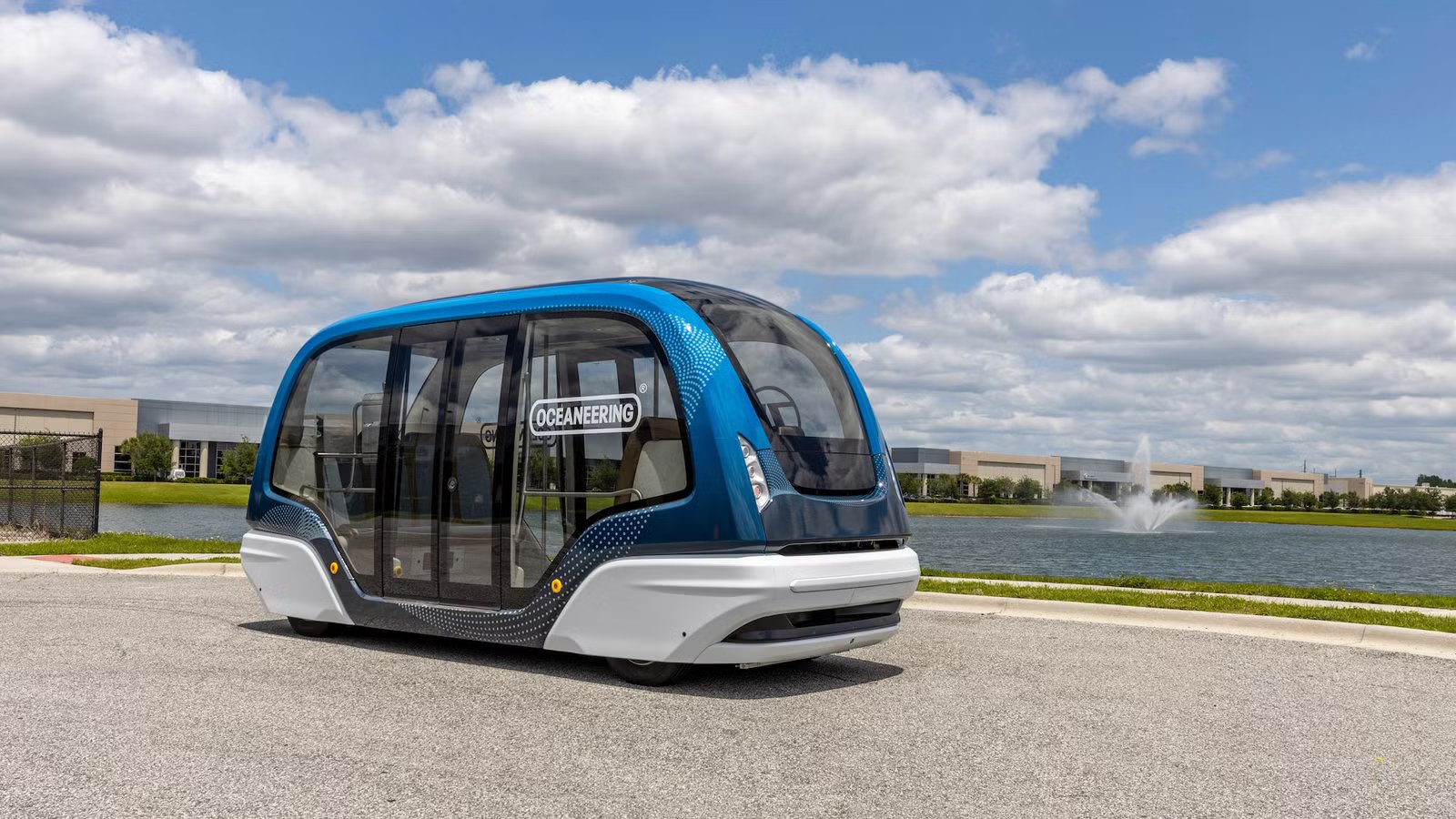
 Newark Liberty International Airport (EWR) is about to launch a trial of something that feels taken directly out of a science fiction movie. Shuttle buses that drive themselves will be deployed around the facility. This spring, the Port Authority of New York and New Jersey will be testing zero-emission autonomous electric shuttles from three companies on a closed section of the airfield, exploring whether automation can move travelers between today’s terminals and tomorrow’s ground-transportation hubs.
The goal is not actually novelty. As cool as the headline of self-driving buses may seem, higher-capacity connections as Newark rebuilds its landside system is actually the objective. A new AirTrain and a future Terminal B are also both part of the picture, and for passengers, the objective is shorter, simpler transfers. For the facility itself, it is a live audition for next-generation mobility and a preview of airport transit of the future.
What Are The Key Developments In This Story?

The Port Authority will run spring 2026 trials of autonomous, battery-electric shuttles from Oceaneering in March, Ohmio in late March, and Glydways starting in May. Each of these vendors will be offered a roughly two-week window in a non-public operating area, with testing meant to mirror a high-capacity loop where multiple vehicles can run in tight headways. These will be noticeable to passengers of all kinds when transferring between terminals or to the facility.
This program follows an earlier October 2024 request for innovation from the agency that sought an electric autonomous network linking points across the airport, a proposal that spent five years in the developmental stage. The finalists also underwent winter adverse-weather checks. Results are expected to inform a formal request for proposals that could be issued in 2027, alongside the airport’s AirTrain replacement that is slated to open in 2030. It builds on the JFK and Newark demonstrations since 2022.
Implications For Passengers

In the near term, most travelers will not interact with these new kinds of driverless shuttles. The testing is happening in very limited areas, so passengers will have a very low likelihood of getting a curb-to-gate ride next week. However, this does not mean that there is no potential payoff for passengers. If autonomous vehicles prove reliable, Newark could offer frequent, quiet, and zero-emission rides that would significantly tighten up connections between terminals, parking, and the future AirTrain station that remains under construction, according to commentary from the facility.
This matters because ground transfers are the kind of places where airports lose significant amounts of time, and passengers encounter major slowdowns, especially when long walks, crowded buses, and confusing signage are involved. A redesigned AirTrain route is expected to make Terminal A easier to reach, and automated shuttles could extend that convenience to other facilities and future Terminal B.
The flip side here is trust in the system. The airport has a lot of hurdles to jump over before these vehicles can be legitimately put into service. They need to pass rigorous redundancy testing and meet clear safety standards so that riders can feel comfortable boarding a shuttle without an actual driver at the wheel. If done effectively, automation could significantly improve accessibility for travelers with major mobility needs and cut wait times at peak hours.

Staffing Issues Cause Ground Stop In Newark Days After Runway Reopened Ahead Of Schedule
Newark has hit another bottleneck as the FAA throttles back inbound flights.
A Step-Up For The Airport

For Newark Liberty International Airport, this is less of a public relations stint and more of a procurement stress test. The facility is in the middle of a multi-year build, with a new AirTrain, future Terminal B, and bigger passenger flows. As a result, the Port Authority is probing whether autonomous shuttles can move people more efficiently than traditional buses or whether conventional electronic buses are just the better answer.
Running three vendors across carefully controlled trials and analyzing the results of real operating data will allow us to analyze how vehicles behave in a complex curbside and airfield environment. Other key questions include how many can run at once and what service levels are remotely realistic. It also helps the agency qualify bidders ahead of a potential 2027 entry to service.
From a strategic perspective, automation is one more lever to keep landside circulation working while construction disrupts normal routes, and to scale capacity later as demand grows beyond what the legacy 1990s-era AirTrain is capable of handling. If adopted, this could cut emissions and noise, although unanswered questions remain about oversight and liability.