dailynewsnblog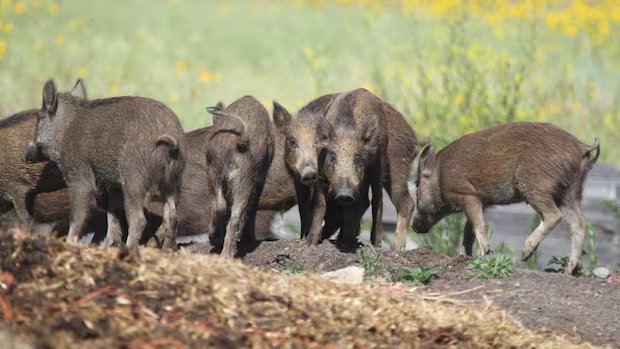

Listen to this article
Estimated 5 minutes
The audio version of this article is generated by text-to-speech, a technology based on artificial intelligence.
Wild boars have been declared “a pest in all circumstances” by the Alberta government effective Dec. 1, meaning new restrictions have been placed on keeping them in captivity and hunting them in the wild.
It is now illegal to keep, buy, sell, obtain or transport wild boars in Alberta without a permit. That also means no new wild boar farms will be permitted in the province.
The hunting and trapping of wild boars in Alberta is banned as well, with the exception of land owners or occupants killing the animals on their own land. Any person who kills a wild boar is now required to report the date, location and number of boars killed to the province as soon as possible.
Hannah McKenzie, the province’s wild boar specialist, says the changes were made due to the dangers posed by existing wild boar populations and the risks associated with more escaping from captivity.
“In addition to damaging agriculture and the environment, wild boar pose a serious risk for the introduction and spread of foreign animal diseases, including African swine fever, and foot and mouth disease,” McKenzie said. “And these would have a massive financial impact on the pork industry and the larger livestock industry and our trade relationships.”
The term “wild boar” refers to the Eurasian wild pig, or hybrids between that animal and domestic swine. They were brought to the Prairies in the late 20th century to be raised as livestock, after which some were able to establish feral populations across Canada but predominantly in the Prairie provinces.
“As they spread and become a greater threat, we’ve seen other provinces and jurisdictions make changes to their wild boar management to combat disease and trade risks,” McKenzie said.

Ontario pork producers have had to phase out Eurasian wild boars from their livestock because of a provincial ban that kicks in on Jan. 1. Hans Lindenmann, a pork producer in eastern Ontario, said he’s unsure of what comes next for him, since those wild boars made up half of his business.
McKenzie said the province is currently working with 12 wild boar farms in Alberta, but that there may be more out there.
Those farms have the option to either keep their wild boars under stricter conditions, or get compensation from the province and exit the industry. The province is offering to pay $590 per boar, along with per-linear-foot compensation for fences.
McKenzie said the program is estimated to cost about $2.6 million. The Ministry of Agriculture and Irrigation had allotted $3 million for wild boar management in this year’s provincial budget.
‘Difficult’ position for pork industry
Alberta Pork industry programs manager Charlotte Shipp says the regulations are a “challenging issue” for the organization.
“Wild boar producers are also producers for Alberta Pork, too, so it’s a difficult position to be in,” she said.
Shipp said tightening restrictions around wild boar farming, particularly when it comes to preventing escapes and the possible spread of African swine fever, and offering wild boar producers an exit incentive are steps in the right direction.
“I think our government has had a challenging line to walk in balancing that risk of the industry [while] making sure those producers can remain vibrant parts of rural communities,” Shipp said.
African swine fever is harmless to humans but can devastate pig populations. An outbreak of the disease among wild boars was reported last week in Spain, one of the European Union’s largest pork producers.
Hard population to control
It’s hard to keep track of how many boars are in the province or where exactly they are, McKenzie said.
“They’re very difficult to survey,” she said, pointing out that traditional methods like aerial surveys aren’t as effective since boars tend to be more active at night and prefer densely-forested habitat that is difficult for aircraft to spot them in.

Ryan Brook, a University of Saskatchewan professor who studies Canada’s invasive wild boars, has been a longtime proponent of stricter regulations around wild boar management.
“They’re really incredibly destructive,” he said. “They destroy the environment because, unlike a lot of our native wildlife, wild boar actually rip up the ground, called rooting.”

Saskatchewan is placing a moratorium on new wild boar farms and placing restrictions on existing operations. New rules for current farms include more surveillance, annual inspections and required fencing. Experts say it’s too little, too late.
Brook said their lack of sweat glands also drives them to wetlands to cool off, where the invasive species contaminate water with various diseases.
“Sport hunting has been banned, which is something I’ve been talking about and begging and pleading for, for certainly over 15 years,” Brook said.
Banning hunting a species the province is trying to eradicate might sound counterintuitive, but Brook said there has been no evidence that sport hunting has lowered wild boar populations. That’s partially because the animals reproduce relatively frequently and have large numbers of offspring, averaging two litters of six piglets per year, he said.
“Unfortunately, not only does hunting not eliminate them fast enough … it also breaks up groups and spreads them around the landscape, because very rarely will hunters actually remove a whole population,” Brook said.