dailynewsnblog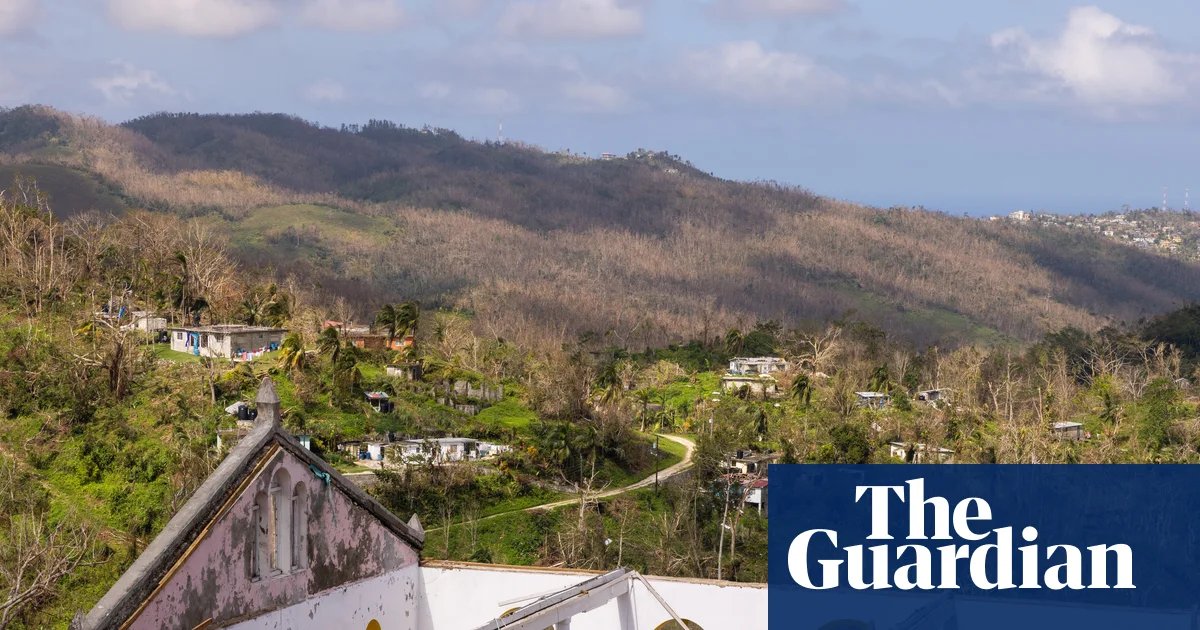
Every aspect of Hurricane Melissa, the most powerful storm ever to hit Jamaica, was worsened by the climate crisis, a team of scientists has found.
Melissa caused widespread devastation when it crunched into Jamaica as a category five hurricane on October 28, with winds up up to 185mph.
Winds of Melissa’s strength are now five times more frequent due to the climate crisis, the research said
The storm wiped out homes, businesses, crops and livelihoods, costing damages estimated to be equivalent to around a third of the island nation’s GDP.
The hurricane displaced hundreds of thousands of people as it continued on to hit Cuba, with its ferocious winds causing damage as far as the Dominican Republic and Haiti. At least 61 people have died as a result.
The savage strength of Melissa was exacerbated by the overheated air and ocean, caused by the heat-trapping emissions that come from the burning of fossil fuels, an international team of scientists has determined.
Climate change increased Melissa’s maximum wind speeds by 7% and extreme rainfall by 16%, the team at World Weather Attribution, a consortium of 20 researchers from the US, UK, Sweden, Dominican Republic, Netherlands, Jamaica and Cuba, found.
Events such as the five days of pounding rainfall in Jamaica from Melissa are now about 30% more intense and twice as likely due to today’s altered climate, which is about 1.3C hotter, globally, than the pre-industrial average, the analysis found.
Global heating has made the atmospheric and marine conditions behind such extreme events six times more likely.
“What we see with Hurricane Melissa and other recent monster storms is that they are becoming so intense that they will soon push millions of people beyond the limits of adaptation,” said Friederike Otto, a climate scientist at Imperial College London and one of the authors of the study.
“Unless we stop burning coal, oil and gas, we will see more and more countries reaching these limits.”
Melissa is just the latest example of a major storm suddenly picking up strength with unusual speed. This “rapid intensification” was particularly pronounced with this hurricane, with Melissa’s wind speeds shooting up from 68mph to 139mph in just one day.
This process is a hallmark of a warming climate, scientists have found, with storms able to feed upon heat in the ocean and atmosphere to become more fierce. Melissa crawled slowly over seas that were nearly 1.5C hotter than the long-term norm, gaining a brutal strength it then unleashed upon Jamacia.
“Hurricane Melissa’s catastrophic landfall in Jamaica is not an anomaly, it is the canary in the coal mine,” said Jayaka Campbell, senior lecturer at the University of the West Indies, Jamaica.
“When a storm can explosively intensify from 70 to 185mph in less than three days over ocean waters that are 1.5C warmer than normal, we are witnessing the dangerous new reality of our warming world.”
The huge task of cleaning up and rebuilding from a storm that caused around $6bn in damages to Jamaica has again highlighted the vexed question of international climate finance. For years, developing, climate-vulnerable countries have urged richer nations to contribute funds to help them with the heatwaves, storms and droughts that these less wealthy places have done little to cause.
Next week, countries will convene for annual UN climate talks in Belem, Brazil, to again discuss climate finance. In September, before Hurricane Melissa, Andrew Holness, Jamaica’s prime minister, told leaders at the UN that contributions to a fund to aid at-risk countries like his are so far “grossly inadequate”.
“Developed countries must honor their commitments and scale up climate finance, recognizing that adaptation is a necessity for the survival of small island developing states,” he said.