dailynewsnblog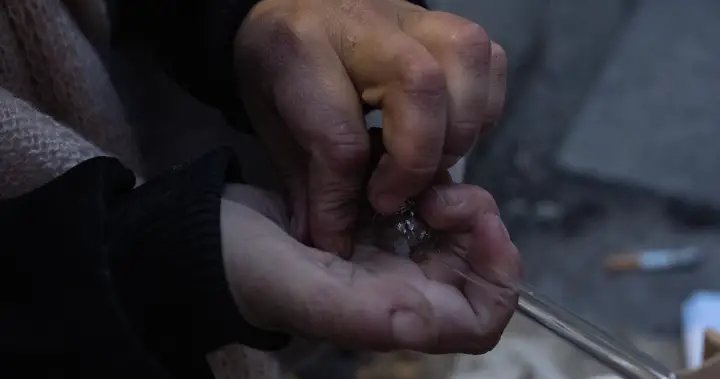
Law enforcement officials hope new provincial offences pushed through by the Ford government last year will give them more options to deal with public drug use as major cities struggle with enforcement.

As part of its Safer Municipalities Act last year, Ontario began the process of creating a provincial offence for people using illegal drugs in public.
The offence means police officers will be able to hand out non-criminal tickets to people ordering them to court if they’re found using illegal substances in the open.
The government is currently considering offering the power to special constables, who work in places like transit and university campuses, as well.
Sarah Kennedy, president of the Ontario Special Constables Association, said the powers would give her and her colleagues an important middle ground between a full criminal offence and being forced to move people on without taking any further action.
“(Currently), they would be arrested for possession of a controlled substance and searched accordingly. They’d be fingerprinted and photographed, and they’d be put through a criminal process. That’s extensive and cumbersome considering it’s for personal use — it’s a small, small amount,” she explained to Global News.

Get breaking National news
Get breaking Canada news delivered to your inbox as it happens so you won’t miss a trending story.
“Alternatively, if we don’t pursue a criminal avenue, the alternative is to do nothing.”
The provincial government recently posted its proposed regulation to allow special constables to hand out tickets for public drug use.
Advocates responded with concern, particularly over how it could be used on Toronto’s public transit system.
“Quite frankly, we’ve had problems in the past with special constables using force on the TTC,” Coun. Gord Perks told Global News. “There have been court cases over it … this is a big step back.”
Kennedy, however, said she believed it could offer a route for people to get help instead of being bounced from one station to another. Or, alternatively, going through a full trial for possession of an illegal drug.
“The criminal courts are full. They’re full, full of stuff, lots of busy stuff going on. Is it not in the public’s interest to have the criminal courts going after drug dealers and importers? Those are the people that prey on the people with addiction issues,” she said.
“The reason that pursuing a provincial avenue is beneficial to everyone involved is because … they can get before a justice of the peace and that justice of the peace can put a probation order or a peace bond on them where they are required to seek treatment and get help.”
A spokesperson for Ontario’s solicitor general said offering the powers to special constables was still under consultation. If approved, it would be added to mandatory training offered by the police college.
Tim Farquharson, chief of police in Port Hope and a member of the Ontario Association of Chiefs of Police, said public consumption offences would compel people to court.
“In this case (public consumption) it would be a Part 111 summons with no set fine and simply a court date given to the person and they will attend court and a fine would be issued,” he wrote in an email.
Ontario’s police chiefs also welcomed the changes, which they said will give officers more ways to deal with dynamic situations.
“This approach recognizes that incidents involving substance use are often complex and require responses tailored to the specific circumstances, particularly where individuals may be vulnerable but unwilling to comply with available supports,” the chiefs said in a statement.
“We acknowledge that enforcement alone cannot solve the complex challenges facing our communities. Police services continue to pursue balanced approaches that prioritize support and treatment, while maintaining the ability to use discretionary policing tools when required.”
© 2026 Global News, a division of Corus Entertainment Inc.