dailynewsnblog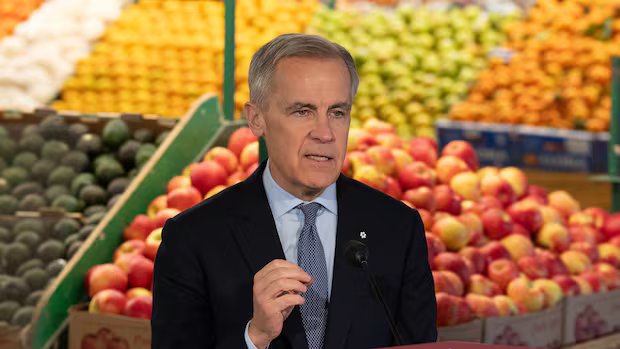

Listen to this article
Estimated 4 minutes
The audio version of this article is generated by AI-based technology. Mispronunciations can occur. We are working with our partners to continually review and improve the results.
We don’t need to tell you that food is expensive.
Canadians have been dealing with sticker shock for years as grocery prices have shot up by more than 30 per cent since 2020, according to the most recent data from Statistics Canada.
- What questions do you have about the new federal grocery rebate? Send an email to ask@cbc.ca.
Last week, Prime Minister Mark Carney announced a suite of affordability measures to help Canadian families who are struggling to cope with the rising cost of living. The flagship measure is the Canada Groceries and Essentials Benefit.
We now know what that will cost. On Monday, the parliamentary budget officer announced that the federal government’s plan to increase the GST credit and offer a one-time payment to Canadians will cost Ottawa an estimated $12.4 billion over five years.
The PBO report estimates the one-time payment will cost more than $3 billion this year, while the annual increases will cost between $1.7 billion and $1.9 billion annually through to 2031.
In its first year, the benefit will give low- and modest-income Canadians eligible for the GST rebate a one-time boost that raises the $1,100 a family of four receives annually to $1,890 and increases the $540 an individual gets to $950.

Federal politicians made their way to Mississauga Friday to hammer home their grocery rebates, announced Monday by Prime Minister Mark Carney. CBC’s Naama Weingarten explains how the rebate works.
Starting in 2026-27, and running for the next five years, the GST rebate will be increased by 25 per cent, which means a family of four will get up to $1,400 annually, while an individual will get about $700 a year.
The existing GST credit is paid out quarterly and is targeted at families with low and modest incomes. More than 12 million Canadians are expected to be eligible for the new benefit.
“For Canadians who are being pinched, particularly Canadians at the lower end of the income scale, this is going to be a dramatic help,” Michael von Massow, a food economics professor with the University of Guelph, told CBC News.
“I think it will let some people eat more, and it will probably let some people increase the quality of what they’re eating, and in many cases, for people at the bottom of the income scale, it will mean they don’t have to choose between paying a cellphone bill and buying groceries that week.”
Conservatives to help fast-track C-19
Conservative Leader Pierre Poilievre has previously said his MPs will support the measure, despite calling it a “Band-Aid solution.”
Speaking in Ottawa Monday, deputy Conservative leader Melissa Lantsman said the grocery rebate doesn’t do enough, and doesn’t solve the actual problem of rising prices.
“Food prices are out of control and they’re not going down,” Lantsman said.

MP Melissa Lantsman, the Conservative Party’s deputy leader, said the Liberal government’s Canada Groceries and Essentials Benefit ‘is going to add more to grocery prices, add more to housing prices, add more to the unaffordability crisis.’ On Monday, the Parliamentary Budget Office released a report estimating the GST credit top-up will cost $12.4 billion over five years.
“No amount of small rebates will help the majority of families, and the majority of those who are struggling with those grocery prices.”
Despite criticizing the Canada Groceries and Essentials Benefit, Lantsman stood in the House of Commons Monday and said her party would work with the Liberals to fast-track the legislation making the rebate possible — Bill C-19.
Roughly a quarter of Canadians live in food-insecure households, according to Food Banks Canada, meaning that they have inadequate access to food for financial reasons. About 20 per cent of those who visit food banks are employed.
One of the ways we see relief from price increases is wage increases, von Massow said, and while some wages have started to come up in response to inflation, there’s been “no significant change in most minimum wages.”
“The people who are suffering the greatest pressure are those at the lower income scale, so it makes sense to have [the rebate] targeted like this,” he said.

On Monday, Conservatives passed a motion in the House of Commons to fast-track the Canada Groceries and Essentials Benefit so Bill C-19 could be cleared by Wednesday. ‘The questions that I received, some of them leave me a bit perplexed in terms of their commitment,’ said Finance Minister François-Philippe Champagne after the bill’s second reading.
Finance Minister François-Philippe Champagne said he hopes the Conservatives back up their commitment to passing the bill quickly.
“I’d like to believe it. But maybe I’ve been here too long to know that folks say things, but what matters to Canadians is the action they’re going to take,” Champagne told reporters before question period on Monday.
“I’m willing to appear at committee this afternoon if they so want to make sure that we progress that and meet the immediate timeline.”