dailynewsnblog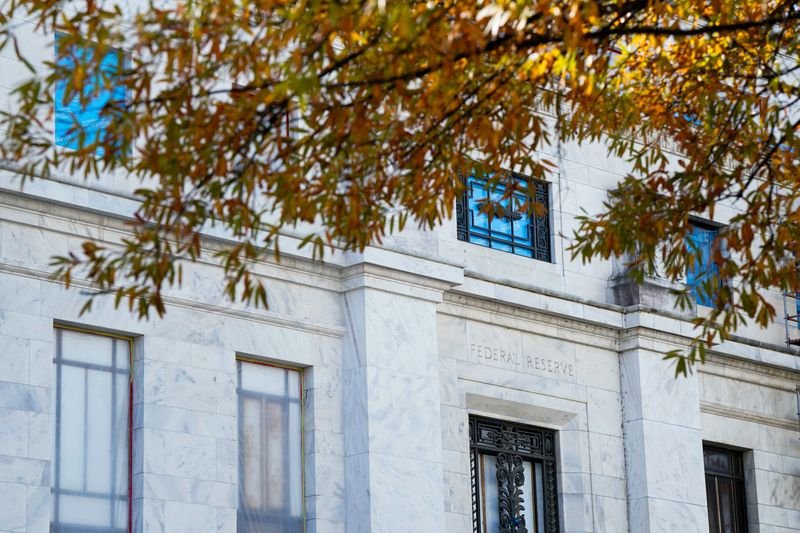
By Howard Schneider
WASHINGTON, Dec 10 (Reuters) – Federal Reserve officials will issue new economic projections on Wednesday, an endpoint to a volatile year that saw a hoped-for “soft landing” from inflation morph into renewed price pressures due to rising tariffs, the supply of workers constrained by an immigration crackdown, and the U.S. central bank sidelined for much of the time by widespread uncertainty.
Those quarterly projections, which will be released with a new policy statement at 2 p.m. EST (1900 GMT), will set a baseline expectation for whoever takes over from Fed Chair Jerome Powell next May and amount to a scorecard for President Donald Trump’s consequential first year back in the White House.
Issues around inflation and affordability, which Trump used as a centerpiece of his 2024 presidential campaign, remain unresolved, with the Republican president’s approval ratings on the economy falling, food prices rising 2.7% annually as of September, versus less than 2% when he returned to power in January, and high housing prices and mortgage interest rates combining to put home ownership out of reach for many.
And yet some of the worst anticipated outcomes from earlier in the year, when Trump’s initial “Liberation Day” tariff plans sparked talk of collapsing global trade, a corrosive mix of rising prices and high unemployment, and even of a “canceled” Christmas shopping season, haven’t been realized.
The U.S. unemployment rate remained at a modest 4.4% in September, the latest month for which data is currently available. Economic growth prospects also have improved. While overall inflation remains above the Fed’s 2% target, there are reasonable arguments for why it might ease next year.
The updated projections will show how Fed policymakers parse this grab bag of developments, map it to the end of 2026, and translate it into the setting of the central bank’s benchmark interest rate, the main lever it uses to influence inflation by encouraging or discouraging borrowing and spending by households and businesses.
BIG POST-ELECTION SHIFT
Compared to Fed policymaker projections issued in September of 2024, just before Trump’s election victory in November set the stage for a dramatic rewrite of economic policy, prices are rising faster, interest rates are higher, and economic growth is slower than central bankers anticipated.
But the outlook also has been improving since the middle of the year, when the steep tariffs rolled out by Trump in early April threw markets into a tailspin. The sky-high import duties initially announced for much of the world have been dialed back since then, and while key negotiations with China, Canada and other countries remain unresolved, the average global tariff impact has been judged by investors and many businesses to be more manageable than initially expected.