dailynewsnblog
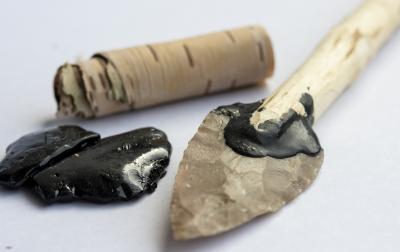
Birch tar had no effect on the E. coli cultures, but it did stop, or at least slow down, the growth of S. aureus. Exactly how well depended on the species of birch and the concentration of the tar, probably because different birch species, and maybe even individual trees, produce tar with different combinations of chemical compounds. The most effective batch, taken from a silver birch (Betula pendula) tree, produced a “comparatively strong response.” Meanwhile, results from four other trees ranged from mild to moderate, and another had no effect.
The results, along with some earlier studies, confirm what Indigenous peoples like the Mi’kmaq, the Saami, and the Yakut would have known for at least several thousand years—or, more to the point, it explains in scientific terms why maskwio’mi works as an antiseptic.
“Our findings not only reinforce what past studies have reported, but they also echo traditional knowledge,” wrote Siemssen and colleagues. Their findings also hint that that traditional knowledge might be much, much older than even the Mi’kmaq oral histories record (or at least that it might have been discovered more than once in our evolutionary past).
How it works, for the chemistry nerds
So how does birch tar work against bacteria? One clue is that, like most other plant-based antimicrobial drugs, birch tar slowed the growth of Gram-positive S. aureus but not Gram-negative E. coli; that’s probably because Gram-negative bacteria like E. coli have an additional outer membrane that can keep the antimicrobial compounds out.
Those compounds are probably mostly ring-shaped molecules called phenolic derivatives; they’re mostly found in plant tissues, and they’re common ingredients in antiseptics and disinfectants (if you’ve ever used antiseptic mouthwash or a pre-surgery skin cleanser like Hibiclens, you’ve used the phenolic derivative chlorhexidine). Other chemicals may also play a role, including terpenes and terpenoids, which help protect plants against being munched on by insects or infected by fungi.
Siemssen and colleagues suggest that more detailed chemical studies could help unravel exactly which combination and proportions of all these chemicals are most effective, something that could be useful even for modern medicine.