dailynewsnblog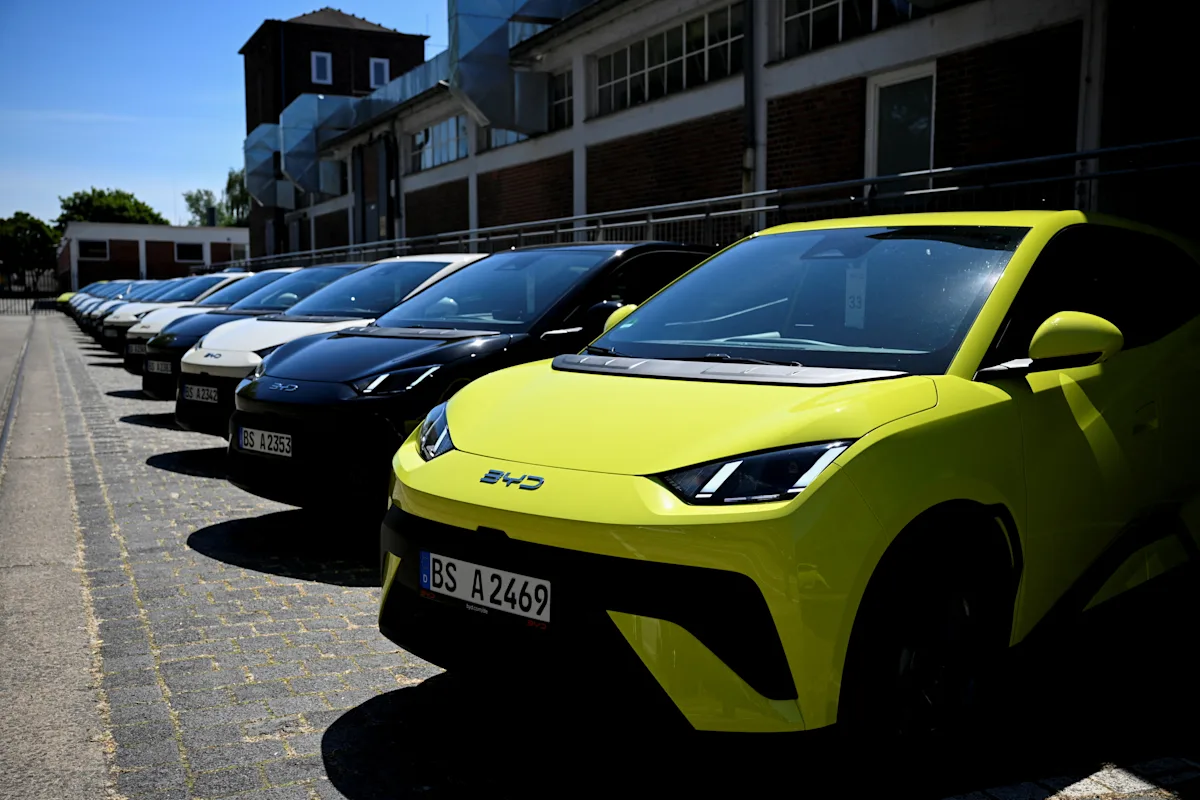
If Chinese automakers eventually do indeed break into the US market, younger Gen Z buyers may be the first in line.
A new study by auto data firm Cox Automotive finds that a staggering 69% of Gen Z car shoppers are “more likely” to consider Chinese brands than others in the firm’s 800-person survey. Compared with all participants in the study, only 38% were “extremely” or “very likely” to consider a Chinese brand, while 39% were “not very likely” or “not at all likely” to consider one.
The Cox study was conducted between Dec. 29, 2025, and Jan. 2, 2026, and was designed to assess perceptions of Chinese vehicle brands.
“Consumer sentiment toward Chinese auto brands is sharply divided,” Cox said in the report. “Younger, EV-oriented shoppers show meaningful openness, while older and domestic-loyal buyers remain resistant.”
One likely reason for the disparity is affordability. The average price of a new US vehicle hovers around $50,000, and Gen Z and younger millennials favor lower prices over features. Chinese EVs in regions like Europe and Asia are significantly cheaper than foreign competition, with BYD’s Dolphin Surf EV priced at around 23,000 euros ($25,000).
The survey reflects one reason automakers in the US lobbied hard for heavy tariffs on Chinese vehicles, currently levied at 100%, as well as restrictions on Chinese tech and software in vehicles.
The split in public perception is also quite pronounced in the marketplace when it comes to dealers versus the general public.
Cox also conducted a dealer sentiment survey, fielded from October to November 2025, of 132 franchised dealers in management or sales roles. It found that 58% of dealers surveyed believed Chinese pricing would undercut that of other automakers. This compares to 51% of the general consumers surveyed.

Dealers and automakers may find some solace, however, in the fact that overall brand awareness of Chinese automakers is still quite low. Only 35% of the general population surveyed was aware of BYD (1211.HK), China’s most recognizable brand, with 17% having “familiarity” with it. Surprisingly, only 25% of dealers were “familiar” with BYD.
But once US consumers become familiar with Chinese brands, that consideration flips, especially if Chinese automakers work with existing automakers.
“When paired with an established U.S. brand, consumer consideration rises sharply to 76%, signaling that who a Chinese automaker aligns with may matter as much as pricing or product,” Cox said.
This bit of survey data is particularly interesting given reports that Ford (F) was considering a joint venture with China’s Xiaomi (XIACF) to build the company’s EVs in the US, though both Ford and Xiaomi denied the report.