dailynewsnblog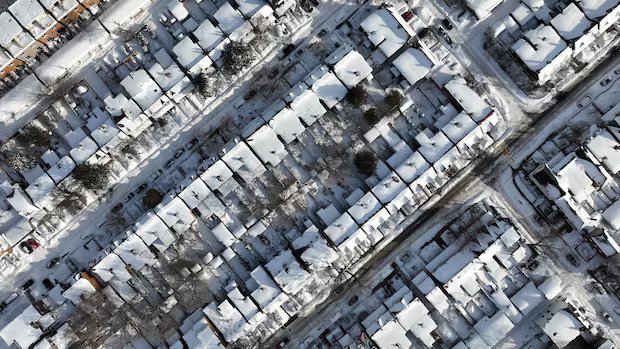

Listen to this article
Estimated 3 minutes
The audio version of this article is generated by AI-based technology. Mispronunciations can occur. We are working with our partners to continually review and improve the results.
The Canadian Real Estate Association (CREA) is blaming Old Man Winter as a factor in cool housing sales during the month of January.
In new data released on Wednesday, CREA says housing sales were down 5.8 per cent in January, month over month, on a national basis.
Shaun Cathcart, the organization’s senior economist, told CBC News the slow January was particularly acute in parts of Ontario, a province that saw some rough winter weather that month.
“The numbers came in weaker than we thought, but it’s all concentrated in central and southwestern Ontario, right along the path of that storm that hit around the third week in January,” Cathcart said in an interview.
The effect on housing transactions wasn’t particularly surprising given many people “couldn’t get to the end of their driveway for a week” at one point, Cathcart said.

Cathcart said the CREA doesn’t see a reason to alter its 2026 forecast just because January was a sub-par month.
“Unless we get another two-foot snowstorm in the most populated part of Canada, our forecast is for things to improve,” Cathcart said.
The CREA said Canada had roughly 4.9 months of housing inventory available for sale at the end of January, roughly in line with the long-term average of five months of inventory.
This is the metric the CREA uses to measure market balance, where a lower ratio would indicate a sellers’ market and a higher ratio would point toward a buyers’ market.
No sign of rate cut
Cathcart said some buyers may be waiting for lower interest rates to come into effect, but he said there’s no indication rates are about to change.
The Bank of Canada dropped its key interest rate to 2.25 per cent at the end of October, but has not adjusted it since.

The Canadian Real Estate Association predicts a slight housing market rebound this year after a sluggish 2025. But while home prices dip in big cities like Toronto and Vancouver, they’re shooting up in smaller ones like Regina and Quebec City.
Cathcart said first-time buyers may face challenges in entering the market, given the combination of prices they face and the available mortgage rates.
“Affordability is still going to be a challenge,” said Cathcart.
The non-seasonally adjusted national average price of a home — according to the national composite MLS home price index (HPI) used by the CREA — stood at $652,941 in January, which the association said was down 2.6 per cent from a year ago.
Its overall forecast for 2026 projects a modest increase of 2.8 per cent for this same metric.
The CREA says the MLS HPI uses more than 15 years of data and “sophisticated statistical models to define a ‘typical’ home based on the features of homes that have been bought and sold.” These homes are then tracked across neighbourhoods and different housing types.
Regionally, CREA said prices are down year over year in British Columbia, Alberta and Ontario, “offsetting gains in other provinces.”