dailynewsnblog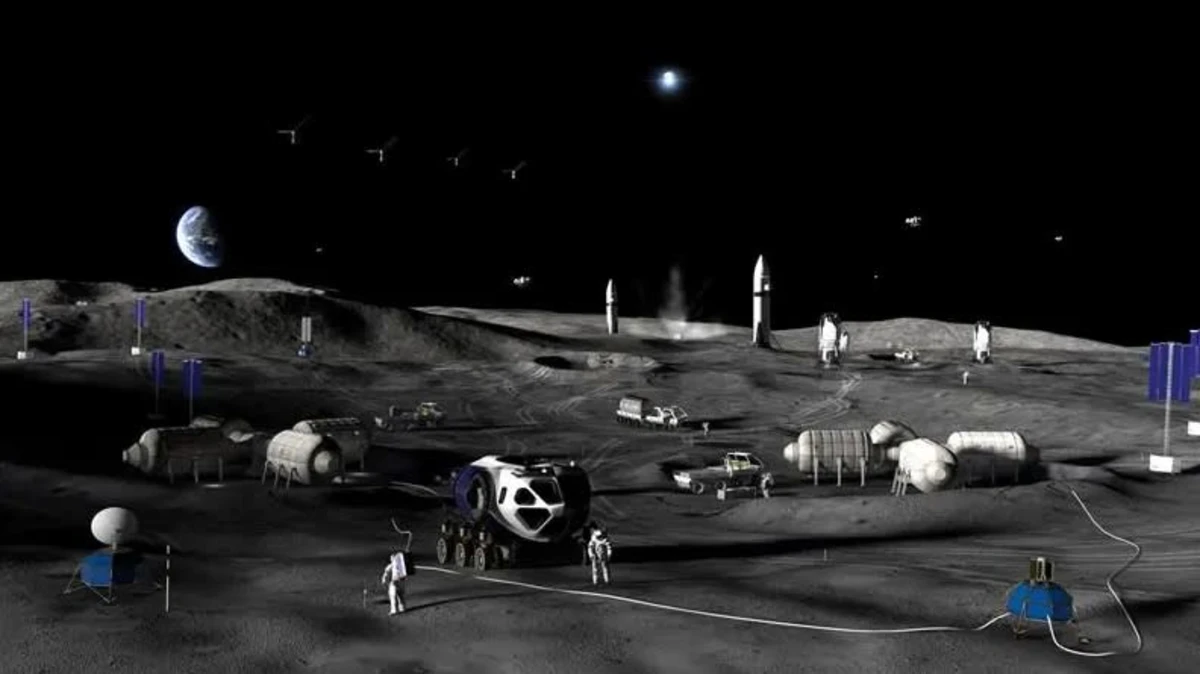
The first crewed mission of NASA’s Artemis moon program may take off in a matter of days, with a launch window that opens on April 1, and as preparations are underway for that, the space agency is refocusing its plan to establish a human presence on the moon. NASA announced major changes to its approach for moon landings that are expected to play out over the coming years, including axing its plan to build an orbiting station called Gateway. Read on to learn more about the agency’s new vision for the moon, along with other interesting science stories from this week.
Gateway out, moon base in
Just a few weeks after overhauling its Artemis program, NASA this week announced even more changes to its plans for putting astronauts back on the moon. Most notably, the space agency is abandoning the lunar Gateway project, which was intended to be the first ever space station orbiting the moon. Gateway, an international collaboration, wasn’t just going to support exploration of the lunar surface, but deep space missions too. But the writing has been on the wall for some time; in the Trump administration’s proposed budget cuts last May, Gateway was among the programs selected for the chopping block. Now, NASA is officially putting it on “pause” and plans to build a $20 billion moon base instead.
“NASA is committed to achieving the near‑impossible once again, to return to the moon before the end of President Trump’s term, build a moon base, establish an enduring presence, and do the other things needed to ensure American leadership in space,” NASA Administrator Jared Isaacman said at the agency’s Ignition event on Tuesday.
There are three phases to the moon base plan, according to NASA: first using contractors to send rovers and instruments to the moon through the Commercial Lunar Payload Services (CLPS) program; next establishing “semi-habitable infrastructure,” with astronauts on the ground and collaboration with other space agencies; and finally adding “heavier infrastructure” to support long-term stays on the lunar surface, including the Italian Space Agency’s Multi-purpose Habitats and the Canadian Space Agency’s Lunar Utility Vehicle. NASA says it’s aiming to start this plan off with crewed moon landings every six months following the Artemis V mission, which is currently planned for 2028.
Comet 41P pulls a reverse card
A study published this week in The Astronomical Journal describes what’s said to be the first observation of a comet reversing its spin. Observations taken several months apart in 2017 show the comet 41P/Tuttle-Giacobini-Kresák starting to spin more slowly after making a close flyby of the sun, before picking up speed again by December of that year. Its spin period, measured using NASA’s Neil Gehrels Swift Observatory, was about 46-60 hours in May 2017, but later observations by the Hubble Space Telescope showed it was just 14 hours, according to NASA. The researchers say what likely happened is that the heat from the sun caused the comet’s ice to sublimate, sending gases spewing off its sides.
“Jets of gas streaming off the surface can act like small thrusters,” author David Jewitt of the University of California at Los Angeles, said in a statement. “If those jets are unevenly distributed, they can dramatically change how a comet, especially a small one, rotates.” Jewitt compares it to pushing a merry-go-round. “If it’s turning in one direction, and then you push against that, you can slow it and reverse it.”
Comet 41P is thought to have come from the Kuiper Belt and passes through the inner solar system every 5.4 years. It’s small, with a nucleus of just around .6 miles, and the researchers found it’s become less active over recent years, indicating that there are changes taking place on the surface. While it’s thought to have been in this orbit for about 1,500 years, it now appears to be rapidly evolving, and the rotational changes — which could cause structural instability if it continues — could mark the beginning of the end for it. “I expect this nucleus will very quickly self-destruct,” said Jewitt.
Saturn in a new light

A side-by-side-comparison of photos captured of Saturn from the Webb telescope and the Hubble telescope. (NASA/ESA/CSA)
Stunning images of Saturn released this week by NASA, ESA and CSA provide a more detailed look at the many layers of the ringed planet’s “busy” atmosphere. The images, which show storms, clouds at different depths, Saturn’s “ribbon wave” jet stream and so much more were taken by the Hubble Space Telescope and the James Webb Space Telescope in 2024. Read more about it here.