dailynewsnblog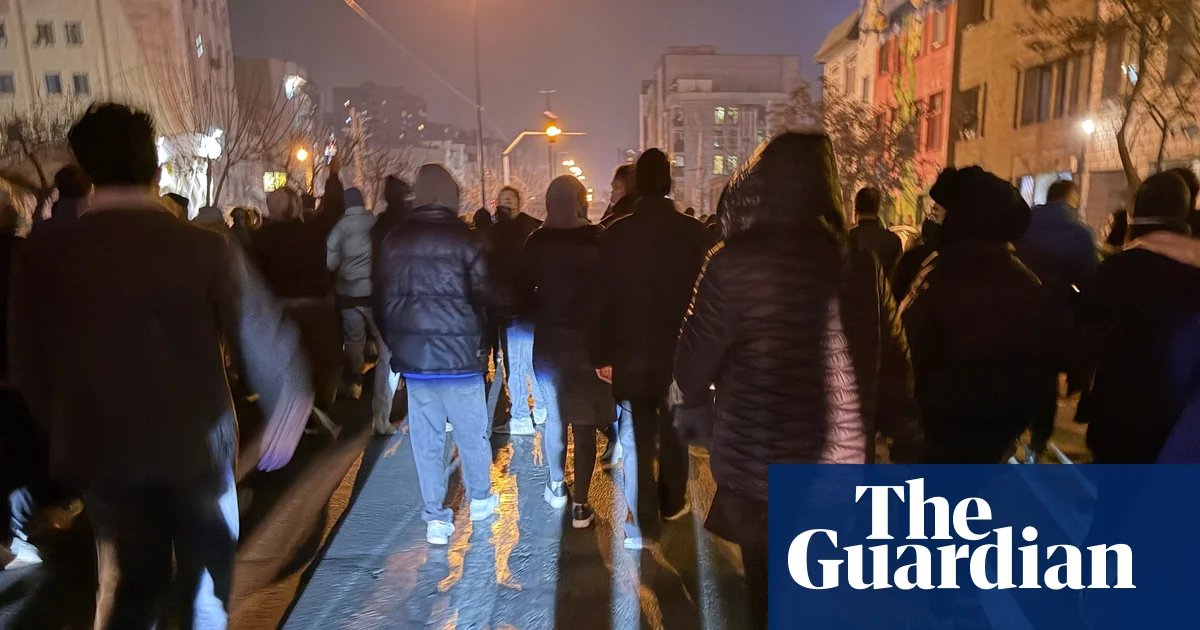
Iranians killed in recent protests that rocked the country have been laid to rest in boisterous funerals featuring loud pop music and dancing, apparently intended to convey defiance to the ruling Islamic regime.
Instead of holding sombre traditional mourning ceremonies presided over by a Shia cleric, bereaved relatives are turning the burials into exultant celebrations of the lives of their loved ones in what analysts say is an intentional snub to the culture of piety demanded by Iran’s theocracy.
Many funerals have reportedly been staged only after relatives were forced to pay large sums to retrieve the bodies from official morgues. There have been reports of bodies only being released after relatives sign statements saying that the deceased belonged to the Basij, a pro-regime militia, a tactic designed to bolster the authorities’ designation of protesters as “terrorists” who attacked security forces and to raise the reported number of casualties on the regime’s side.
Some projections have estimated that 30,000 were killed in the demonstrations that broke out in late December and spread across the country. Other estimates have suggested even higher numbers.
Iranian sociologists say the mood of the resulting funerals carries a message of rebellion in the face of the lethal crackdown.
“Many of today’s mourners … do not want the grief over their loved ones to bear any trace of the religious mourning that is emblematic of the subculture shared by their killers,” said Hosein Ghazian, a US-based Iranian commentator. “Instead of outwardly expressing grief, they choose to display joy. This joy carries a powerful political message of persistence in the struggle against bloodthirsty oppressors.”
Footage of several funerals has been shared on social media.
Rather than overt grieving, the videos depict euphoric scenes, including women without traditional Islamic head covering, whooping and dancing to popular songs being blared from stereo sound systems.
Families who lost relatives said they had decided to stage vibrant events to capture the spirit in which the dead person had lived.
Relatives of Milad, 17, danced to his favourite song, Ghaf, a romantic ballad by Alireza Talischi, at his funeral after he died from injuries sustained when security forces fired on a protest in Tehran’s Naziabad neighbourhood on 8 January. The authorities initially demanded the equivalent of £5,000 to return his body. It is unclear how much the family eventually paid.
“They did what Milad would have wanted,” said his older brother, Reza, who lives in Tallinn in Estonia. “They danced through tears at the burial. Even in mourning, they honoured his vibrant life.”
Shaghayegh, 21, described similar circumstances surrounding her 19-year-old cousin, who was shot dead in a protest in Narmak, a neighbourhood in north Tehran.
“I can’t even tell you how much money we paid but we just wanted him back,” she said. “When his body finally arrived home, the family prepared as if for a wedding. Loudspeakers were set up. Large tents filled the garage. Family members cooked together, just as they would for a celebration.
“The only difference was that none of us were laughing. We were celebrating his life, what he meant to us, what he could have given to the world.”
Dancing is an important part of Iranian culture but is generally limited to closed-door settings such as private parties and weddings under the religious restrictions imposed by the regime.
By contrast, many of the euphoric funerals depicted on social media take place outdoors in settings that appear to boldly challenge the regime’s conservative mores.
Scenes of women dancing and singing along in public can likewise be interpreted as a repudiation of the Islamic republic’s basic tenets, which forbid dancing and the female singing voice as haram.
Saeed Paivandi, a sociologist at the University of Lorraine in France, said Iranian funerals without traditional Islamic symbolism represented “resistance against the theocratic government that wants to impose religious norms on all of Iranian society and various areas of individuals’ lives”.
He added: “In the protest movements, mourning ceremonies for victims of government repression have become a space to challenge religious and official norms.
“What seems very significant symbolically is the use of music and dance, which are considered anti-values in the state culture. Replacing the crying and wailing that are considered a core value with a kind of bitter joy is another significant element in this cultural transformation.
“They want to tell the government that we don’t cry for the martyrs of freedom – they chose the right path and are a source of pride for us.”
An inspiration may have been Majidreza Rahnavard, who was executed in 2022, aged 23, after being accused of stabbing two members of the Basij during the Woman, Life, Freedom protests.
After his death, footage appeared of Rahnavard moments before his execution, saying: “I don’t want anyone to mourn upon my grave. I don’t want them to read the Qur’an or pray. Just celebrate and play celebrating music.”
Regime opponents have since embraced Rahnavard as a folk hero and have invoked his words as legacy to be emulated.