dailynewsnblog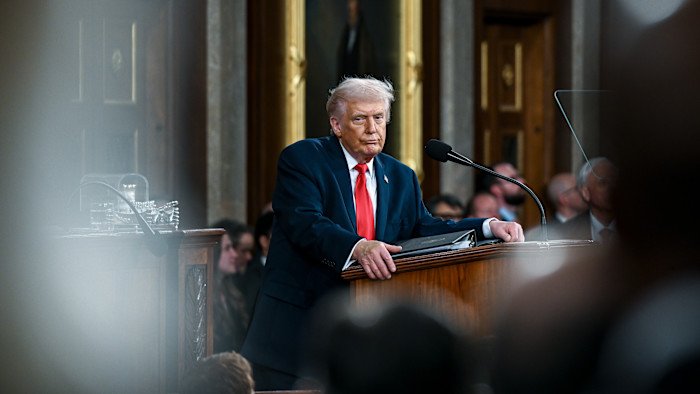
This is an on-site version of the White House Watch newsletter. You can read the previous edition here. Sign up for free here to get it on Tuesdays and Thursdays. Email us at whitehousewatch@ft.com
Good morning and welcome to White House Watch. In today’s edition, we’ll be looking at:
Donald Trump and his top officials have tried to argue that last week’s Supreme Court ruling striking down the core of his trade agenda is not a big deal.
But the White House is facing a messy reality. For one, it is bracing for the impact of more than 900 lawsuits that have been filed challenging the emergency tariffs, which may now force the administration to issue refunds worth billions of dollars to aggrieved importers.
“We are going to fight tooth and nail to make sure this money is given back quickly with no games and reservations about it,” Neal Katyal, the lawyer who argued against Trump’s tariffs on behalf of US-based businesses before the Supreme Court, told Stefania Palma in an interview. He set up a task force on Tuesday to secure refunds from the levies he helped invalidate.
The administration had initially responded by casting doubt on whether Americans would get their money back. But it has recently shifted to signalling that it will not oppose refunds if they are approved by the lower courts.
“In some ways, it is standard practice,” Jamieson Greer, the US trade representative, told Lauren Fedor on Capitol Hill after Trump’s State of the Union address.
“Companies will go, and if they think they have a claim for a refund, they go make it to the court, and the courts decide the time, place and manner of this kind of thing,” he said.

The refunds are not the only tariff troubles facing the president. He has also left many US trading partners in limbo about the tariff rate they will be charged in the future. Trump has now applied a 10 per cent levy on global imports that took effect on Tuesday, based on a different statute and which will last 150 days.
But Trump has also threatened to increase that to 15 per cent, and every diplomat in Washington is scrambling to avoid being hit by that higher levy. “[Trading partners] obviously want to understand and have more clarity, and we are working to get to that spot,” Greer said after the speech. On Wednesday morning, speaking to the Fox Business Network, he remained hazy.
“Now we have the 10 per cent tariff. It will go up to 15 for some, and then it may go higher for others, and I think it will be in line with the types of tariffs we’ve been seeing,” Greer said. “We want to have continuity”.
The latest headlines
What we’re hearing
Donald Trump’s State of the Union address was the longest in recent memory, lasting almost two hours.
There were many highlights: the appearance of the US men’s ice hockey team that had just won the Winter Olympic tournament in Italy, the president’s open clash with Minnesota congresswoman Ilhan Omar and his attempt to defend his record on immigration and the economy before a sceptical public.
But it was Trump’s pronouncements on Iran, wedged between a huge US military build-up in the Middle East and key talks in Geneva today, that were the most consequential. The president did not give a lot away about his plans, but he did offer the first glimpses of how Washington would justify an attack.
After launching strikes against Iran’s nuclear facilities in June last year, and declaring them “obliterated”, Trump is now claiming that Tehran is rebuilding its programme with “sinister” ambitions. Meanwhile, he lashed out at Iran’s ballistic missile capabilities, saying they “can threaten Europe and our bases overseas, and they’re working to build missiles that will soon reach the United States of America”.
Tehran responded to Trump’s bluster with its own ominous warning, saying it would retaliate against any US attack, indicating a far more dangerous escalation could be in store compared with the short conflict last June. By Wednesday afternoon, though, Marco Rubio offered an even more detailed attempt at defending the possible need for a US strike against Iran, citing the Islamic Republic’s unwillingness to make any concessions.

The US secretary of state said that Iran “refuses to talk about the ballistic missiles to us or to anyone, and that’s a big problem”. And on uranium enrichment, Rubio said that Iran was “trying to get to the point where they ultimately can” do it, according to reporting from Steff Chávez.
“They don’t need to enrich in order to have nuclear energy. They don’t need nuclear energy, by the way, they have plenty of natural gas,” Rubio said.
Asked if Thursday was the last chance for diplomacy, Rubio did not suggest it was a make-or-break meeting. “I don’t think diplomacy is ever off the table,” he said, adding that Trump’s “preference” was to “make progress on the diplomatic front”.
“I wouldn’t characterise tomorrow [Thursday] as anything other than . . . a set of conversations,” Rubio said.
Viewpoints
-
Silicon Valley billionaires are spending big to write America’s AI rules, report Joe Miller and George Hammond.
-
“Long live the anti-Trump trade,” writes markets columnist Katie Martin.
-
Lloyd Blankfein’s memoir delivers a sharp insider’s guide, including how he led Goldman Sachs through the financial crisis, writes John Gapper.
-
Alan Beattie declares it’s “payback time for Trump’s trade fiasco”. Sign up for his Trade Secrets weekly briefing for more on international trade and globalisation (premium subscribers only).
-
How has New York City coped with a deep freeze this winter? Oliver Roeder takes a look at the data behind the historic cold stretch.
Recommended newsletters for you
FT Alerts — Important breaking news plus exclusive FT scoops and investigations. Sign up here
US Top Stories — The latest US top stories, from markets to geopolitics. Sign up here