dailynewsnblog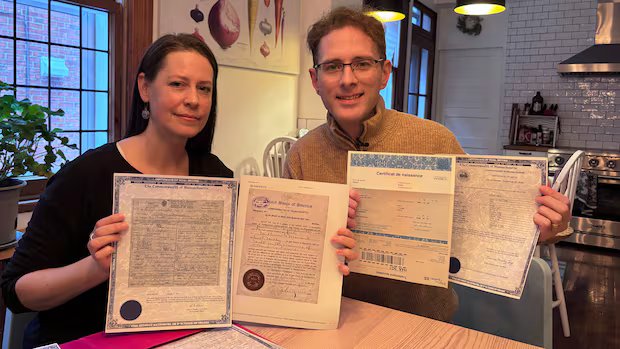
Amid rising tensions in the United States, many Americans are looking to Canada — and their roots — for a possible way out.
Lynn Rutman, a Cape Cod, Mass., resident with family ties to Quebec and Nova Scotia dating back centuries, said she’s worried about the political situation in her country, citing recent events surrounding controversial immigration enforcement policies and long-standing ideological divides.
“It’s not just me, many of us are concerned,” she said.
She’s now one of thousands who have begun the process of applying for proof of Canadian citizenship following recent changes to Canada’s citizenship rules.
Prior to Bill C-3, An Act to Amend the Citizenship Act (2025), citizenship by descent for those born abroad was limited to the first generation.
But now, Canadian citizenship is being retroactively granted to people born before the new law came into effect on Dec. 15, 2025, who would have been citizens if not for the first-generation limit.
“We feel like we want that Plan B so that we know we have a place to go in the event that things get even worse here,” Rutman said, “which you know, you see it’s getting worse by the day.”
The change in law came following a 2023 Ontario Superior Court of Justice decision that found the first-generation limit was unconstitutional, making the certificate “the hottest ticket in 2026,” according to Cassandra Fultz, a regulated Canadian immigration consultant.
Fultz said because the legislative changes coincide with a time of increased global volatility, many Americans are seeking a second passport of any kind.
“There’s no limit on how many generations you can go back, as long as you can prove it,” Fultz said.
New pathway to citizenship
For Mary and Ryan Hamel, the new legislation has brought a sense of relief.
The family of four came to Quebec from Massachusetts as temporary foreign workers during the COVID-19 pandemic.
“I thought Montreal would be the best place for me and my kids and my job allowed me to do that,” Ryan said, adding that becoming a Canadian citizen was always the end goal.
With a new pathway to permanent residency now open to them, both Mary and Ryan, who have French Canadian roots, started digging into their family history and tracking down official documents showing their lineage.
Fultz said the main documents that are required include baptismal or birth certificates, to show parentage and place of birth, and marriage certificates to show any name changes, which was common practice when women were married.
Unofficial name changes are also a frequent issue, says Fultz, who says she has helped numerous clients apply for a certificate of Canadian citizenship over the years. French names like Pierre, for example, were often anglicized and became Pete when the person moved to the United States.
In those cases, she said, any substantiating documents to fortify a claim, such as death certificates, census records, property deeds, court records or criminal records might be helpful in showing the ancestor is who the applicant says they are.
Over 3,000% growth in requests for certified documents
In Quebec, official documents dating back to 1621 and up to 100 years ago are kept by the Bibliothèque et Archives nationales du Québec (BAnQ), with more recent records available through the Directeur de l’état civil.
Sarah Hanahem, an archivist with the BAnQ office in Montreal, said while there’s always been an interest from Americans looking into their ancestry, requests for certified copies have exploded.
“In January 2025, we had 32 requests for certified copies of vital records and this year in January 2026, we’ve had over 1,000,” she said, adding most of those requests were made by Americans.

In statements to CBC, other archives across the country, including New Brunswick, British Columbia, Newfoundland and Ontario, have also seen a sizable increase in requests from the same time last year.
Because of the sudden surge in demand, Hanahem warned that international applicants should expect delays.
The priority, she said, is to fulfil requests by Quebec residents.“BAnQ is a government entity and we are paid with Quebec tax dollars.”
But more than that, Hanahem said the process itself is lengthy and can involve a lot of research.
There are sometimes discrepancies with the spelling of names, some of which might have changed over time, she said. Other times, critical information like which parish someone was born in, is unknown or key dates are approximate when actual dates are required.
“We have to go back to the original register,” Hanamen said, explaining some of the bound volumes are very old and need to be handled carefully.

The Hamels said they were able to obtain the needed Quebec documents – a birth certificate in their case – through the Directeur de l’état civil and not the BAnQ , but warned nonetheless that the undertaking wasn’t for the “faint of heart.”
It required several phone calls, appointments and was in general a time-consuming pursuit.
“We had to prove why we needed this document,” Mary said. “Then we had to go to a commissioner of oath, swear that we would not use this document for malintent or bad purposes.”
Historical ties to Quebec
David Vermette, an author and researcher specializing in Franco-American history based in Maryland, isn’t surprised the BAnQ is being flooded with requests.
He says the legislative change has been creating quite the buzz on social media – and not only among those looking for an exit strategy.
“There’s a lot of people who still feel very much connected to their Québécois heritage. They’re very much connected to some kind of a French Canadian identity,” he said.

That’s the case for Patricia Evan Martins, whose Québécois grandmother, one of 12 children, was sent to Maine when she was around 11 years old to work in a mill.
Evan Martins, who herself grew up in Maine and still calls it home, said she learned to speak French before English, went to a French Catholic school, sang French songs and ate French food.
Ryan, for his part, said he grew up with a dad who spoke better French than English and where Québécois staples like meat pies and split pea soup were part of the regular fare. Their situation is hardly unique.
Between 1840 and 1930, close to one million French-speaking Canadians, mostly Québécois but also some Acadians from Eastern Canada, emigrated to the United States in a mass migration movement known as the Great Hemorrhage.
They mostly settled in New England factory towns, with the majority working in the textile industry, Vermette said, leading to the creation of French Canadian neighbourhoods known as Little Canadas.
While many families have since returned home to Canada, the number of descendants remaining in the United States could number in the millions, according to Vermette.
Canadians at heart
Vermette says many Franco-Americans have long felt invisible on both sides of the border.
He believes Bill C-3 presents Quebec with a unique opportunity to repatriate or reclaim those who feel a connection to the province’s culture and language, even amid heightened controversy surrounding immigration and pressures linked to cultural and linguistic preservation.
“The Franco-American population is an untapped natural resource for Quebec,” he said.
Whether or not they intend to move back to Canada, for many in the community, an official recognition by means of Canadian citizenship legitimizes a long-held sense of belonging.
“I always have felt Canadian and this would make me just so happy,” Evans Martin said.
That is a feeling that resonates with Ryan.
“My mindset is much more Canadian than American,” he said. “So it will feel very natural for me.”
Both his and Mary’s sense of connection to the country has also been deepened by living here and learning more about their family histories through the application process.
“I can look in the maps and say, ‘Oh, this is where Nana was born,’ or ‘This is where Papa’s family was from,’” Mary said.

Ryan, meanwhile, has traced his ancestors all the way back to Jacques Archambault, who dug Montreal’s first well in 1658.
Now that their paperwork is done, the next step for the Hamel family is to wait for a decision from Immigration, Refugees and Citizenship Canada (IRCC).
In a statement to CBC, the IRCC said it does not have an exact estimate of how many people might be affected by Bill C-3, but says it expects tens of thousands of requests for Canadian citizenship certificates over time.
According to the IRCC website, at the beginning of March, almost 48,000 people were waiting for a decision pertaining to their certificate application, with an estimated processing time of 11 months.