dailynewsnblog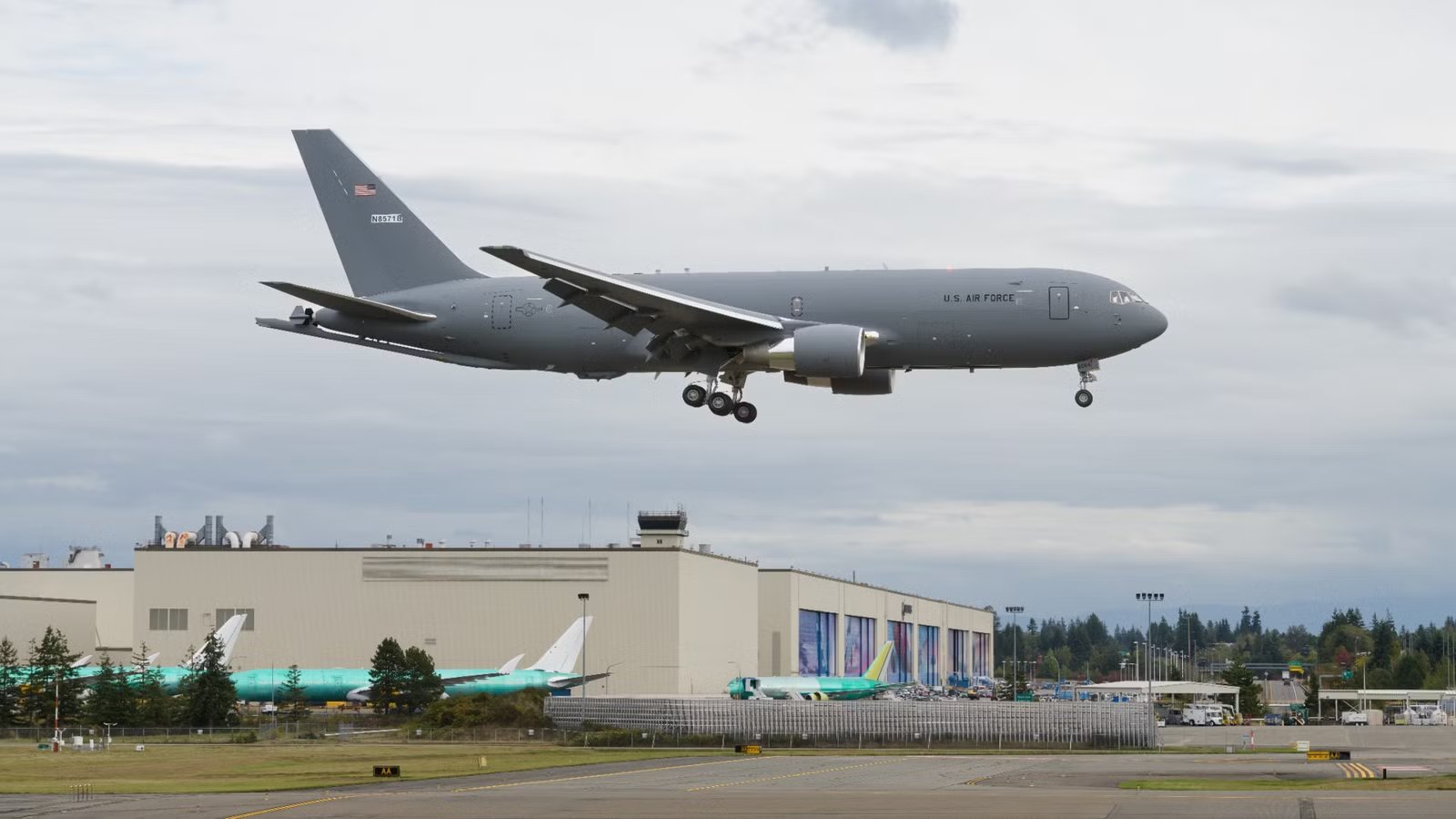
An engine testing incident in Fairbanks Airport (FAI), Alaska, saw a military Boeing KC-46 Pegasus (KC-46A) aircraft damage the airport’s asphalt surface, creating a 25-foot-wide hole behind the engine. The damage was severe enough to be valued at over $140,000. While the investigation indicated that the airport’s asphalt surface was within the standards for what is required for a parking ramp, it was not sufficient to handle continuous engine testing, which was being conducted at the time.
Considering that regular commercial airport parking stands are not designed to sustain extended high-power engine exhaust blasts exceeding a thousand degrees, the damage that occurred is not a surprise.
$147,044 In Airport Ground Damages

This incident occurred last year, on July 12, but the formal report has only been published this month. The incident saw a KC-46A Tanker aircraft belonging to the New Hampshire Air National Guard damage the asphalt surface at Fairbanks International Airport (FAI), during an engine testing procedure. According to reports from Task & Purpose, the aircraft was performing multiple high-powered engine runs at one of the airport’s parking ramps.
Reports indicate that on the tenth engine run, the aircraft performed, and the ground behind the engine got damaged, with chunks of asphalt being flung into the air due to the thrust from the engine, resulting in a 25-foot hole being formed on the ground. For context, the report states that each of the engine runs lasted for about 20 to 30 minutes, and the engine exhaust, during these high-power runs, can average to about 1,170 degrees. This meant the ground behind the engine was subjected to sustained high temperatures and high pressures, which could have weakened the integrity of the asphalt structure.
It is worth noting that the report states that the maintenance personnel followed procedures during these engine runs, and the surface of the parking ramp also met the specifications required to function as a parking ramp. However, it was not prepared for long-duration engine test runs. Task & Purpose reports the following quote from the Investigation president, Air Force Lt. Col Michael Raynor:
“After a comprehensive investigation into this mishap, I find by a preponderance of the evidence the cause of the mishap was persistent high temperatures in combination with repeated high engine exhaust from the [KC-46A’s] right engine.”
Safety Is Critical For Engine Testing

Due to the nature of engine operations and the sheer power produced by modern aircraft engines, any work being done on or even around an engine requires considerable safety measures. In fact, even within airports, there are special areas designated for aircraft to perform engine runs and tests safely without impacting regular operations in the airport.
According to regulations, these designated engine test areas are required to be secure areas capable of keeping noise levels within an acceptable range, while also mitigating any risks from the engine blasts. Considering the risks, these areas also have fire suppression systems integrated.
As per IATA’s Engine Danger Areas document, depending on the engine type (jet or propeller), IATA has designated danger areas around aircraft engines, which include the intake and blast areas. This information acts as guidance for any airline and airport ground staff who might be working around an aircraft, ensuring all ground personnel remain safe.

Aircraft Engine Testing: 5 Things You Might Not Know
Engines could be taken to frozen deserts or be fired at with dead birds for testing.
Stay Away From The Jet Engines

The information in this IATA document regarding engine danger areas is relevant because there have been a considerable number of incidents over the years, which have resulted in engine damage, equipment damage, aircraft damage, and, unfortunately, even loss of life.
Walking too close behind a running jet engine or any equipment that happens to enter the engine blast zone will result in the person or the equipment being flung several feet backwards due to the high-speed (and high-temperature) force from the engine exhaust. Just in the past year, there have been a number of incidents where something or someone gets sucked into a running engine.
An unfortunate incident from July 2025 saw a person get sucked into the engine of a Volotea Airbus A319 aircraft in Milan’s Bergamo Airport (BGY). It was reported that the person lost their life. Another incident, which occurred more recently in January, saw a cargo container get sucked into the engine of an  Air IndiaAirbus A350 aircraft. While no passengers, crew members, or ground staff were hurt, the aircraft was grounded for over a month following the incident. These few examples indicate the importance of ensuring safe operations, especially around a running engine.