dailynewsnblog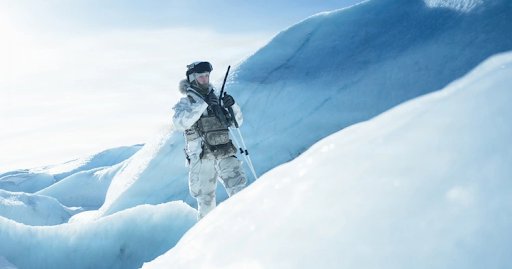
U.S. forces this week wrapped up their participation in an annual Arctic training exercise that for the first time was held in both Alaska and Greenland. Arctic Edge, which began in 2018, includes training to respond to threats that Russia — and increasingly China — could pose to the U.S.
The portion in Greenland was coordinated with Denmark and involved both U.S. and Danish special forces. The long-planned exercise took place despite President Trump’s repeated threats this year to take control of Greenland, which is an autonomous territory of Denmark.
According to NORAD and U.S. Northern Command, which ran the exercise, Denmark hosted the U.S. in Greenland for training focused on operating in the Arctic. Every other year, Arctic Edge takes place in the winter and this year’s was the first in recent years to take place in the dead of winter.
Defense Visual Information Distribution Service 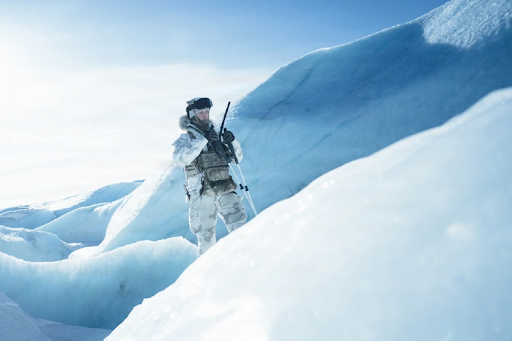
“Half of the battle in exercising in the wintertime in the Arctic is simply surviving,” Royal Canadian Air Force Lt. Gen. Iain Huddleston, the deputy commander of NORAD, told reporters earlier this week.
The overall lesson of the exercise is the military must prepare units for the Arctic before they get there, according to U.S. Air Force Lt. Gen. Robert Davis, who is the head of U.S. Alaska Command, the Alaskan NORAD region, and commander of the 11th Air Force.
During the training exercise, according to Davis, there are routinely aircraft that are damaged and require additional maintenance because of the lack of familiarity with practices unique to the extreme cold, like warming up hydraulic systems beforehand. Some service members try to open the window on an aircraft too soon, and the window cracks.
“Now you can’t use the aircraft until you replace the window — so, a couple of examples of just some of the practical challenges of not operating on a routine basis, and then all of a sudden coming up into the Arctic and having to do a little discovery learning,” Davis said.
Huddleston and Davis said the exercise did not have a theoretical adversary but had portions to defend against weapons, like the cruise missiles that only certain countries, like Russia and China, could potentially use to threaten the U.S.
“We don’t have any intelligence that would suggest that we’re actually at risk of them launching cruise missiles against Alaska,” Davis said. “Nevertheless, we feel like we need to be adequately prepared to take the military capabilities that the U.S. government has given to us from a defensive perspective and make sure that we can put them together.”
A smaller weapon of increasing concern to the military is the drone. In the exercise, the military practiced responding to a drone incursion at Fort Greely in Alaska.
According to Davis, they tested scenarios including a single drone that might just be surveilling the installation as well as a small swarm of about six drones, to see if the different systems Fort Greely has were able to detect and communicate information to the Army soldiers.
“None of the drones were completely undetected,” Davis said, adding that there are multiple types of sensors and at least one of them detected each of the drone, and none of the systems were negatively impacted by the temperature, which can plummet to -40 degrees fahrenheit.
The U.S. forces did take down one drone, according to Davis, but used a counter-unmanned aerial system that throws a net over the drone and lowers it to the ground intact so the U.S can inspect it.
Because the counter-drone systems at Fort Greely are mostly electronics based and don’t necessarily require batteries, which can drain quickly in the cold, the temperatures “didn’t really affect them in a negative way, which is good,” Davis said.
He said the speed at which industry and commercial companies are modifying and changing drone technology makes it “really difficult” for the formal programs within the military to keep up. That’s a concern the Pentagon is confronting throughout the armed forces, not just in the Arctic.