dailynewsnblog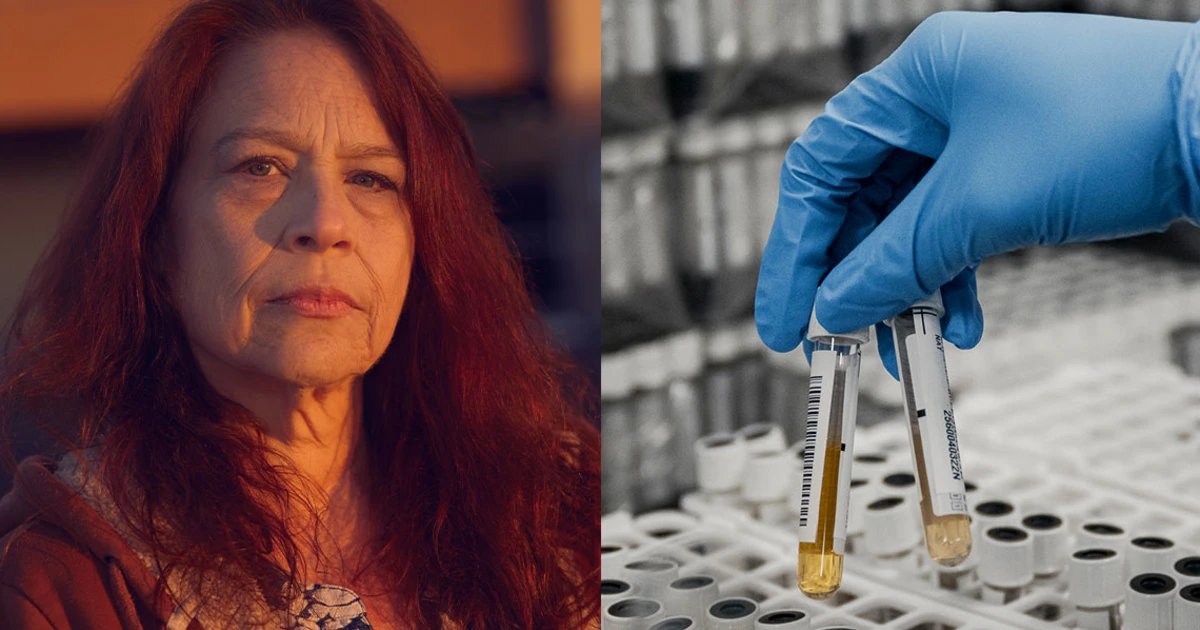
Plasma sellers interviewed by NBC News said the benefit to patients was an added bonus, but it was the money that drew them in and kept them coming back.
“They are all about how you’re helping to save lives. But honestly, no one’s there for that,” Eagan said.
At the B Positive plasma center near Philadelphia, workers bounce among a steady flow of patients, inserting needles, removing tubes and canisters still coated in blood, and ferrying plasma into a walk-in freezer before it’s shipped to pharmaceutical companies to be turned into medicines.
Ben Ruder, the company’s CEO, said the business operates on relatively narrow margins, similar to those of a restaurant, and is vulnerable to spikes in the cost of supplies and labor. The expenses add up: hiring staff, buying equipment and medical supplies, testing the plasma, and meeting all the regulatory requirements of a plasma center.
“You’re spending significant amounts of money to open a center, which then you obviously have to recoup,” Ruder said. “The incentive is commensurate with maintaining a healthy margin, just like any business would.”

Donors say that the amount companies pay varies throughout the year, apparently as demand ebbs and flows. Payments tend to go down in December, for instance, when there is an uptick in people wanting to make extra money around the holidays. When tax refunds start hitting bank accounts at the start of the year, the number of sellers tends to go down, so the payments appear to go up to draw people in, sellers said.
For the plasma sellers, the process can come with a physical price. The most common side effects are bruising where the needle is inserted, fatigue and lightheadedness, which can be managed with proper hydration and nutrition, according to the Department of Health and Human Services.
A small number of people can have an allergic reaction to a substance used to prevent clotting, causing chills, a tingling sensation and in rare cases more severe reactions that can require hospitalization, according to the Food and Drug Administration.
While the FDA has allowed companies to collect a person’s plasma as frequently as twice a week since the 1970s, there is little research on the long-term health effects. Some studies have shown that regular plasma donors have a decrease in certain proteins and antibodies in their blood, but it’s unclear if that has health consequences. An industry-funded study found that people who sold their plasma more than once a week didn’t self-report significantly more health problems than those who did so less frequently.
“We don’t see outcomes that appear to be related to plasma donation that are serious,” said Mark Weinstein, a retired FDA official who worked in the division that oversaw plasma products. “But should a person be wary of it? Personally, I wouldn’t be overly enthusiastic about giving twice a week.”
Doing larger-scale, controlled studies that follow donors over time and measure their health outcomes would be complex and expensive, Weinstein said.
On a recent Thursday morning, Jill Chamberlain, 57, arrived at a Kedplasma center in a Phoenix shopping center at 6:40 a.m. so she could be among the first in line when the doors opened. She was hoping to have enough time to sell her plasma before going to her full-time job doing administrative work for a local school district. As she waited in the cold, dark parking lot, nine other people joined her, and soon after opening, the waiting area was mostly full.

It’s a place she never would have expected to be two years ago, before losing her job, when she was living comfortably in a four-bedroom home with a pool in Scottsdale, Arizona, and vacationing in Tokyo. Now, she’s counting on the money from her plasma to pay this month’s electric bill. If she sells her plasma twice a week, she can make at least $400 a month.
Plasma sellers have to pass a screening that involves a blood test to check for protein levels and a physical exam to ensure they are healthy. Chamberlain said she tries to eat a balanced diet and stay well hydrated to pass the screening.
Each time she goes, she must answer dozens of questions, like whether she’s had any recent vaccinations or is pregnant. Most plasma centers exclude people at risk for having an infectious disease, like those who recently received a tattoo or were released from prison.
Chamberlain said the process has taken a toll. Recently, she said an employee improperly inserted the needle twice, leaving her with large bruises on her arms. Even when the needle is inserted properly, she said it is still painful, and when the anti-clotting agent is injected, she shivers uncontrollably.