dailynewsnblog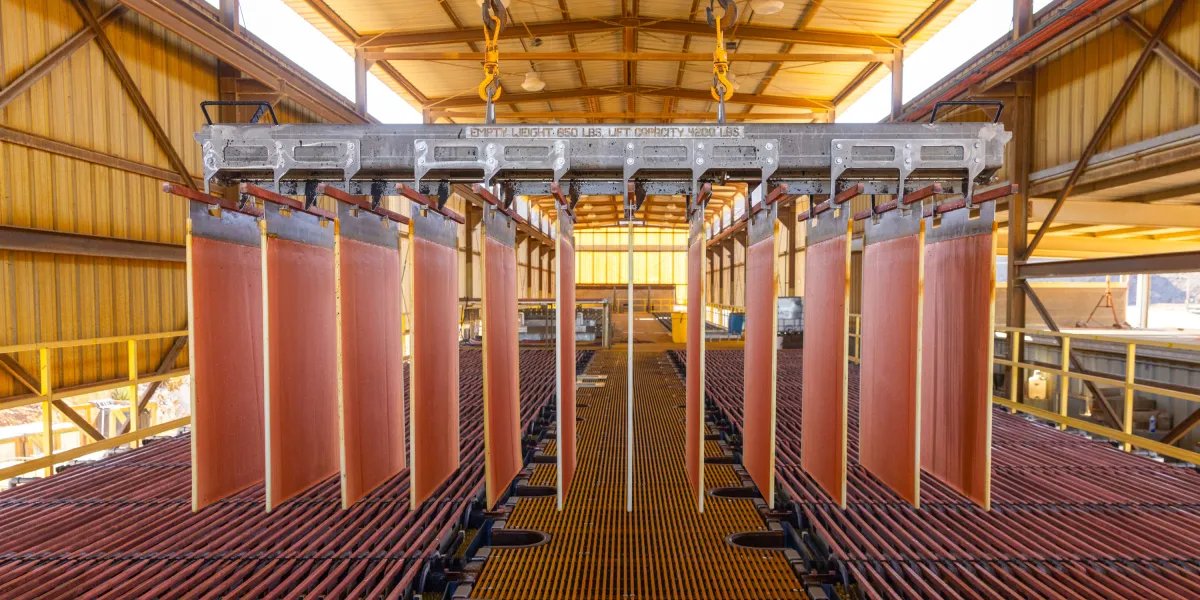
“They are acutely aware of what it takes to scale these technologies because they know the industry,” she says. “They’ll be your biggest supporters, but they’re going to be your biggest critics.”
In addition to technical challenges, Rasner points out that venture-capital-backed biotechnology startups will struggle to deliver the quick returns their investors seek. Mining companies want lots of data before adopting a new process, which could take years of testing to compile. “This is not software,” Rasner says.
Nuton, a subsidiary of the mining giant Rio Tinto, is a good example. The company has been working for decades on a copper bioleaching process that uses a blend of archaea and bacteria strains, plus some chemical additives. But it started demonstrating the technology only late last year, at a mine in Arizona.

NUTON
While Endolith and Nuton use naturally occurring microbes, the startup 1849 is hoping to achieve a bigger performance boost by genetically engineering microbes.
“You can do what mining companies have traditionally done,” says CEO Jai Padmakumar. “Or you can try to take the moonshot bet and engineer them. If you get that, you have a huge win.”
Genetic engineering would allow 1849 to tailor its microbes to the specific challenges facing a customer. But engineering organisms can also make them harder to grow, warns Buz Barstow, a Cornell University microbiologist who studies applications for biotechnology in mining.
Other companies are trying to avoid that trade-off by applying the products of microbial fermentation, rather than live organisms. Alta Resource Technologies, which closed a $28 million investment round in December, is engineering microbes that make proteins capable of extracting and separating rare earth elements. Similarly, the startup REEgen, based in Ithaca, New York, relies on the organic acids produced by an engineered strain of Gluconobacter oxydans to extract rare earth elements from ore and from waste materials like metal recycling slag, coal ash, or old electronics. “The microbes are the manufacturing,” says CEO Alexa Schmitz, an alumna of Barstow’s lab.
To make a dent in the growing demand for metal, this new wave of biotechnologies will have to go beyond copper and gold, says Barstow. In 2024, he started a project to map out genes that could be useful for extracting and separating a wider range of metals. Even with the challenges ahead, he says, biotechnology has the potential to transform mining the way fracking changed natural gas. “Biomining is one of these areas where the need … is big enough,” he says.
The challenge will be moving fast enough to keep up with growing demand.