dailynewsnblog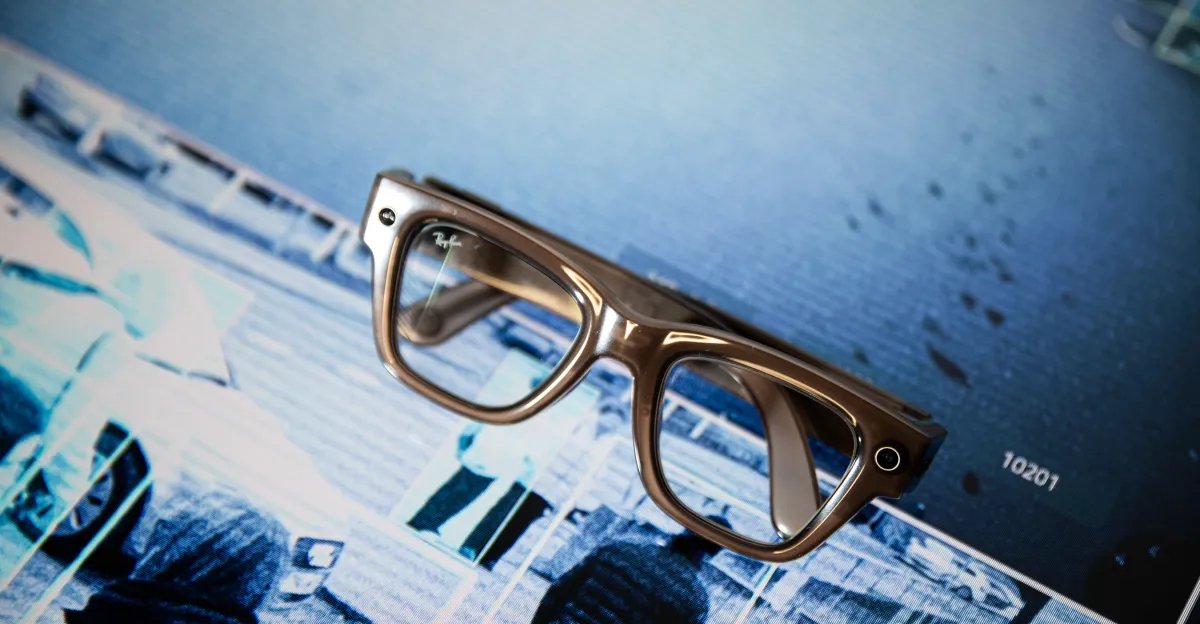
Whenever I write about Meta’s Ray-Ban smart glasses, I already know the comments I’m going to get. Cool hardware, but hard pass on anything Meta makes; will wait for someone else to come along. It’s hard to imagine that sentiment changing anytime soon after The New York Times reported that Meta mulled launching facial recognition software “during a dynamic political environment” precisely because privacy advocates would be distracted.
Smart glasses evangelists often tell me this fear is somewhat overblown. After all, the phone in your pocket also has a camera. The government already uses facial recognition tech, and CCTV feeds are everywhere. Anyone who’s ever watched a true-crime documentary or an episode of Law & Order knows that these days, it’s hard to step out in public and not be recorded. The recent Guthrie case, in which law enforcement recovered “lost” Nest Doorbell camera footage, underscores this further. This is one of the scariest things about smart glasses: The cameras are tiny, their privacy LEDs are weak, and the design is incredibly discreet. That invisibility, that these recording tools look like a normal pair of glasses, is the point.
It’s a bit of a catch-22. Meta’s glasses are great because they’re discreet. That discretion is also unnerving because it means they’re perfect monitoring tools. I’ve written this many times, but wearing modern smart glasses often makes me feel like I’m a spy. It doesn’t matter if the Ray-Ban Meta glasses have a privacy indicator light. I’ve worn them in public, outdoors, indoors, and in crowds. As far as I know, no one has ever noticed me in them. Even so, it doesn’t feel good. I, however, have begun spotting them in the wild, and sometimes that also doesn’t make me feel great. It doesn’t matter that Meta says that its glasses cannot record if the light is tampered with. 404 Media reported that a $60 mod could disable the light. Anecdotally, one day, the privacy light on my spouse’s pair just stopped working. They can record video just fine.
That’s creepy enough without Meta in the mix. What happens if you take a second to think of Meta’s history with the Cambridge Analytica data privacy scandal, CEO Mark Zuckerberg’s willingness to kiss Donald Trump’s ring, and recent changes to its smart glasses privacy policy to boost AI training? When you remember that Zuckerberg once said that early Facebook users were “dumb fucks” for entrusting him with their data, and more recently, that people who opt out of smart glasses will be at a “severe cognitive disadvantage”? How are you supposed to feel knowing the current political climate is what Meta apparently wants to take advantage of to roll out facial recognition?
Viewed from that lens, of course it’s just like Meta to explore a feature that would, according to the NYT, allow smart glasses users to identify people they don’t know but who “have a public account on a Meta site like Instagram.”
In fairness, this is a feature people have asked for. It could be helpful for low-vision and blind people in navigating the world. Forgetful people and the socially awkward might appreciate glasses that help them remember names during business meetings, conferences, or parties. But it’s one thing to employ a feature in a culturally appropriate setting. It’s a Pandora’s box to unleash it everywhere.

This is exactly why I spent a good chunk of my Meta Ray-Ban Display review discussing privacy. Smart glasses makers have yet to solve the glasshole conundrum that ultimately doomed the original Google Glass.
When you put powerful tools into the hands of jerks, you can’t just say, “Well, we told them to behave responsibly.” (For the record, that is what Meta’s smart glasses privacy policy amounts to.) Already, there have been reports of “manfluencers” recording women without their consent. Meta may not have directly been responsible for this, but it hasn’t come out swinging against this behavior either. For example, in response to CNN’s report about manfluencers misusing the tech, Meta merely pointed to its terms of service and LED lights, and asserted that people should use its products safely. When two college students figured out a way to dox strangers using the glasses, a Meta comms official on Threads again pointed to the LED light as a deterrent.
In a recent column, I noted that no one seems to agree on what to call this tech. The internet told me it had plenty of names: spy glasses, e-waste, fascism sunnies, and hammer bait. Some people employ much more violent imagery. Think: a GIF of someone smashing a hammer down on a glasses-wearing head superimposed over a watermelon. I’ve lost count of how many people tell me that, if they happened to notice a glasshole wearing this in their vicinity, they’d punch said person in the face. Of course, most of this is hyperbole. Most people wouldn’t notice the glasses. Then again, a New York City woman was also hailed as a hero when she plucked Ray-Ban Meta glasses off an influencer’s face and snapped them in two.
Smart glasses aren’t inherently evil. I’ve spoken with blind and low-vision users who say Meta’s glasses have changed their lives for the better. I’ve spoken with other accessibility advocates who are thrilled at the doors that smart glasses could open for the deaf, hard of hearing, and those with limb differences.
But even in that sphere, not everyone trusts Meta. Some rankled that, in the NYT report, Meta seemed to present facial recognition tech as an accessibility feature. Meanwhile, fans of Supernatural — a VR game that Meta recently sunset — would argue Meta callously abandoned the many veterans and people with limited mobility who relied on its product for fitness.
The current smart glasses renaissance is fragile. Meta’s wretched privacy reputation is perhaps the biggest hurdle to achieving its smart glasses ambition. While plenty of people will trade privacy for convenience, perception matters. Oura’s deal with Palantir forced its CEO, Tom Hale, to defend and clarify the company’s data privacy policies after intense backlash. Ring and Amazon backpedaled after consumers fired back against its Search Party feature for video doorbells. If Meta were smart, it’d revamp its entire policy to be much more proactive in protecting consumer privacy.
Many things killed Google Glass. The outlandish design, the expense, the glasshole behavior of its users — all these factors contributed. But there were multiple instances where consumers rejected the idea of being surveilled, snatching glasses off people’s faces. Meta may have kicked off a new era of smart glasses, and it’s done many things right. But it can’t outrun its reputation, especially when other major players are also itching to get in on the action. Glassholes haven’t gone anywhere. All it takes is destroyed public trust for smart glasses to once again return to the realm of science fiction.