dailynewsnblog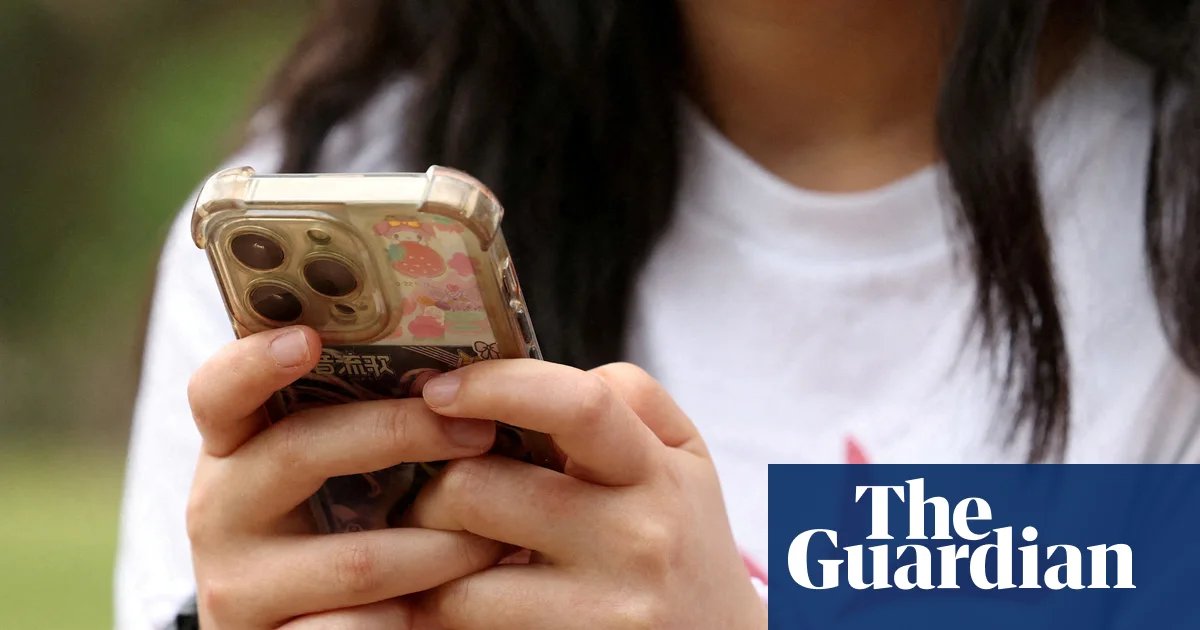
The Australian government has accused big tech firms like Meta, TikTok and Google of disobeying the landmark ban on under-16s using social media, after the country’s online safety office warned many children had accounts.
A survey of 900 Australian parents found around a third (31%) said their children still had one or more social media accounts after the ban, compared to 49% before the laws.
Of the total number of under 16s who had accounts on Instagram, Snapchat and TikTok before the ban, 70% had maintained access, the survey found.
On Tuesday it was revealed Instagram, Facebook, Snapchat, TikTok and YouTube were all under investigation for potential non-compliance with the rules, with Australia’s communications minister, Anika Wells, alleging the companies were not doing enough to enforce the ban.
The eSafety Commission claimed the technology being used by the companies – such as facial age estimation – was not effective enough, and alleged the firms had lax guardrails which allowed teens to repeatedly attempt age verification until they were successful.
“None of this is impossible. None of this is even difficult for big tech who are innovative billion dollar companies. What this update shows is unacceptable,” Wells said in Canberra on Tuesday.
“If these companies want to do business in Australia, they must obey Australian laws.”
The social media minimum age laws specify that Facebook, Instagram, Snapchat, Threads, TikTok, Twitch, X, YouTube, Kick and Reddit are “age-restricted platforms”, banning under-16s from holding accounts and requiring those companies to take reasonable steps to prevent children from opening or holding accounts.
The laws, which came into effect last December, carry a maximum A$49.5m (US$33.9m, £25.7m) penalty. Wells said eSafety was continuing to gather evidence before it decided whether to pursue such fines against any company.
“What we are seeing is evidence of the absolute bare minimum from social media companies, it’s straight out of the big tech playbook … They obfuscate, they try to throw doubt on any regulation,” she said.
“They want you all to report today that the laws are failing. That helps them in their quest to reduce regulation, to minimise it the world over. So I’m not surprised by any of this. We expected this.”
In a statement, Meta said it was committed to complying with the social media ban and working with eSafety and the government.
“We’ve also been clear that accurately determining age online is a challenge for the whole industry, particularly at the age‑16 boundary where the Government’s own Age Assurance Technology Trial noted ‘natural error margins’.
“The most effective, privacy‑protective and consistent approach is to require robust age verification and parental approval at the app store and operating system level before a teen can download an app or create an account.”
TikTok and Google were contacted for comment but did not respond by publication time.
The government said in January more than 4.7m social media accounts were deactivated, removed or restricted in the first days after the ban came into effect on 10 December last year, but declined to provide a disaggregated number of how many accounts were removed from each platform.
The Australian government has trumpeted the success of the ban, including promoting it at the United Nations in New York, but anecdotal reports that many children remained online have dented the policy’s outcome.
In its first compliance report on the legislation, more than three months on from the law coming into force, eSafety said “despite overall reductions in account ownership, a substantial proportion of children under 16 retained accounts on age-restricted platforms”.
It conducted a survey of nearly 900 parents, with many saying their kids still had access to social media.
“Of the parents who reported their child had an account on each platform prior to 10 December 2025, around 7 in 10 reported that their child still had an account on Facebook (63.6%), Instagram (69.1%), Snapchat (69.4%), and TikTok (69.3%).
“Around 3 in 10 reported that their child no longer had an account. One in two of these parents (48.5%) reported that their child still had an account on YouTube following the age restrictions coming into effect,” the report said.
Prior to the ban, the survey respondents said about 49.7% of their kids had social media; post-ban, that was down to 31.3%.
The Albanese government has long conceded that not all kids would be immediately removed from their accounts, but that the laws would reduce the number and help parents set their own household rules.
The eSafety report stated “the most common reason children still had their social media accounts was that they had not yet been asked by the platform to verify their age”, and raised concern over numerous “poor practices” it accused those platforms of undertaking.
It claimed some platforms were encouraging children to attempt age assurance even when their declared age on the service was under 16, or allowed users to repeatedly attempt the same method of age assurance. The eSafety office also claimed some services did not have easy pathways to report underage users.
In particular, eSafety said that facial age estimation had higher error rates for people close to the 16-year-old cut-off, and claimed some platforms would have known some children aged 14 or 15 would receive “false” results of being judged to be over 16.