dailynewsnblog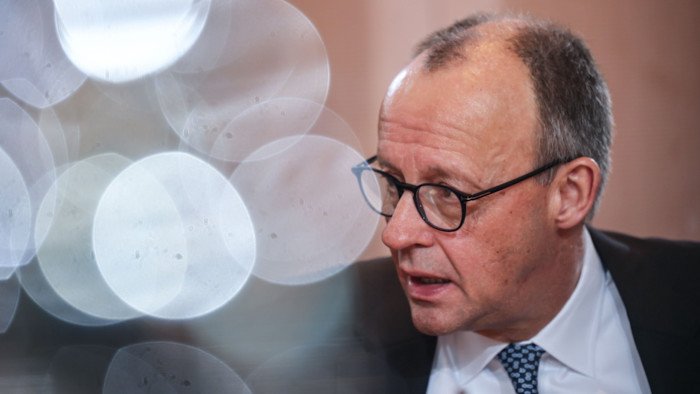
This article is an on-site version of our Europe Express newsletter. Premium subscribers can sign up here to get the newsletter delivered every weekday and fortnightly on Saturday morning. Standard subscribers can upgrade to Premium here, or explore all FT newsletters
Good morning. It looks like Monopoly money, but there is a twist. Read this extraordinary tale of the colourful imitation Russian banknotes issued by a Kremlin-backed outfit that are designed to help move roubles around the world in defiance of western sanctions.
Today, our defence colleagues report on the German chancellor’s trip to the Gulf in search of new defence and energy deals, and our trade correspondent has news of European ports dropping a new IT system and returning to paper forms to avoid piles of rotting fish.
New friends
German Chancellor Friedrich Merz is in the Gulf seeking new partnerships on energy and defence, trying to diversify away from Berlin’s traditional ally across the Atlantic, write Laura Pitel and Sylvia Pfeifer.
Context: Berlin rapidly weaned itself off its dependence on Russian gas after Moscow’s full-scale invasion of Ukraine. But today, around 10 per cent of its gas supplies are liquefied natural gas — more than 90 per cent of which comes from the US. That is making policymakers nervous given Europe’s increasingly rocky relationship with US President Donald Trump.
Merz and a delegation of business executives arrived in Saudi Arabia last night, where the German leader had dinner with Crown Prince Mohammed bin Salman.
Speaking ahead of his departure, he said he wanted to forge new alliances. “We need such partnerships more than ever in a time when major powers are increasingly determining politics,” said Merz, who has also visited Brazil, South Africa and India in recent months.
Today he flies to Qatar, one of the world’s largest producers of LNG, and tomorrow he makes his last stop in the UAE.
While no new gas deals are expected this week, officials have said that they want to deepen the partnership and open the door to future agreements — also on defence.
Gulf nations are increasingly important customers for German arms producers, and Merz’s government has loosened the country’s strict weapons export rules, which had hampered sales to some non-Nato countries.
Airbus is hoping to seal a deal to sell A400M military transport aircraft during this week’s trip. The pan-European group, whose defence division is based in Germany, had warned its production line was at risk in the medium term without additional orders.
Pressed on human rights concerns in the region, Merz said that Gulf nations “may not all share the same values and interests, but they do share the understanding that we need an order in which we can rely on agreements and treat each other with respect.”
Chart du jour: Made in Europe

The EU is trying to save its manufacturing base with the controversial move to prioritise ‘Buy European’. That, critics say, risks increasing costs, damaging competitiveness and alienating trading partners.
Fishy
A new EU computer dragnet to catch illegal fishing is too tight, leaving many countries to ditch the system in favour of paper certificates to avoid fish piling up in ports, writes Andy Bounds.
Context: The European Commission launched the CATCH IT system on January 10 but it has floundered, leaving fish stranded on the quayside as importers are unable to input key data.
Several countries, including France and Germany, have told companies to continue using the old system of filing paper catch certificates until CATCH is working properly.
“Without these member state workarounds fresh fish would be rotting on the docks,” one industry figure told the FT. “There would be shortages on the supermarket shelves.” Some 70 per cent of seafood eaten in the EU is imported.
Industry representatives said that the problems with CATCH are myriad, including drop-down menus missing some fish species and country codes from where they were imported.
With the certificates sometimes running to 100 pages, some are too big to be uploaded. The commission has suggested compressing them first and contacting the help desk for other problems.
The system is supposed to better regulate illegal fishing, for instance to avoid overfishing, but because Brussels cannot force third countries to adopt it the burden falls on the EU processors and importers.
As a result, much canned and frozen fish is stranded in EU ports, resulting in rental fees and electricity bills.
The commission said it has granted some exemptions. “In highly specific cases — and strictly for a limited period — this may include the temporary acceptance of paper catch certificates, provided that, once the underlying issue is resolved, all such certificates are subsequently submitted and validated via the CATCH system,” it said.
What to watch today
-
European Commission president Ursula von der Leyen meets French President Emmanuel Macron in Paris.
-
Informal meeting of EU environment ministers in Nicosia.
-
Italian Prime Minister Giorgia Meloni hosts Chile’s President-elect José Antonio Kast in Rome.
Now read these
Recommended newsletters for you
Free Lunch — Your guide to the global economic policy debate. Sign up here
The AI Shift — John Burn-Murdoch and Sarah O’Connor dive into how AI is transforming the world of work. Sign up here
Are you enjoying Europe Express? Sign up here to have it delivered straight to your inbox every workday at 7am CET and on Saturdays at noon CET. Do tell us what you think, we love to hear from you: europe.express@ft.com. Keep up with the latest European stories @FT Europe