dailynewsnblog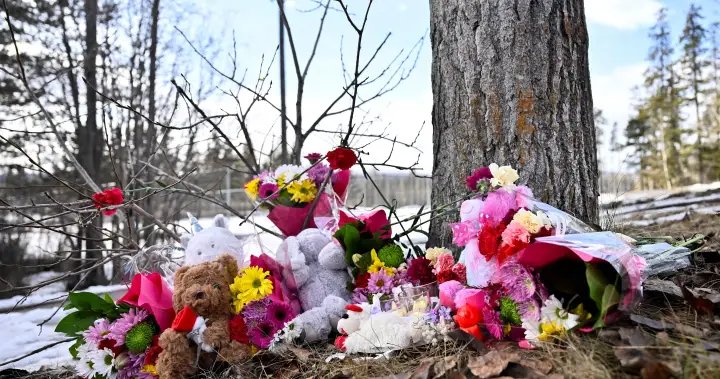
The Tumbler Ridge, B.C., mass shooting that left eight people killed and more than 25 injured highlights the need for access to mental health care in smaller communities — and to make sure those who may need support after the devastation know they are not alone, experts say.

Federal leaders who spoke in the House of Commons on Wednesday noted the need for supports for the community as its members grapple with the losses and injuries from the attack.
“A smaller community, being able to attract a number of helping professionals there that can meet the needs of the population is tricky,” said Jonathan Morris, CEO of the B.C. division of the Canadian Mental Health Association, in an interview with Global News.
“I remember growing up in a smaller community and worrying, ‘Will this person see me go to the counsellor’s office?’ That’s why we’ve got a lot of work to do to make sure reaching out for help doesn’t carry shame.”
“I think the bigger challenge is making sure we have the right level of care and the right level of access to resources in communities so no matter where you live, you can ask once and get the help you want fast.”
The importance of having mental health resources available in B.C. has been prevalent in recent years, following the collision involving three Southern Alberta Mustangs that killed three boys, the 2020 Nova Scotia mass shooting and the 2018 Humboldt Broncos bus crash.
Tumbler Ridge has a population of just over 2,700 people, making both the impact of the shooting and the need for mental health resources “essential,” another expert says.
“Rural communities don’t have less or more needs — they are the same in our urban settings — but the thing is, there are fewer formal supports that are available in rural areas,” said Conor Baker, associate professor of psychology and education at Mount Saint Vincent University.
Siri Brown, regional director of the Canadian Counselling and Psychotherapy Association (CCPA) in BC/Yukon for CCPA acknowledged that “geography and transportation barriers” can also be present.

Get daily National news
Get the day’s top news, political, economic, and current affairs headlines, delivered to your inbox once a day.
“Some services may be located far from where people live, often requiring travel to larger towns or cities,” Brown said in a written statement to Global News.
“Public transit is often limited or nonexistent, so people without a private vehicle may struggle to reach appointments, including things such as mountain roads and winter conditions in B.C.”

She also acknowledged how smaller communities “often mean many people know each other, and fears about lack of privacy and confidentiality regarding mental health concerns can inhibit some from seeking help.”
However, Barker noted that it is how “interconnected” rural communities are that progress can be made.
“All the things that are barriers in rural spaces are also the opportunities in rural spaces,” he said.
Baker also noted that rural communities do have “some very powerful protective factors” that include “strong relationships, strong and accessible local leadership and the ability to mobilize quickly when supported properly.”
While Tumbler Ridge is slightly larger than the community sizes that the Canadian Mental Health Association has used in past research assessing mental health resources in rural and remote communities, many of the findings appear applicable.
The association’s fact sheet on rural and remote mental health notes that those in the communities often face “difficulty getting services because of geography, long distances, and challenging weather” as well as “more stigma about asking for and getting help” and a “lack of anonymity, which can impact privacy.”


Morris said their work over recent years has also highlighted that virtual supports can be helpful.
“Tumbler Ridge over the years has made some significant contributions around primary care, so that’s why a dual approach is helpful, “he said.
“Making sure good virtual care is available, because some communities are hard to reach in-persons services, and doing all that we can to make sure an adequate level of in-person care in regions is helpful.”
Global News also reached out to Northern Health, the B.C. health ministry provider of care in the region where Tumbler Ridge is located.
Northern Health provided Global News with a link to their Informational Bulletin released Wednesday evening with details regarding mental health supports available in Tumbler Ridge.
That includes a free shuttle service between Tumbler Ridge and the larger city of Fort St. John, as well as more resources in the community.
“Drop-in appointments with mental health clinicians are now available at the Tumbler Ridge Health Centre for anyone seeking support. To help ensure access, Health Centre hours have been extended for the remainder of this week. Beginning today, the health centre is open daily from 7 am to 11 pm. Updates on future hours of operation will be coming soon,” says Northern Health.
“A range of mental health and psychosocial supports are being made available through Northern Health and partner organizations. In addition to more Northern Health mental health clinicians being deployed to the community, the local school district, the Ministry of Children and Family Development, and the Provincial Health Services Authority (PHSA) are mobilizing additional supports to travel to and support Tumbler Ridge.”
Brown said she is “heartened” by the” rapid response of both the local community, surrounding communities, and the province in responding to the tragedy.”
“Remembering that supporting all community members and their mental health needs helps the whole community is important, and therefore ensuring funding for those services remains in place would be the best next step,” she said.
Barker said while crisis events often focus on the physical injuries or impacts, it’s important to recognize the mental health impact on survivors and the community.
“I think we are becoming more and more aware as society that it is not just a physical injury that occurred to this community, it is a broader mental health pact that is happening,” Barker said.
© 2026 Global News, a division of Corus Entertainment Inc.