dailynewsnblog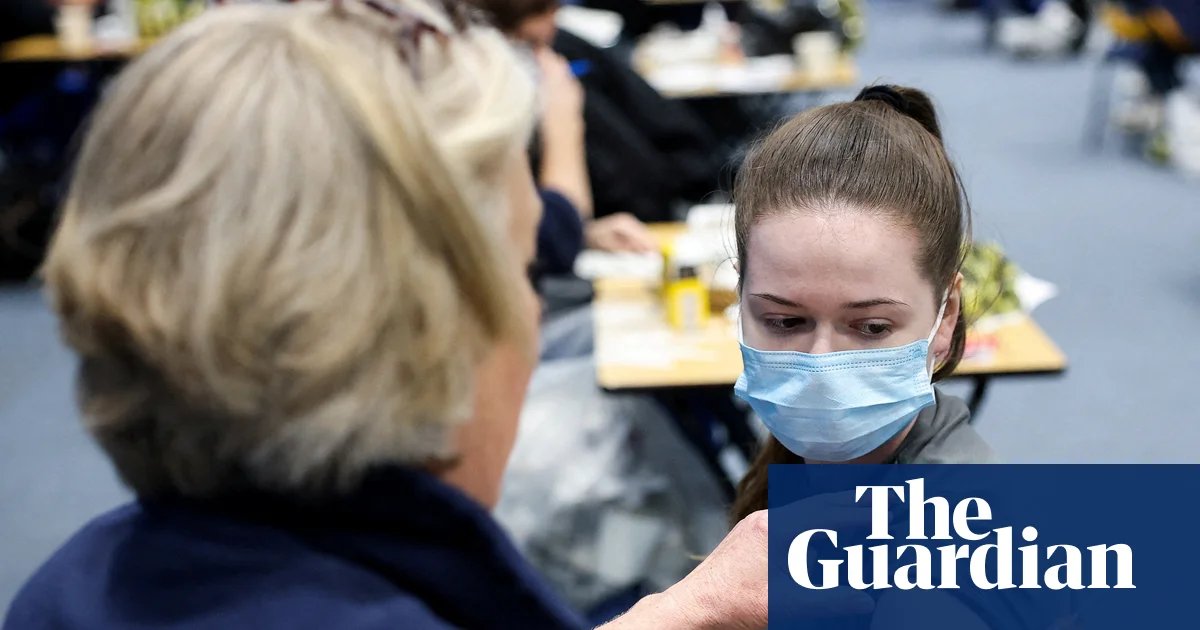
The meningitis B vaccination programme will be expanded to include year 11 pupils at schools affected by the outbreak in Kent, health officials have said.
Figures from the UK Health Security Agency (UKHSA) show the number of cases of meningitis have fallen from 29 on Sunday, when 20 cases were confirmed and a further nine were under investigation, to 20 confirmed cases with a further three under investigation, as of 12.30pm on Monday.
Officials started vaccinating University of Kent students on Wednesday 18 March. The following day, on a visit to the campus, the health secretary, Wes Streeting, said the programme would be expanded to more people, including sixth form pupils at four schools with known or suspected cases of MenB.
The UKHSA has now confirmed ministers have agreed to offer jabs to year 11 pupils at these schools. Officials said widening the programme was a precaution to ensure long-term protection.
The Guardian understands that to date more than 13,000 antibiotic doses and more than 10,000 vaccine doses have been administered in response to the outbreak.
The news comes as UKHSA published a technical report that includes a preliminary analysis of the outbreak. This reveals that the earliest known case in the outbreak fell ill on 9 March, with the most recent becoming unwell on 16 March.
The peak of the outbreak, with the largest number of cases reporting onset of illness on a single day, was 13 March, the report notes. All the cases were admitted to hospital, with nine known to have been taken to intensive care.
The two students who have died are 18-year-old Juliette Kenny, who was described by her family as “fit, healthy and strong” before her death, and a University of Kent student. The report reveals the median age of cases in the outbreak to be 19 and 18 of the 23 cases are known to be students.
“So far, the majority of outbreak cases have been found to have an epidemiological link with a club in Canterbury,” the report adds, noting 20 of the 23 people are known to have attended Club Chemistry at least once before they became unwell.
Experts have stressed it is not unexpected to see an outbreak in young adults and the report notes the risk of meningococcal disease is estimated to be 11 times higher among university students than non-students of the same age.
However, the report confirms the Kent outbreak is of an unusual size and pace. This, it adds, is probably owing to a combination of three factors: the nature of the bacterial strain involved, levels of population immunity, and social and environmental factors.
The Guardian understands that, for one of the cases, the whole genome of the bacteria involved has been sequenced. The results reveal the strain behind the Kent outbreak belongs to a group of bacteria known as group B meningococci, but is a new variant of a subtype that has been present in England since 2020. UKHSA added this strain responds to antibiotics and MenB vaccines.
Work is under way to explore whether the multiple genetic differences in the outbreak strain could affect its biology, for example by increasing its transmissibility or potential to cause disease.
The Guardian understands experts are also looking at viruses that might have been co-circulating in the young people affected. This is because viral infections that damage the lining of the nose and throat can make it easier for bacteria to break through and enter the bloodstream leading to meningococcal disease.
In addition, the report notes studies are being carried out to assess susceptibility to the MenB outbreak strain, with the initial work focused on young people between the ages of 15 and 22.
The report adds that the level of transmission is now deemed to be at level 1.1 – this means there is a known cluster with a small number of directly linked cases. All of these infections were acquired in Kent.
However, the report adds that it is highly likely that in the next four weeks there may be cases where infections are acquired outside Kent.
Dr Merav Kliner, an incident director at UKHSA, said that whileantibiotics and vaccinations had been offered to contacts of cases who could be at increased risk of infection, contacts should be vigilant for symptoms.
“A reminder that we also see more than 350 cases of meningococcal infection across the country each year, which is why it is important that everyone remains aware of the signs and symptoms of the infection and seeks rapid medical attention if they are concerned,” she added.